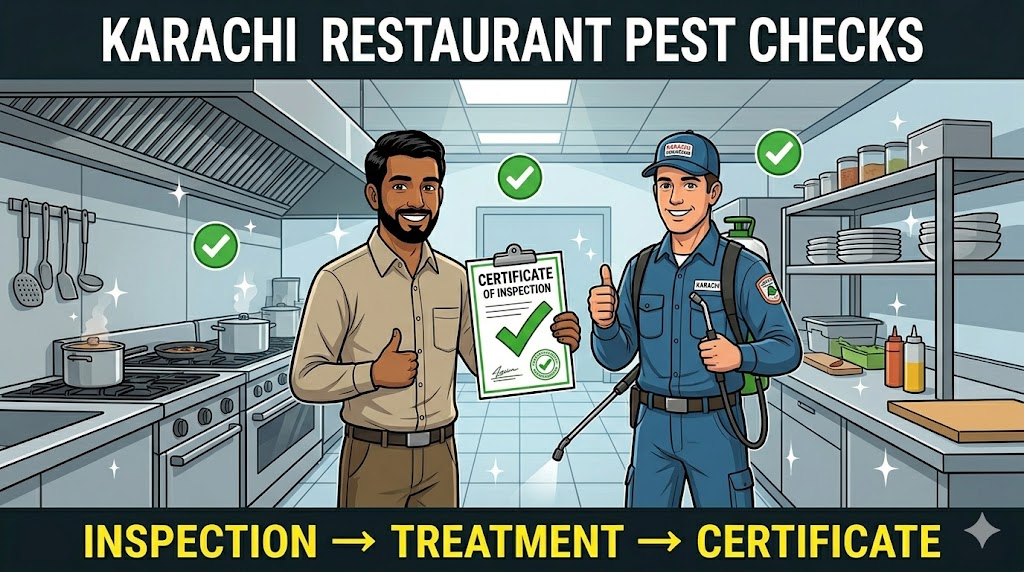
The knock on the door from a Sindh Food Authority inspector is one that no Karachi restaurant owner wants to be unprepared for. Yet every day, eateries across the city — from high-end restaurants in DHA to popular dhabas in Saddar — are caught off-guard during unannounced inspections. And among the most common reasons for fines, warnings, and closures? Pest-related violations.
Understanding exactly what food inspectors look for during pest checks is one of the most practical things a restaurant owner or kitchen manager in Karachi can do. It removes the guesswork, allows you to identify and fix problems before an inspection, and demonstrates a genuine commitment to food safety that inspectors respond positively to.
This guide takes you through the complete pest-related inspection checklist — area by area, pest by pest — and tells you what it means for your business.
Who Conducts Food Pest Inspections in Karachi?
In Karachi, food business pest inspections are primarily conducted by officers of the Sindh Food Authority (SFA), which was established under the Sindh Pure Food Act. The SFA has broad powers to enter any food premises without prior notice, inspect all areas of the business, collect samples for testing, issue notices, impose fines, and order closure.
The Karachi Metropolitan Corporation (KMC) can also conduct sanitation inspections under municipal bylaws. For businesses that import or export food, the Plant Protection Department (PPD) may additionally be involved.
SFA inspections are conducted by trained food safety officers who follow a structured assessment process. While they check for many aspects of food hygiene, pest evidence is consistently one of the most heavily weighted areas — and one of the most common sources of violations across Karachi’s food industry.
The 10 Key Things Inspectors Check During a Pest Inspection
1. Physical Evidence of Pest Activity
The most obvious thing an inspector looks for is signs that pests are — or recently have been — present. This includes:
- Rodent droppings — found along walls, in corners, under equipment, inside storage cupboards, or near drain openings
- Cockroach droppings — small dark specks resembling ground pepper, typically found in cracks, under sinks, and behind appliances
- Live pests — a cockroach on the wall during a daytime inspection is treated as highly significant, since cockroaches are nocturnal and their presence during the day suggests a severe infestation
- Dead pests — found in corners, under equipment, or in storage areas
- Gnaw marks on food packaging, wooden surfaces, cabling, or structural elements
- Pest body parts — shed skins, egg casings (ootheca), or insect wings
- Grease trails along walls or pipes — a common sign of rodent activity
2. Fumigation and Pest Control Records
One of the first things a well-trained SFA officer will ask for is your pest control documentation. Even if there is no visible evidence of pests, failing to produce adequate records is itself a compliance failure. Inspectors look for:
- A valid, current fumigation certificate issued by a licensed pest control company
- A pest control service log showing dates of all treatment visits
- Written reports from each pest control visit
- The name, licence number, and contact details of your pest control contractor
Inspectors can tell the difference between a genuine, ongoing pest management programme and a single certificate obtained just to show during an inspection. A stack of reports showing regular monthly visits is far more convincing than a single certificate dated last month with nothing before it.
3. Kitchen and Food Preparation Areas
The kitchen receives the most scrutiny during any food pest inspection. Inspectors will look behind, beneath, and inside equipment — not just at visible surfaces. Key focus areas include:
- Behind stoves, ovens, fridges, and other appliances — cockroaches nest in warm, dark spaces and are frequently found here
- Under sinks and around plumbing fixtures — a common entry and harbourage point for cockroaches and rodents
- Along wall-floor joints and skirting boards — where grease build-up and crack formation create ideal pest habitats
- Food preparation surfaces — for contamination from droppings or pest body parts
- Cooking oils, sauces, and ingredient storage areas — rodents and insects are attracted to spills and unsealed containers
4. Food Storage Areas and Dry Store
Dry food storage rooms are pest hotspots in Karachi restaurants, particularly during summer when cockroaches and stored product insects are most active. Inspectors specifically check:
- Whether dry goods (flour, rice, sugar, spices) are stored in sealed, pest-proof containers or left in torn or open packaging
- Evidence of gnawing on packaging — a clear sign of rodent activity
- Food stored directly on the floor — which both attracts pests and makes cleaning more difficult
- Webbing, larvae, or adult insects inside grain sacks or flour containers — signs of stored product insect infestation
- Gaps in shelving or flooring that provide harbourage areas for pests
5. Drains and Sanitary Areas
Open or poorly maintained drains are one of the primary entry routes for cockroaches and rodents into Karachi restaurants — particularly in areas where the municipal drainage infrastructure is inadequate or blocked. Inspectors will look at:
- Whether floor drains are covered with properly fitting drain covers or fly screens
- The condition of drainage pipes passing through walls — any gaps around pipes are entry points for pests
- Whether standing water is present — which attracts flies and mosquitoes
- Evidence of cockroach activity around and inside drain openings
6. Entry Points and Structural Gaps
A pest-proofed building is the foundation of effective pest control. Inspectors assess how well the building is physically protected against pest entry:
- Gaps around doors and windows — particularly external doors to kitchens and delivery areas
- Holes in walls where cabling or pipes enter — even a small gap can admit a mouse
- Damaged wall surfaces, floor tiles, or ceiling panels that create concealed harbourage areas
- Whether doors leading to the outside close tightly, or whether there is a gap at the base that allows rodent entry
7. Waste Management and Rubbish Storage
Poor waste management is the number one reason pest infestations develop in Karachi restaurants. With KMC waste collection sometimes unreliable in certain areas, many businesses accumulate waste that creates perfect pest conditions. Inspectors check:
- Whether waste bins have lids and are kept closed
- The cleanliness of the waste storage area and how frequently it is emptied
- Whether organic waste is being left outside overnight — a major rodent attractant in Karachi
- Whether the waste storage area itself shows signs of pest activity
8. Pest Control Devices and Their Condition
The presence of pest control devices is a positive indicator to inspectors — but only if they are properly maintained and in active use. Inspectors will check:
- Whether insect light traps (fly killers) are installed in appropriate locations and their bulbs are functional
- Whether rodent bait stations are in place, clearly labelled, and contain active bait
- Whether cockroach monitoring traps are present and being checked
- Whether any devices are overflowing, damaged, or clearly not being attended to
9. Dining Areas and Customer-Facing Spaces
Pest inspections are not limited to the back-of-house. Inspectors also check dining areas for:
- Food debris under tables, along wall edges, and in seat cushions — which attract cockroaches and ants
- Fly activity around food service areas or customer seating
- Evidence of rodent activity in false ceilings, behind panelling, or along skirting boards
- General cleanliness and whether the environment is conducive to pest harbourage
10. Staff Knowledge and Hygiene Culture
In more thorough inspections — particularly for larger establishments — an officer may ask kitchen staff basic questions about food hygiene and pest awareness. This is not a formal exam, but it gives the inspector a sense of whether the business has a genuine food safety culture or whether compliance exists only on paper.
A well-trained kitchen team that can answer basic questions about reporting pest sightings, storing food correctly, and maintaining cleanliness makes a significantly better impression than a team that is unaware or indifferent.
Common Violations Found in Karachi Restaurants During Pest Inspections
Based on what SFA inspection notices and industry experience reveal, these are the most frequently cited pest-related violations in Karachi food establishments:
- No fumigation records or certificates on file
- Live cockroach sightings in kitchen or storage areas
- Rodent droppings in food storage rooms or dry store
- Open or uncovered drains in the kitchen
- Food stored on the floor or in torn packaging
- Gaps in walls, floors, or around pipes creating pest entry routes
- Non-functional or absent fly control devices
- Overflowing or unsealed rubbish bins inside the kitchen
Many of these violations are preventable with a proper pest management programme in place — and all of them can be addressed before an inspector arrives.
How to Prepare for a Pest Inspection: A Quick Pre-Inspection Checklist
You cannot know exactly when an SFA inspector will visit — but you can make sure your restaurant is always ready. Use this checklist as a regular self-audit tool:
- Fumigation certificate is current and in the file
- Pest control service reports from the last 6 months are on file
- All dry goods are in sealed containers and off the floor
- Floor drains are covered
- No gaps visible in walls, floors, or around pipes
- Behind and under kitchen equipment has been cleaned recently
- Rodent bait stations are in place and labelled
- Fly killer unit is operational and in place
- Waste bins have lids and are emptied before closing each night
- Staff can describe basic pest reporting procedures
The Role of Licensed Pest Control in Passing Inspections
No amount of cleaning or self-monitoring fully replaces the role of a professionally executed, regularly documented pest control programme. SFA inspectors know the difference between a business that takes pest control seriously and one that is just going through the motions.
Working with a licensed provider for ongoing pest control in Karachi means you always have the documentation you need, the treatments are being done correctly and at the right frequency, and your team has a professional resource to call on when problems arise between scheduled visits.
More importantly, it means you are not just passing inspections on paper — you are genuinely protecting your customers, your staff, and your food from the real health risks that pests bring with them.
Book Your Free Kitchen Pest Inspection Today
Do not let a surprise inspection catch you unprepared. Whether you are setting up a new restaurant, bringing an existing business up to compliance, or simply want to make sure you will pass the next SFA visit with no issues — our team can help.
We offer free, no-obligation pest inspections for restaurants, kitchens, and food businesses across Karachi. Our licensed technicians will assess your current pest risk, identify any compliance gaps, and recommend the most effective and affordable treatment plan.
Contact us now and take the guesswork out of your next inspection. Your licence to operate — and your customers’ trust — is worth protecting.

Ahmad Karimi is a PPMA-registered pest management specialist and the lead technical consultant at Karachi Fumigation Services, where he has overseen field operations and treatment protocols since 2005. With over 20 years of hands-on experience treating residential, commercial, and industrial properties across Karachi — from DHA bungalows with structural termite infestations to Korangi factories requiring large-scale rodent exclusion — he brings direct field knowledge to every article published on this blog.
Ahmad has managed pest control programs for clients including Descon Engineering, Pakistan Tobacco Company, Saylani Welfare, and J. (Junaid Jamshed), and has issued hundreds of fumigation certificates for health authority compliance, import/export, and commercial licensing purposes. He holds active PPMA membership and works exclusively with WHO-approved chemicals in all field operations.
The content on this blog draws directly from two decades of Karachi-specific infestation data — seasonal pest patterns, neighbourhood-level risk factors, building-age vulnerabilities, and the regulatory requirements that Karachi businesses actually face. No recycled content from foreign pest control sites. Every article reflects conditions specific to Karachi’s climate, infrastructure, and compliance environment.
For treatment enquiries or technical questions, Ahmad’s team can be reached at 03463303875 or via the office at Trade Tower, Civil Lines, Karachi.