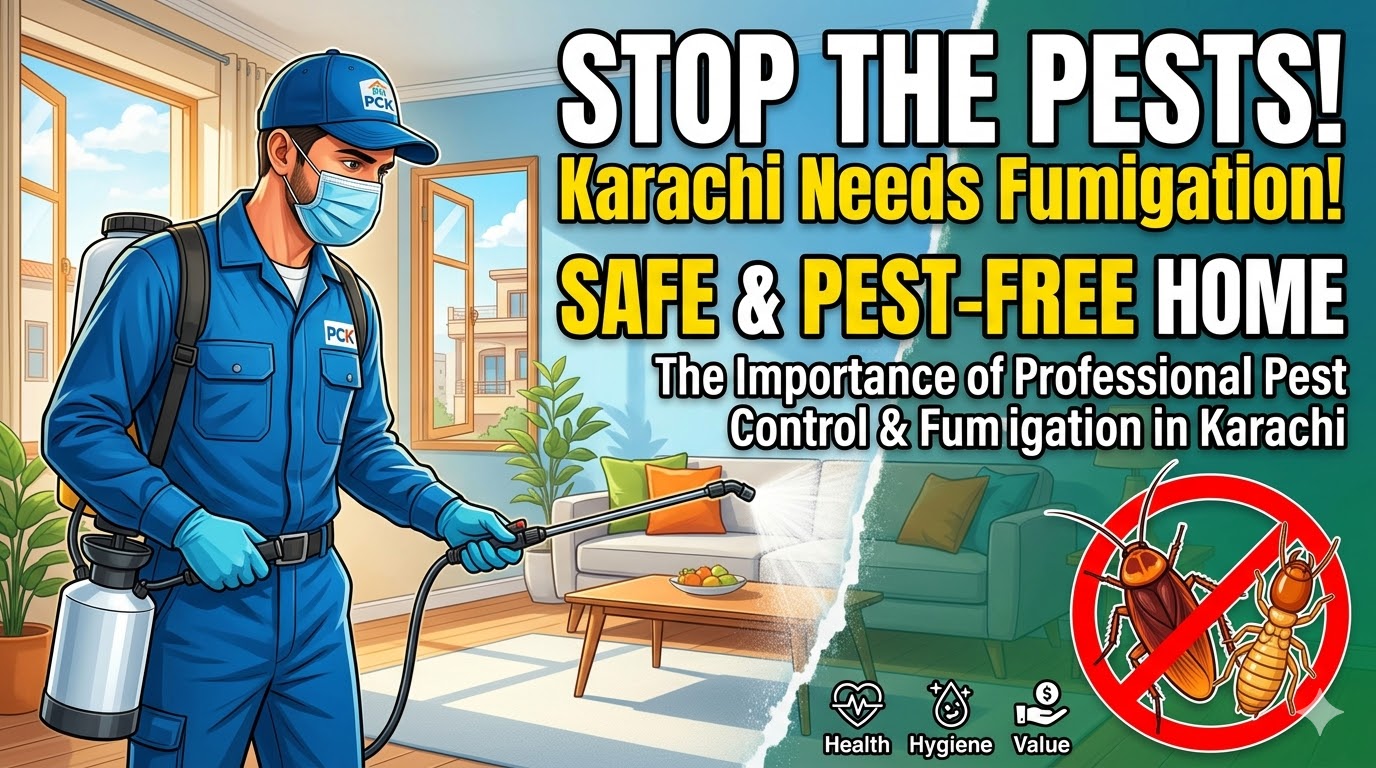
Karachi — Pakistan’s largest city and economic hub — is home to over 16 million people living in dense residential communities, thriving commercial districts, and sprawling industrial zones. But the same heat, humidity, and urban density that defines this vibrant city also makes it one of the most pest-prone environments in South Asia.
From cockroaches in restaurant kitchens to termites silently hollowing out wooden furniture, from rodents infesting warehouses to mosquitoes spreading life-threatening diseases — pests are a constant, year-round challenge in Karachi. The consequences of ignoring them extend far beyond minor inconvenience: they impact public health, structural safety, food security, and economic productivity.
This is why professional fumigation and pest control services in Karachi have become an indispensable part of responsible home and business management.
Why Karachi Is Especially Vulnerable to Pest Infestations
Understanding the root causes of Karachi’s pest problem helps explain why regular, professional pest control is so critical here — far more so than in cities with drier or cooler climates.
1. The Climate Factor
Karachi sits on the Arabian Sea coastline and experiences a hot, semi-arid climate with high humidity levels, particularly during the monsoon season from June to September. Temperatures often exceed 35–40°C in summer, and humidity routinely climbs above 70–80%. This combination is exactly what cockroaches, mosquitoes, termites, and rodents thrive in. Unlike cold climates where winters naturally suppress pest populations, Karachi offers pests a warm, hospitable environment every single month of the year.
2. Rapid Urbanization & Dense Housing
Karachi’s explosive urban growth has created densely packed neighbourhoods — from the high-rise apartments of Clifton and Defence to the bustling lanes of Orangi Town and Lyari. Dense housing means shared walls, communal drainage systems, and interconnected infrastructure, all of which make it extremely easy for pests to migrate from one unit to another. A single infested apartment can spread cockroaches or bed bugs to an entire building within weeks.
3. Drainage & Sanitation Challenges
Many parts of Karachi still face challenges with open drainage channels, irregular garbage collection, and standing water after rainfall. These conditions are prime breeding grounds for mosquitoes, flies, and rodents. Areas near nullahs (drainage canals) are particularly high-risk zones for serious pest infestations.
4. Year-Round Food Industry Activity
Karachi is home to thousands of restaurants, food processing units, warehouses, and markets — all operating continuously. Food facilities are magnets for cockroaches, rodents, flies, and stored-product insects. Without rigorous, professional pest management, food contamination becomes an ever-present risk.
Common Pests Found in Karachi Homes & Businesses
Karachi is home to a wide variety of pest species, each with its own behaviour, hiding spots, and damage profile:
- Cockroaches — German & American species thrive in kitchens, bathrooms, and drainage pipes. A major food contamination risk year-round.
- Mosquitoes — Aedes & Anopheles species breed in standing water and are vectors for dengue, malaria, and chikungunya.
- Rodents (Rats & Mice) — Gnaw through electrical wiring, contaminate food, and carry leptospirosis and other dangerous diseases.
- Termites — Silent destroyers that cause devastating structural damage to wood and foundations, often undetected for years.
- Bed Bugs — Hitchhike through luggage and second-hand furniture. Extremely difficult to eliminate without professional treatment.
- Wasps & Bees — Build nests in wall cavities and rooftops, posing a serious risk to children and allergic individuals.
- Flies — Houseflies and drain flies spread bacteria rapidly across food preparation areas.
- Lizards — Their droppings contaminate food surfaces and their presence often signals a larger underlying insect infestation.
The Serious Health Risks of Uncontrolled Pest Infestations
The most urgent reason to take pest control seriously in Karachi is public health. Pests are not merely a nuisance — they are active vectors and carriers of dangerous diseases that affect thousands of families in the city every year.
Mosquito-Borne Diseases: A Deadly Annual Threat
Karachi faces dengue fever outbreaks virtually every monsoon season. The Aedes aegypti mosquito breeds in clean, stagnant water found in flower pots, water containers, and clogged drains. Dengue can be fatal in its severe hemorrhagic form. Malaria, transmitted by Anopheles mosquitoes, also remains a public health concern in peri-urban areas of Karachi.
Professional mosquito fumigation programs dramatically reduce breeding populations and are critical during and after the monsoon period.
Cockroaches and Gastrointestinal Illness
Cockroaches carry Salmonella, E. coli, Staphylococcus, and numerous other pathogens on their bodies and legs. They contaminate food surfaces, utensils, and stored food with their droppings and shed skin. For Karachi’s food service industry, a cockroach infestation is not just a health code violation — it is a direct pathway to foodborne illness outbreaks affecting customers and staff.
Rodents and Leptospirosis
Rats and mice are prolific in Karachi’s urban environments, particularly near markets, restaurants, and older residential buildings. Rodent urine is the primary vehicle for leptospirosis — a bacterial infection that can cause liver and kidney failure if untreated. Rodents also gnaw through electrical wiring, creating serious fire hazards in homes and commercial premises.
Bed Bugs and Mental Health Impact
While bed bugs do not transmit diseases, their impact on quality of life is profound. Itching bites, sleep deprivation, anxiety, and the psychological distress of a persistent infestation take a measurable toll on the mental health of affected households. Children are particularly vulnerable in severe infestations.
“In Karachi, pest control is not a luxury service — it is a public health necessity for every household, school, hospital, restaurant, and office in the city. The cost of inaction is always greater than the cost of prevention.”
Protecting Your Property from Pest-Related Damage
Beyond health risks, pests cause enormous financial damage to properties across Karachi every year.
Termites: The Silent Structural Threat
Termites are arguably the most financially devastating pest in Karachi. Subterranean termite colonies can silently consume wooden beams, floorboards, furniture, books, and even structural components of a building for years before any visible damage becomes apparent. By the time homeowners notice signs — bubbling paint, hollow-sounding wood, mud tubes along walls — the damage is often already extensive and expensive to repair.
A single mature termite colony can number in the millions. Professional termite control with soil treatment and baiting systems is the only reliable solution.
Rodent Damage to Infrastructure
Rodents must constantly gnaw to keep their teeth from overgrowing. In buildings, this means chewing through electrical cables, water pipes, insulation, and structural materials. Chewed electrical wiring is a leading cause of unexplained fires in residential and commercial properties.
Cockroaches and Business Reputation
For restaurants, hotels, and food processing businesses in Karachi, a cockroach infestation can be catastrophic. A single failed health inspection or viral social media complaint can cost a business years of hard-earned goodwill. Regular professional pest control is not just a compliance requirement — it is fundamental brand protection.
Why Professional Fumigation Is Far Superior to DIY Methods
Many Karachi residents and businesses attempt to manage pest problems with over-the-counter sprays and traps. While these may offer temporary relief, they consistently fail to address the root cause of infestations. Here is why professional fumigation is in a different league entirely:
- Accurate Identification & Assessment — Trained technicians identify the exact species, assess the severity of the infestation, and locate nesting sites and entry points that untrained eyes routinely miss.
- Commercial-Grade Treatments — Licensed fumigation companies use approved, commercial-strength pesticides that are not available to the general public. These are significantly more effective at eliminating entire colonies, not just visible individuals.
- Safety & Proper Application — Many fumigation chemicals require precise dosages and application methods. Professional technicians are trained in safe handling, proper ventilation procedures, and post-treatment protocols to protect residents and pets.
- Integrated Pest Management (IPM) — Reputable pest control companies combine chemical treatments with physical barriers, exclusion methods, sanitation recommendations, and follow-up monitoring for long-term, sustainable protection.
- Guaranteed Results & Follow-Up — Professional services include warranties and follow-up treatments if a problem persists. DIY products offer no such guarantee.
Key Fumigation & Pest Control Services Available in Karachi
A full-service provider offers a comprehensive range of specialized treatments:
General Fumigation
Application of liquid insecticides to interior surfaces — walls, floors, crevices, and drains — to eliminate cockroaches, ants, silverfish, and other crawling insects. The foundational service most homes and offices require on a quarterly or bi-annual basis.
Termite Proofing & Control
Includes soil treatment (applying termiticide around and beneath foundations), wood treatment, and bait station systems that allow termites to carry slow-acting poison back to the colony. Requires expert assessment before treatment.
Mosquito Control & Fogging
Thermal or cold fogging machines disperse insecticidal mist across gardens, drains, and outdoor spaces. Particularly valuable before the monsoon season, during dengue alerts, and for housing societies and commercial campuses.
Rodent Control
Combines bait stations with rodenticide, glue traps, and — most critically — exclusion work: identifying and sealing entry points through which rodents are accessing the building.
Bed Bug Treatment
Typically requires heat treatment or a combination of liquid insecticide and dust applications to all harbourage areas including mattresses, bed frames, skirting boards, and electrical sockets. Multiple treatment sessions are usually required.
Warehouse & Commercial Fumigation
For large warehouses, food storage facilities, and industrial premises, whole-building fumigation is used to eliminate stored-product insects and rodents from bulk commodities and large spaces.
Who Needs Professional Pest Control in Karachi?
The short answer: everyone. But certain properties have particularly heightened needs:
- Residential homes & apartments — especially ground-floor units, older buildings, and properties near drainage channels
- Restaurants, cafes & food courts — regulatory compliance, food safety, and reputation management all depend on zero-tolerance pest control
- Hospitals & clinics — where pest activity poses direct infection control risks to vulnerable patients
- Schools & educational institutions — protecting children from cockroach allergens, mosquito bites, and rodent-spread illness
- Hotels & guesthouses — where a single bed bug complaint can damage years of business reputation
- Warehouses & storage facilities — preventing losses from pest-damaged goods and stock
- Offices & commercial premises — employee health, hygiene standards, and professional image
- Newly constructed buildings — pre-construction termite proofing is far more effective and economical than post-infestation treatment
How Often Should You Schedule Pest Control in Karachi?
The ideal frequency depends on your property type, location, and past infestation history:
| Property Type | Recommended Frequency |
|---|---|
| Residential homes | Every 3–4 months; annual termite inspection |
| Restaurants & food businesses | Monthly at minimum; quarterly deep treatment |
| Hotels & hospitals | Monthly for high-risk areas; quarterly comprehensive |
| Offices | Quarterly; annual termite inspection |
| Warehouses | Quarterly; pre-shipment fumigation as required |
Karachi’s year-round warm climate means there is no “off-season” for pests. Consistent scheduled treatment is always more effective — and more economical — than reactive emergency treatments after a major infestation takes hold.
The Economic Case for Investing in Pest Control
Some property owners hesitate due to perceived cost. This is a false economy.
A professional quarterly fumigation program for a standard home in Karachi costs a fraction of what a single termite remediation project costs after structural damage has occurred. Termite repairs to wooden furniture, flooring, and structural beams can run into hundreds of thousands of rupees.
A restaurant facing closure due to a failed pest inspection loses far more in a single day than a full year of monthly professional fumigation would cost.
Pest control is, at its core, an investment in asset protection — whether that asset is your family’s health, your property’s structural integrity, or your business’s operational continuity and reputation.
Preventive Measures Between Professional Treatments
Professional fumigation creates a protective window — but your habits between treatments significantly influence how long that protection lasts:
- Seal all cracks, gaps, and crevices in walls, around pipes, and under doors
- Store food in airtight containers — open packaging is an open invitation for cockroaches and rodents
- Eliminate standing water immediately after rain — even a small container is sufficient for mosquito breeding
- Clear clutter regularly, especially cardboard boxes, which are ideal nesting sites
- Keep drainage pipes and sink drains clean and fitted with mesh covers
- Inspect second-hand furniture carefully before bringing it into your home
- Maintain clean garbage disposal practices and use sealed dustbins
- Trim vegetation near building foundations to reduce termite and rodent harborage
Conclusion: Pest Control Is Non-Negotiable in Karachi
Karachi’s unique combination of tropical climate, dense urbanization, and year-round warmth makes it one of the most challenging cities in South Asia for pest management. Cockroaches, mosquitoes, termites, rodents, and bed bugs are not seasonal visitors here — they are permanent residents that will proliferate unchecked without active, professional intervention.
The importance of fumigation and pest control services in Karachi cannot be overstated. It is a matter of public health — protecting families from dengue, salmonella, and leptospirosis. It is a matter of property protection — defending homes and businesses from the devastating structural damage caused by termites and rodents. And it is a matter of economic responsibility — preventing far greater costs from reactive repairs, business closures, and medical treatment.
Whether you own a flat in Gulshan-e-Iqbal, manage a restaurant in Saddar, run a warehouse in SITE, or operate a hotel in Clifton — professional fumigation and pest control is not a luxury. It is a fundamental responsibility to the people who live, work, and eat in your space.
To learn more or to schedule a free inspection, visit Karachi Fumigation Services — your trusted partner in creating pest-free environments across the city.

Ahmad Karimi is a PPMA-registered pest management specialist and the lead technical consultant at Karachi Fumigation Services, where he has overseen field operations and treatment protocols since 2005. With over 20 years of hands-on experience treating residential, commercial, and industrial properties across Karachi — from DHA bungalows with structural termite infestations to Korangi factories requiring large-scale rodent exclusion — he brings direct field knowledge to every article published on this blog.
Ahmad has managed pest control programs for clients including Descon Engineering, Pakistan Tobacco Company, Saylani Welfare, and J. (Junaid Jamshed), and has issued hundreds of fumigation certificates for health authority compliance, import/export, and commercial licensing purposes. He holds active PPMA membership and works exclusively with WHO-approved chemicals in all field operations.
The content on this blog draws directly from two decades of Karachi-specific infestation data — seasonal pest patterns, neighbourhood-level risk factors, building-age vulnerabilities, and the regulatory requirements that Karachi businesses actually face. No recycled content from foreign pest control sites. Every article reflects conditions specific to Karachi’s climate, infrastructure, and compliance environment.
For treatment enquiries or technical questions, Ahmad’s team can be reached at 03463303875 or via the office at Trade Tower, Civil Lines, Karachi.
Leave a Reply