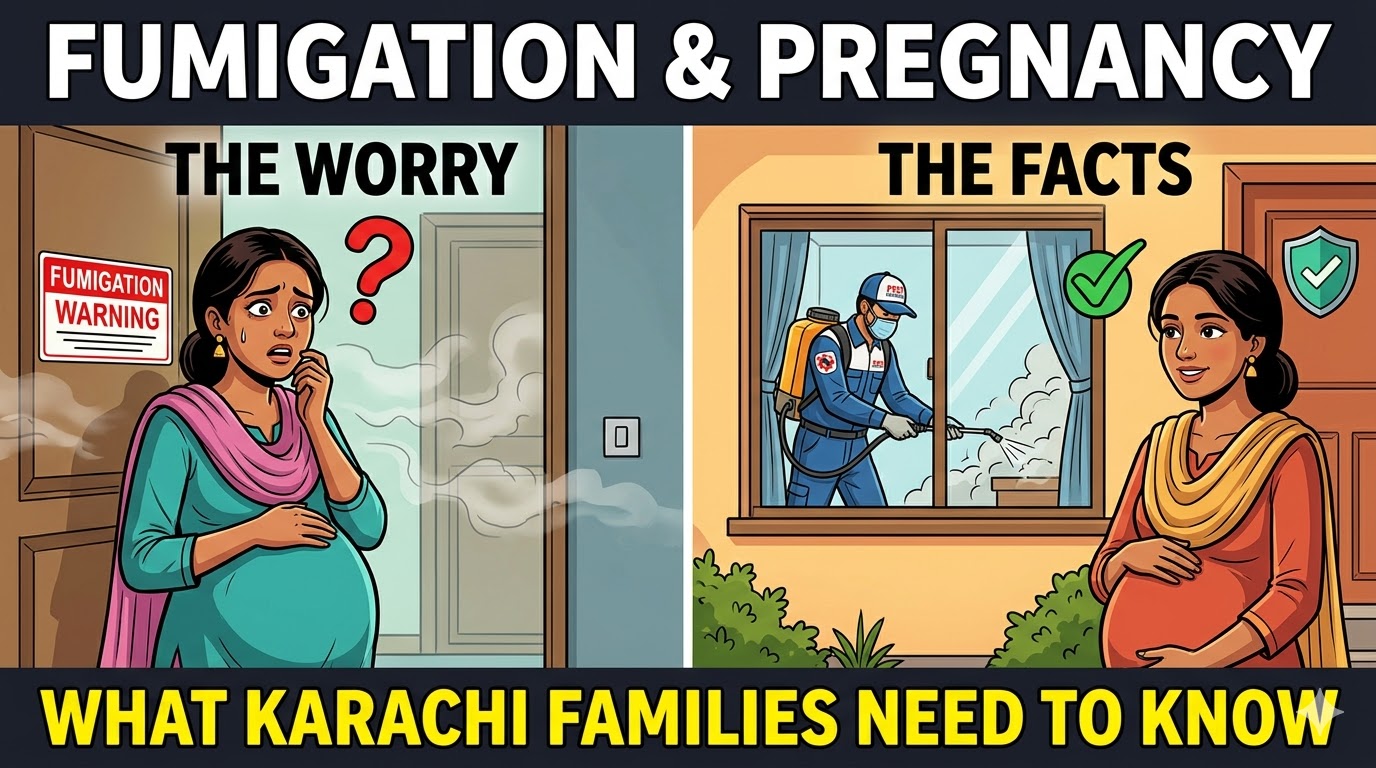
Pregnancy brings with it a heightened awareness of everything in your environment — the food you eat, the air you breathe, the cleaning products you use. So when pest season hits in Karachi, or when a cockroach infestation forces the issue, the question becomes urgent: can I have my home fumigated while pregnant? Is it safe?
The answer is not a simple yes or no. It depends on the type of fumigation, the trimester you are in, how the treatment is carried out, and the precautions taken before and after. This guide gives Karachi families the honest, practical information they need to make a safe and informed decision.
Why Pregnancy Changes Everything About Chemical Exposure
During pregnancy, a woman’s body undergoes profound physiological changes that make her — and especially her unborn baby — more vulnerable to chemical exposure than at any other time. Here is why:
- The developing fetus has no developed detoxification system. Its liver and kidneys cannot process toxins efficiently until much later in development.
- Many pest control chemicals are fat-soluble and can cross the placental barrier, reaching the fetus directly.
- The first trimester (weeks 1–12) is the most critical period — this is when all major organ systems are forming.
- Hormonal changes during pregnancy can amplify the effects of chemical irritants, making nausea, dizziness, and respiratory sensitivity much worse.
- Even chemicals that are considered low-risk for adults can pose risks to fetal neurological development.
This does not mean fumigation must never happen in a home with a pregnant woman. It means it must happen correctly, with the right chemicals, proper precautions, and with the pregnant woman completely absent from the premises.
The Pest Problem Reality in Karachi
Let us be honest about why this question even comes up: Karachi is one of South Asia’s most densely populated cities, and pest infestations are a year-round reality. From the monsoon-fuelled surge of mosquitoes and cockroaches to the termite season that ravages wooden furniture and structures across DHA, Gulshan, and Malir, pest control is not a luxury — it is a necessity.
Pregnant women living in Karachi’s older neighbourhoods — areas like Lyari, Old Clifton, or parts of Saddar — often contend with century-old building infrastructure that harbours pest colonies resistant to basic deterrents. Delaying fumigation can also cause harm: the stress of a severe infestation, the diseases carried by mosquitoes (dengue, malaria), and the contamination of food by cockroaches all pose real risks to a pregnant woman.
The key is to manage fumigation safely — not to avoid it indefinitely.
Which Fumigation Chemicals Are Considered High-Risk During Pregnancy?
Organophosphates
Chemicals like chlorpyrifos and malathion, commonly used against cockroaches and mosquitoes, are organophosphate-based. Research has associated prenatal organophosphate exposure with reduced birth weight, altered fetal brain development, and increased risk of neurological issues in children. Many countries have restricted or banned chlorpyrifos. Ask your pest control provider specifically whether they use organophosphate compounds and request alternatives.
Pyrethroids
Synthetic pyrethroids (such as cypermethrin and permethrin) are among the most widely used insecticides in Karachi. They are generally considered lower risk than organophosphates but are not completely without concern during the first trimester. Studies suggest minimal risk when used in properly ventilated spaces and when the pregnant woman is absent during and after application. Pyrethroids break down relatively quickly and are less likely to persist in the environment.
Methyl Bromide and Sulfuryl Fluoride
These are used in tent or structural fumigation. Both are highly toxic and absolutely should not be used in a home where a pregnant woman will return within 24–72 hours. Sulfuryl fluoride in particular can cause systemic toxicity. These treatments require full evacuation, professional air testing before re-entry, and should only be handled by licensed operators.
Boric Acid and Gel Baits
These are among the safest options. Boric acid-based treatments and gel baits for cockroaches have a much lower toxicity profile and do not generate airborne exposure the way sprays and fogs do. If the infestation level permits, a good pest control company will recommend these as a first-line solution for homes with pregnant women.
Trimester-by-Trimester Risk Guide
First Trimester (Weeks 1–12): Highest Risk
This is when organ systems — including the brain, heart, and nervous system — are forming. Exposure to pesticides during this period carries the greatest potential for harm. The advice here is clear: avoid the home entirely during and for at least 24–48 hours after any spray, fog, or fumigation treatment. Gel baits are the only relatively acceptable option, and even then, the pregnant woman should not be present during application.
Second Trimester (Weeks 13–26): Moderate Caution
The highest-risk window for organ formation has passed, but the fetal nervous system continues to develop throughout pregnancy. Standard pyrethroid-based sprays, when done with strict ventilation and with the pregnant woman absent, are generally considered manageable. Always discuss the specific product with both your pest control provider and your OB/GYN.
Third Trimester (Weeks 27–40): Still Caution Required
While the risk profile is somewhat lower in the third trimester compared to the first, the fetal brain is still developing rapidly. Additionally, late-term pregnant women are more physically vulnerable to fumes and respiratory irritation. The same precautions apply: leave the premises, ventilate thoroughly, and return only when surfaces are dry and the air is clear.
Safety Rules for Fumigation When Someone Is Pregnant
If fumigation is necessary in a home with a pregnant family member, follow these non-negotiable rules:
- The pregnant woman must leave the premises before treatment begins — not just go to another room
- She should stay away for at least 24 hours after standard spray treatments, longer for fogging or structural fumigation
- All food, water, utensils, and baby items must be removed or tightly sealed before treatment
- Inform your pest control provider about the pregnancy — a responsible company will adjust their chemical selection
- Request a Material Safety Data Sheet (MSDS) for every chemical to be used
- Upon return, all surfaces should be wiped down, floors mopped, and windows kept open
- The pregnant woman should not be the one doing the post-treatment cleaning
- Consult your doctor before and after any fumigation treatment during pregnancy
What to Tell Your Pest Control Provider in Karachi
Not all pest control companies in Karachi are equally transparent about what they use. When calling to book a fumigation service, be direct about the pregnancy and ask these specific questions:
- What exact chemicals will be used? (Ask for brand names or active ingredients)
- Are any organophosphates being used? If yes, can they be substituted?
- What is the recommended re-entry time for a pregnant woman?
- Do you offer pregnancy-safe or low-toxicity treatment options?
- Will you provide written documentation of the chemicals used?
A professional and trustworthy pest control service in Karachi will answer all of these questions clearly and without hesitation. If a company dismisses your concerns or cannot provide product details, do not hire them.
Natural and Low-Risk Alternatives to Consider
In cases where the pregnancy is in the first trimester or where the infestation is not yet severe, these lower-risk alternatives may help manage the problem temporarily:
- Diatomaceous earth: A natural powder that physically damages insects without chemical toxicity
- Boric acid gel baits: Effective for cockroaches, low inhalation risk
- Ultrasonic pest repellers: No chemical risk, though effectiveness varies
- Mechanical traps for rodents: Avoids all chemical exposure
- Essential oil-based repellents: Some limited effectiveness against mosquitoes; discuss with your doctor
These alternatives are not always sufficient for severe infestations. However, they can buy time or reduce the need for heavy chemical treatment.
A Word on Karachi’s Dengue and Malaria Season
Here is the difficult reality that many articles about fumigation and pregnancy do not address: in Karachi, refusing all fumigation during pregnancy has its own risks. Dengue fever, which surges during and after the monsoon season (roughly July–October), can be extremely dangerous during pregnancy — it is associated with premature birth, low birth weight, and in severe cases, fetal death.
In neighbourhoods near water bodies, nullahs, or areas with poor drainage — including parts of Orangi, Baldia, and Keamari — mosquito control is not optional. In these scenarios, the risk of chemical exposure during proper, professionally conducted fogging may be lower than the risk of contracting dengue while pregnant.
This is a conversation you must have with your OB/GYN, who knows your specific health situation. Do not make this decision alone.
After Fumigation: Steps Specifically for Pregnant Women
When it is finally safe to return home after fumigation:
- Have a family member or helper mop all floors and wipe all surfaces before you enter
- Keep all windows and doors open for the first several hours
- Avoid spending time in enclosed rooms with limited ventilation on the first day back
- Do not wash or handle any pest control equipment or empty chemical containers
- Monitor yourself for any symptoms: headaches, nausea, dizziness, or shortness of breath — and contact your doctor if they appear
- Inform your midwife or OB/GYN that fumigation took place and share the name of the chemicals used
Frequently Asked Questions
Can the smell of fumigation chemicals harm my baby if I am pregnant?
Strong chemical smells during pregnancy can trigger nausea and headaches, and may indicate the presence of airborne particles. However, brief exposure to dissipating odours after proper waiting periods is generally considered low risk. The critical period is during and immediately after treatment, which is why the pregnant woman must not be present.
My husband had the home fumigated while I was away. I came back after 6 hours. Is my baby safe?
If standard pyrethroid-based sprays were used, the home was ventilated, and surfaces were wiped down, your risk exposure is likely low. However, do inform your OB/GYN and mention the chemicals used so they can advise you appropriately.
Can I use mosquito coils or sprays inside during pregnancy?
Mosquito coils emit smoke that contains combustion byproducts. Frequent indoor use is not recommended during pregnancy. Topical mosquito repellents with DEET at lower concentrations (under 30%) are generally considered safe during the second and third trimesters, but discuss this with your doctor. Alternatives like mosquito nets and fans are the safest options.
Protecting Your Family Starts with Choosing the Right Partner
Fumigation during pregnancy is manageable — but only when it is handled by professionals who take your safety seriously. The right pest control team will work with you to choose the safest possible treatment, advise you clearly on re-entry timing, and provide complete transparency about the chemicals they use.
In a city like Karachi, where pest pressure is real and the risks of untreated infestations are also real, the goal is smart, informed pest management — not avoidance at all costs.
Book Your Free Inspection — We Will Work Around Your Family’s Needs
Pregnant and worried about a pest problem in your home? Do not wait until the infestation worsens. Our team provides a free home inspection to assess your situation, identify the safest treatment approach, and give you a clear timeline that protects everyone — including the newest member of your family.
We are transparent about every chemical we use, and we tailor every treatment to the specific needs of your household. Your family’s health is not something we take lightly.
Call or WhatsApp us today to book your free inspection and get a plan that keeps your home pest-free and your pregnancy safe.

Ahmad Karimi is a PPMA-registered pest management specialist and the lead technical consultant at Karachi Fumigation Services, where he has overseen field operations and treatment protocols since 2005. With over 20 years of hands-on experience treating residential, commercial, and industrial properties across Karachi — from DHA bungalows with structural termite infestations to Korangi factories requiring large-scale rodent exclusion — he brings direct field knowledge to every article published on this blog.
Ahmad has managed pest control programs for clients including Descon Engineering, Pakistan Tobacco Company, Saylani Welfare, and J. (Junaid Jamshed), and has issued hundreds of fumigation certificates for health authority compliance, import/export, and commercial licensing purposes. He holds active PPMA membership and works exclusively with WHO-approved chemicals in all field operations.
The content on this blog draws directly from two decades of Karachi-specific infestation data — seasonal pest patterns, neighbourhood-level risk factors, building-age vulnerabilities, and the regulatory requirements that Karachi businesses actually face. No recycled content from foreign pest control sites. Every article reflects conditions specific to Karachi’s climate, infrastructure, and compliance environment.
For treatment enquiries or technical questions, Ahmad’s team can be reached at 03463303875 or via the office at Trade Tower, Civil Lines, Karachi.
Leave a Reply