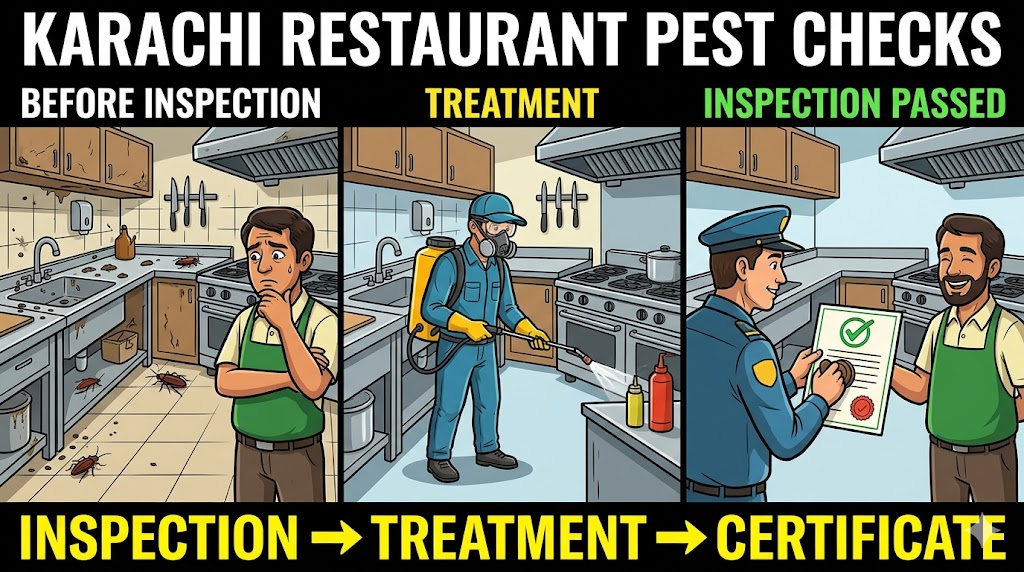
Running a restaurant in Karachi is hard work. Between sourcing fresh ingredients, managing staff, keeping customers happy, and handling the business side of things, hygiene compliance can sometimes feel like just another item on an already overwhelming checklist. But here is the reality: pest-related violations are among the most common — and most damaging — reasons restaurants get fined or shut down by the Sindh Food Authority. And the first question every restaurant owner should be able to answer confidently is this: how often are we fumigating?
This guide gives you the straightforward answer — along with practical guidance on why the frequency matters, what factors affect it, and how to build a fumigation schedule that keeps your kitchen, dining area, and storage rooms consistently pest-free.
Why Pest Control Frequency Is a Serious Issue for Karachi Restaurants
Karachi’s climate is uniquely challenging for food businesses. With temperatures regularly exceeding 35°C in summer, high humidity levels during the monsoon months, and the constant movement of goods, people, and waste through densely populated commercial areas, pests thrive year-round.
Cockroaches can multiply into hundreds within weeks in a warm kitchen. A single rat entering through a drain can contaminate an entire food preparation area. Stored grain pests can devastate flour and spice supplies within days. In a city like Karachi, the question is not whether pests will appear — it is how quickly you respond and how consistently you prevent them.
The Sindh Food Authority (SFA) takes this seriously. Inspectors conduct unannounced visits to restaurants across the city — from upscale eateries in Clifton and DHA to high-volume dhabas in Saddar and Burns Road. Pest evidence is one of the top reasons for:
- Immediate fines ranging from PKR 10,000 to over PKR 100,000
- Temporary suspension of operations
- Forced closure pending a compliance re-inspection
- Public listing on SFA’s violation notices — which can permanently damage your reputation
The Minimum Fumigation Frequency for Karachi Restaurants
There is no single universal law in Pakistan that mandates a specific fumigation interval for restaurants. However, guidelines from the Sindh Food Authority, in combination with international food safety standards (including HACCP and ISO 22000 principles) followed by many inspectors, point clearly toward a minimum of once every month for active food preparation premises.
For most Karachi restaurants — particularly those operating in high-traffic areas, serving high volumes, or located near open drains, markets, or waste disposal sites — monthly fumigation is the baseline. Some categories of food businesses require even more frequent intervention.
Here is a practical breakdown by restaurant type:
Small Dhabas and Street-Level Eateries
Minimum: Every 2 to 4 weeks. These premises are often close to open drainage, waste bins, and foot traffic — all of which increase pest pressure significantly. Monthly is the baseline; fortnightly is recommended during summer and monsoon.
Mid-Size Restaurants and Cafes
Minimum: Once per month. This applies to most sit-down restaurants in areas like Gulshan-e-Iqbal, North Nazimabad, Bahadurabad, and similar localities. Monthly scheduled fumigation, combined with gel bait treatment between sessions, provides solid protection.
Fine Dining Restaurants and Hotels
Minimum: Once per month, with ongoing monitoring. High-end establishments in Karachi’s upscale areas like Clifton Block 9, DHA Phase 6, and Zamzama face reputational risks that make compliance even more critical. A visible pest in a fine dining setting can destroy years of goodwill instantly.
Catering Services and Cloud Kitchens
Minimum: Once per month with immediate response provisions. Cloud kitchens, which have become extremely popular in Karachi over the last few years, often operate in smaller spaces with dense activity — making monthly fumigation and thorough sanitation essential.
Fast Food Chains and High-Volume Outlets
Minimum: Monthly full treatment with bi-weekly monitoring visits. Outlets serving hundreds of customers daily, particularly around university campuses like FAST, IBA, and Karachi University, or in busy commercial strips like Tariq Road and Nursery, face elevated pest risk due to constant food handling and waste generation.
Seasonal Factors That Affect Fumigation Frequency in Karachi
Karachi’s pest landscape changes with the seasons, and your fumigation schedule should reflect that.
Summer (April to June)
Cockroach and fly populations peak dramatically in Karachi’s scorching pre-monsoon months. Kitchens that are not fumigated regularly during this period can develop infestations surprisingly fast. Consider increasing to fortnightly treatments if your premises are particularly susceptible.
Monsoon (July to September)
Flooding and waterlogging push rodents and cockroaches out of drains and into buildings. This is the highest-risk period for Karachi restaurants, particularly those near low-lying areas or open drainage channels. Monthly fumigation is non-negotiable during monsoon; fortnightly is strongly advised for high-risk premises.
Winter (November to February)
Pest activity reduces somewhat in winter, but rodents seek warmth in indoor environments — including food storage areas and behind commercial kitchen equipment. Monthly treatment should continue through winter without interruption.
What Types of Pest Control Are Used in Karachi Restaurants?
Fumigation in the traditional sense — full enclosure with gas treatment — is not always practical for an operating restaurant. Pest control for food businesses in Karachi typically involves a combination of methods:
Gel Bait Treatment
Highly effective for cockroaches, gel bait is applied to corners, cracks, under equipment, and behind fixtures. It is odourless, food-safe when applied correctly, and does not require staff to vacate the premises. It can be done during off-peak hours or after closing.
Chemical Spray Treatment
Residual insecticide sprays are applied to walls, floors, and surfaces in storage and non-food contact areas. This is typically done on days the restaurant is closed or during deep cleaning days.
Rodent Control (Baiting and Trapping)
Tamper-resistant rodent bait stations are placed at entry points, near drainage, and in storage areas. These are checked and replenished as part of a monthly service visit.
Fly Management
UV fly killers and insect light traps are installed in kitchens and preparation areas. In Karachi’s fly-heavy months, these are essential support tools alongside chemical treatments.
Documentation: What the SFA Expects to See
The Sindh Food Authority does not just check for the presence of pests — it also reviews your documentation. During an inspection, an SFA officer may request:
- Your most recent fumigation certificate from a licensed pest control company
- A pest control service log or treatment record showing dates and methods used
- The name and licence number of the pest control provider
- Evidence of a pest monitoring programme (such as bait station maps or inspection reports)
If you cannot produce these documents during an inspection, it is treated the same as having no pest control programme at all — regardless of whether the premises appears clean. This is a critical point that many restaurant owners miss: compliance is not just about the physical treatment, it is about demonstrating a consistent, documented programme.
The Real Cost of Non-Compliance vs. the Cost of Prevention
Let us put this in simple financial terms. A monthly professional pest control service for a mid-size restaurant in Karachi typically costs between PKR 5,000 and 15,000 per visit depending on size and treatment type. An annual maintenance contract works out to even less per visit.
Now consider the alternative. A single SFA fine for a hygiene violation can start at PKR 10,000 and escalate quickly. A forced closure — even for just three or four days — can cost a busy restaurant tens of thousands of rupees in lost revenue, wasted stock, and staff wages. And if your violation ends up on social media or in a news report, the reputational damage could take years to recover from.
Consistent, professional pest control is not an expense — it is an investment in the continued operation of your business.
Building a Compliant Pest Management Schedule for Your Restaurant
A solid pest management programme for a Karachi restaurant should include the following elements:
- Monthly scheduled treatment visits — covering all pest types relevant to your premises
- Written service reports after every visit — detailing findings and actions taken
- Pest monitoring between visits — using bait stations, sticky traps, and staff reporting
- Annual review of the programme — adjusting frequency and methods based on seasonal patterns
- Emergency call-out provision — for rapid response if a pest problem is detected between scheduled visits
- A compliance folder — containing all certificates, service records, and contractor details ready for inspection
Choosing the Right Pest Control Partner in Karachi
Not all pest control companies in Karachi are equal. For restaurant compliance specifically, you need a provider who understands the food safety context — not just someone who can spray chemicals and leave. Look for:
- A licensed operator with verifiable credentials
- Experience working with SFA-regulated food businesses
- Issuance of a proper fumigation certificate after every treatment
- Flexible scheduling that minimises disruption to your operations
- Transparent pricing with no hidden charges
A reliable provider of pest control services in Karachi will also help you build your compliance documentation so you are always prepared when an SFA inspector walks through your door.
Book Your Free Restaurant Pest Inspection Today
Do not wait for an SFA notice or a customer complaint to take action. The right time to get your restaurant’s pest control programme in order is now — before the next inspection, before the next monsoon season, and before a small problem becomes a costly closure.
We work with restaurants, dhabas, catering companies, cloud kitchens, and hotels across Karachi to deliver compliant, effective, and documentable pest management programmes. Our licensed team covers all areas of the city and can schedule treatments at times that work for your operation.
Get in touch today for a free site inspection and a no-obligation quote. Protecting your restaurant’s licence, reputation, and customers starts with a single call.

Ahmad Karimi is a PPMA-registered pest management specialist and the lead technical consultant at Karachi Fumigation Services, where he has overseen field operations and treatment protocols since 2005. With over 20 years of hands-on experience treating residential, commercial, and industrial properties across Karachi — from DHA bungalows with structural termite infestations to Korangi factories requiring large-scale rodent exclusion — he brings direct field knowledge to every article published on this blog.
Ahmad has managed pest control programs for clients including Descon Engineering, Pakistan Tobacco Company, Saylani Welfare, and J. (Junaid Jamshed), and has issued hundreds of fumigation certificates for health authority compliance, import/export, and commercial licensing purposes. He holds active PPMA membership and works exclusively with WHO-approved chemicals in all field operations.
The content on this blog draws directly from two decades of Karachi-specific infestation data — seasonal pest patterns, neighbourhood-level risk factors, building-age vulnerabilities, and the regulatory requirements that Karachi businesses actually face. No recycled content from foreign pest control sites. Every article reflects conditions specific to Karachi’s climate, infrastructure, and compliance environment.
For treatment enquiries or technical questions, Ahmad’s team can be reached at 03463303875 or via the office at Trade Tower, Civil Lines, Karachi.