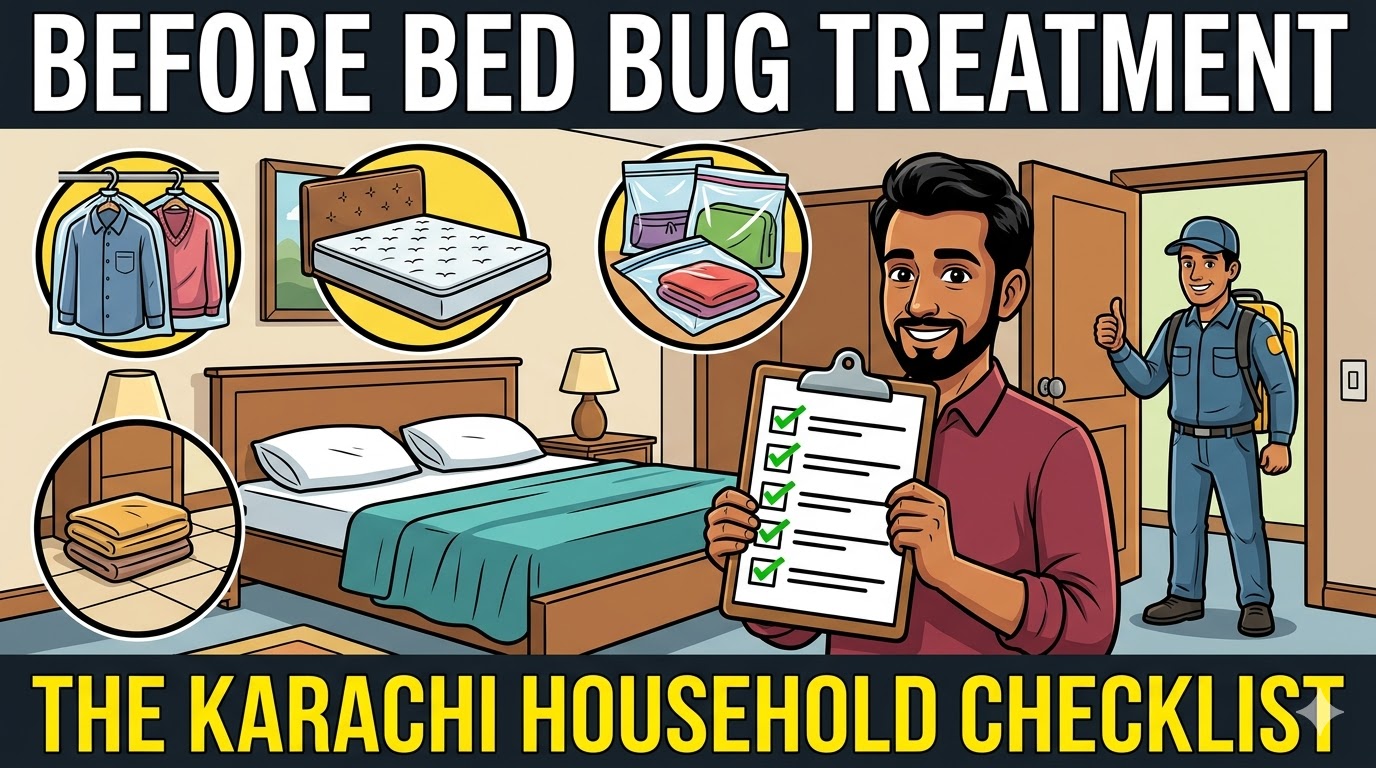
Waking up with itchy red welts is alarming. Your first instinct might be to call a pest control company immediately — but before you do, it’s worth taking 30 minutes to do a proper inspection yourself. Not because professional help isn’t necessary (it almost certainly will be), but because confirming what you’re dealing with helps you communicate clearly with the treatment team, ensures the right treatment is planned, and prevents you from paying for treatment of the wrong pest.
This guide walks you through exactly how to inspect your Karachi home for bed bugs — what tools you need, where to look, and how to interpret what you find.
Why Confirming the Pest Matters
Not every bite is a bed bug bite. In Karachi, mosquitoes, fleas (especially in homes with pets), mites, and even allergic reactions can produce skin reactions that look similar. Calling a pest control company for bed bugs when you actually have a flea problem leads to the wrong treatment being applied.
Conversely, many Karachi residents who do have bed bugs don’t realise it for weeks because they attribute bites to mosquitoes. During those weeks, the infestation grows significantly.
A proper inspection resolves the uncertainty in either direction, and the evidence you gather helps a professional team understand the scope of the problem before they arrive.
What You’ll Need for the Inspection
You don’t need any specialist equipment. Gather:
- A bright LED torch or phone flashlight
- A credit card, old loyalty card, or thin plastic card (to probe seams and cracks)
- A white sheet of paper or a white cloth to catch fallen bugs or debris
- Disposable gloves
- A magnifying glass if available (helpful but not essential)
- A phone for taking photos of any evidence you find
Where to Look: Room by Room
The Bed — Your Primary Search Area
Bed bugs are named for their habitat. The bed is always the first and most thorough inspection area.
Mattress: Strip all bedding completely. Inspect every seam of the mattress — run your card along the seam as you look, because bugs and eggs hide in the folded edge. Look at both sides and all four sides. Check any tufts or stitching details. Look for:
- Dark spots (1–2mm) — bed bug excrement, which appears as dark ink dots
- Rust-coloured smears — dried blood, often from a bug crushed during sleep
- Tiny white oval eggs — usually cemented along seam folds
- Translucent yellow shed skins (exuviae)
- Live bugs — flat, oval, reddish-brown, roughly 5mm long when unfed
Bed frame and headboard: This is often the heaviest concentration area. Unscrew the headboard from the wall if it’s wall-mounted, or pull the bed slightly away from the wall. Inspect every joint, groove, and crack. Run your card into the gaps. Bugs cluster in these areas in large numbers in established infestations.
Box spring: If your bed has a box spring, inspect along every seam and edge. The fabric backing is often a major harborage area. Lift the mattress completely to inspect the top of the box spring.
Bedside Furniture
Nightstands, bedside tables, and any furniture within 1–2 metres of the bed are common satellite harborage areas. Open every drawer and inspect the inside edges. Check the joints where legs meet the frame. Pull furniture away from the wall and inspect the back surfaces.
Sofas and Upholstered Furniture
In heavier infestations, or in homes where people frequently sleep on the sofa, upholstered furniture becomes infested. Inspect all seams, under cushions, and along the bottom edge of the frame. Lift the cushions and check underneath.
Walls and Electrical Points
Bed bugs travel along walls and hide behind electrical socket plates, light switches, and wall frames near sleeping areas. Gently pull these plates away (after turning off the power at the breaker) and shine your torch inside. This is a spot many homeowners miss entirely.
Check also: any picture frames or mirrors hanging close to the bed, any cracks in plaster or paint, and the junction between wall and skirting board.
Wardrobe and Clothing Storage
In heavier infestations, bugs migrate to wardrobes. Check along the inside edges and joints of the wardrobe, especially if it is close to the sleeping area.
Interpreting What You Find
Here’s a quick guide to what different signs tell you about the infestation:
- Only dark spots, no live bugs: Early or moderate infestation. Bugs are present but may be hidden deeply. Professional treatment is needed.
- Dark spots plus shed skins: Active infestation with ongoing reproduction. Urgency is high.
- Live bugs visible in daylight: Significant infestation. When bugs are visible outside their normal nocturnal hiding period, the population is large enough that hiding spots are crowded.
- Eggs found: Treatment must include follow-up visits to catch newly hatching nymphs. Flag this to your treatment provider.
- Infestation in multiple areas of the home: The spread is already established. Multiple rooms need to be treated simultaneously.
How Bite Patterns Help Confirm the Pest
While bites alone can’t definitively confirm bed bugs (they look similar to other bites), the pattern can help:
- Bed bugs: Bites typically appear in a line or small cluster (3 or more bites close together). They appear on exposed skin — arms, neck, face, legs. They itch intensely the next day.
- Mosquitoes: Random placement, no pattern, typically larger welt with a central puncture mark.
- Fleas: Concentrated around the ankles and lower legs, associated with pet presence.
Bed bug bites may not appear until 24–72 hours after the bite. Some people react strongly; others show almost no visible reaction at all, which is why physical evidence from the inspection matters more than bites alone.
Document Your Findings Before Calling
Before you call a professional, photograph everything you’ve found. Good documentation:
- Helps the pest control team understand the scope before they arrive
- Enables a more accurate quote
- Ensures the right treatment protocol is planned
- Provides a baseline for post-treatment comparison
Once you’ve confirmed the infestation, contact a professional for a thorough bed bug inspection and treatment in Karachi. Share your photos and inspection findings with them.
Book Your Free Professional Inspection
Your own inspection is a valuable first step — but a professional inspection will check areas you may not have access to, use detection tools you don’t have at home, and give you an accurate picture of the full extent of the infestation. Contact Fumigation Services in Karachi today to book your free inspection. Our team will confirm exactly what you’re dealing with and recommend the right treatment plan for your specific situation.

Ahmad Karimi is a PPMA-registered pest management specialist and the lead technical consultant at Karachi Fumigation Services, where he has overseen field operations and treatment protocols since 2005. With over 20 years of hands-on experience treating residential, commercial, and industrial properties across Karachi — from DHA bungalows with structural termite infestations to Korangi factories requiring large-scale rodent exclusion — he brings direct field knowledge to every article published on this blog.
Ahmad has managed pest control programs for clients including Descon Engineering, Pakistan Tobacco Company, Saylani Welfare, and J. (Junaid Jamshed), and has issued hundreds of fumigation certificates for health authority compliance, import/export, and commercial licensing purposes. He holds active PPMA membership and works exclusively with WHO-approved chemicals in all field operations.
The content on this blog draws directly from two decades of Karachi-specific infestation data — seasonal pest patterns, neighbourhood-level risk factors, building-age vulnerabilities, and the regulatory requirements that Karachi businesses actually face. No recycled content from foreign pest control sites. Every article reflects conditions specific to Karachi’s climate, infrastructure, and compliance environment.
For treatment enquiries or technical questions, Ahmad’s team can be reached at 03463303875 or via the office at Trade Tower, Civil Lines, Karachi.
Leave a Reply