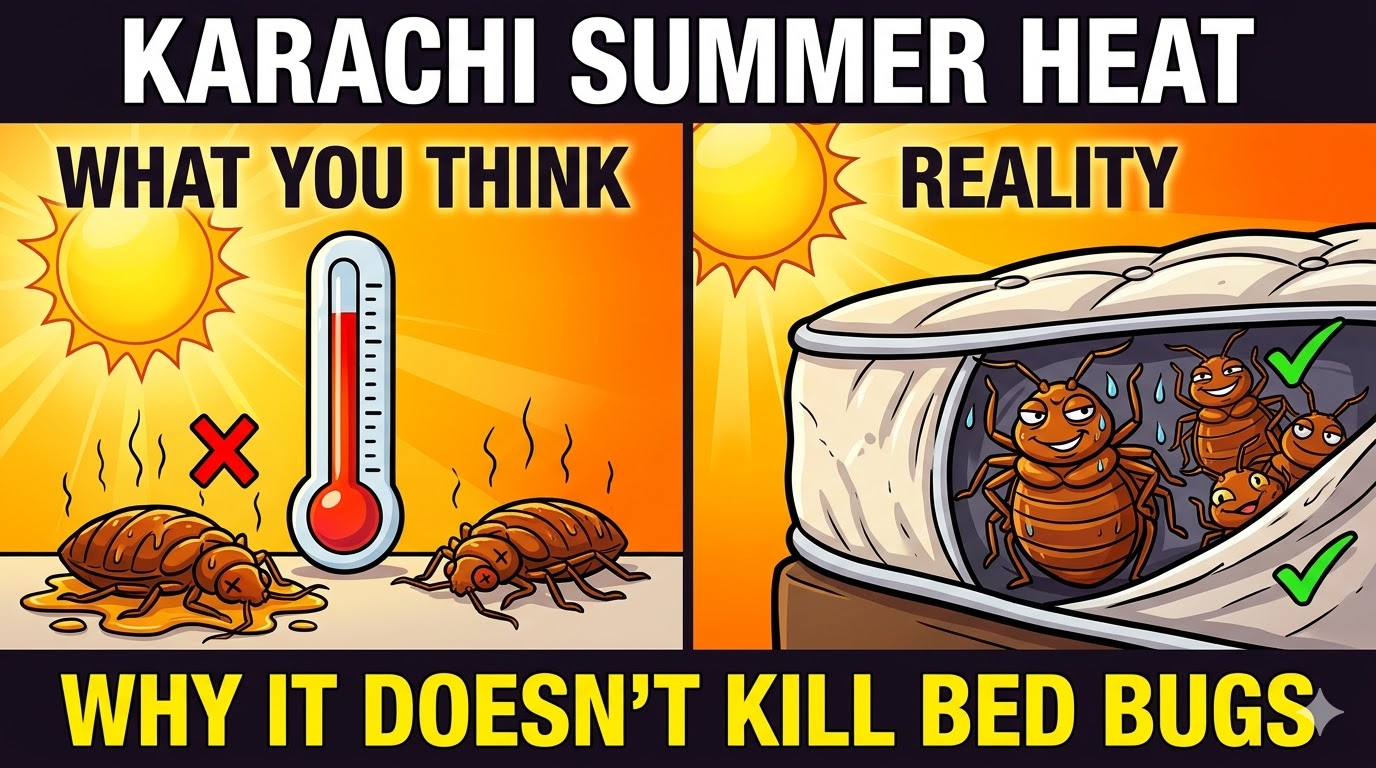
If you live in Karachi, you’ve probably heard the common belief: “The summer heat will take care of the bed bugs.” It sounds logical. Karachi summers are brutal — temperatures regularly climb above 40°C, humidity is high, and the city bakes for months. Surely no pest could survive that. Unfortunately, this is one of the most dangerous myths about bed bugs, and believing it costs Karachi homeowners weeks of suffering, sleepless nights, and a worsening infestation.
The truth is that bed bugs are not just surviving Karachi’s heat — they are thriving in it. Understanding why is the first step toward actually getting rid of them.
The Biology Behind Bed Bug Heat Resistance
Bed bugs (Cimex lectularius) are among the most resilient insects on the planet. They have survived for thousands of years alongside humans across climates ranging from Siberia to the tropics. Their biology gives them specific tools to handle heat that most people don’t know about.
Core body temperature vs. ambient temperature: Bed bugs are small, flat, and they hide. When temperatures rise in a room, bed bugs don’t simply sit in the open air and absorb that heat. They burrow deep into mattress seams, wall cracks, behind skirting boards, inside electrical sockets, and inside furniture joints. The temperature a few centimetres inside a crack can be 10–15°C lower than the surface temperature of the same wall.
Thermal death point requirements: Scientific research shows that bed bugs die when their body temperature reaches approximately 45–48°C for a sustained period — typically 90 minutes or more. Karachi ambient air may hit 42°C outdoors, but inside a shaded room, inside a mattress, inside a wardrobe crack, the bug’s actual body temperature may never come close to the lethal threshold.
Metabolic slowing: In high temperatures, bed bugs can slow their metabolism and enter a semi-dormant state. They reduce activity, conserve moisture, and wait. They are not dead — they are simply waiting for conditions to normalise, which in Karachi’s coastal climate, they always do.
Why Karachi’s Climate Actually Helps Bed Bugs
This may be uncomfortable to read, but Karachi’s climate is close to ideal for bed bug survival. Here’s why:
1. Warmth Accelerates Their Life Cycle
Bed bugs reproduce faster in warm temperatures. Between 21°C and 32°C — a range Karachi experiences nearly year-round — a bed bug can go from egg to adult in as little as 21 days. A female lays 1 to 5 eggs per day. Do the arithmetic: within three months of an undetected infestation, you can go from a handful of bugs to thousands.
In colder climates, winters slow the life cycle dramatically, giving residents a natural “reset.” In Karachi, there is no such reset. The cycle runs continuously, which is why infestations here grow so quickly once established.
2. High Humidity Helps Them Retain Moisture
Bed bugs lose moisture through their exoskeleton. In extremely dry environments, they desiccate and die. But Karachi’s coastal humidity — often 60–90% during the monsoon months — creates exactly the kind of environment where bed bugs can maintain their body moisture with ease.
3. Dense Housing and Constant Human Traffic
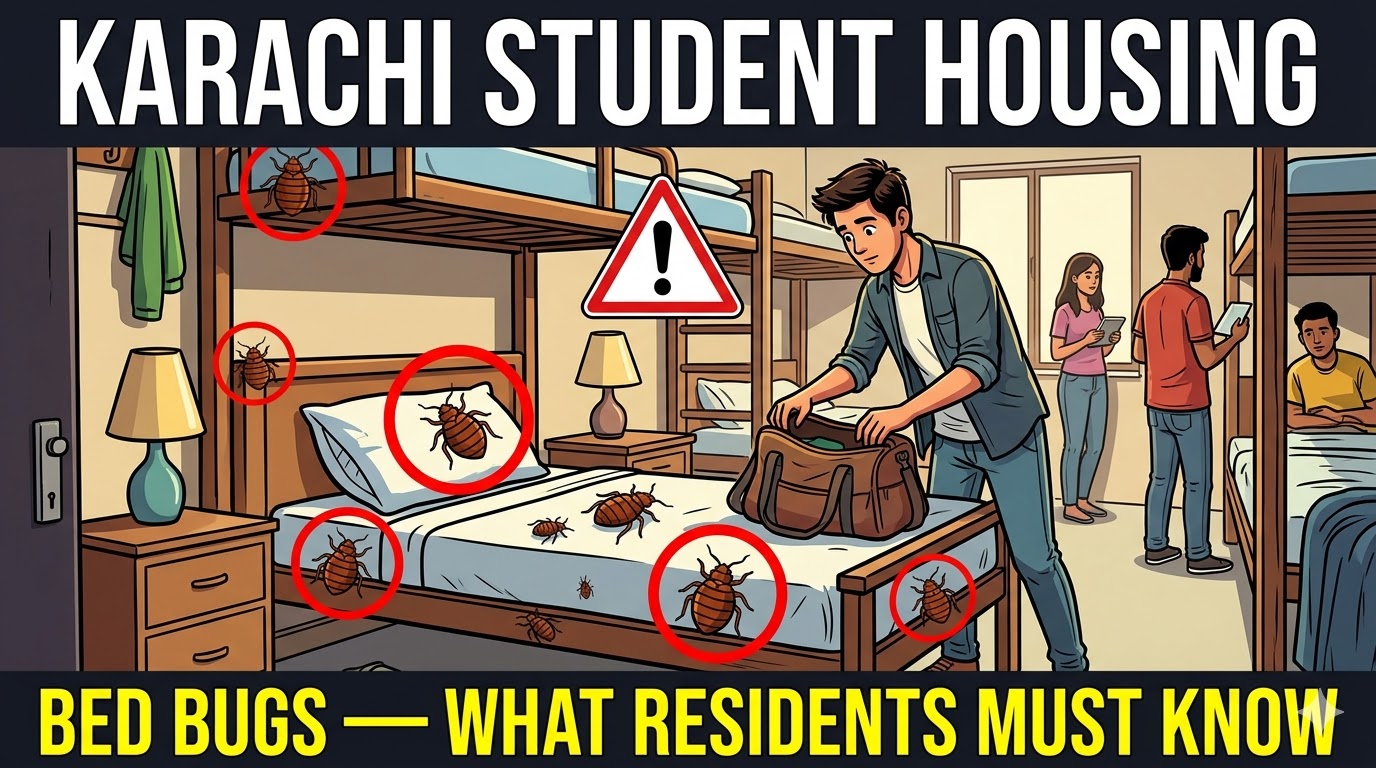
Karachi is one of the most densely populated cities in the world. Areas like Saddar, Landhi, Korangi, North Nazimabad, and SITE Town have apartment buildings where dozens of families share walls. Bed bugs travel through wall voids, electrical conduit pipes, and shared spaces. Even if you fumigate your flat perfectly, re-infestation from a neighbouring unit can happen within weeks if the building isn’t treated comprehensively.
Common Myths That Get Karachi Residents in Trouble
Beyond the heat myth, several other beliefs delay treatment and allow infestations to worsen:
- “Bed bugs only live in dirty homes.” False. Bed bugs are attracted to human blood, not filth. A spotless Defence or Clifton apartment is just as susceptible as any other home if someone brings in infested luggage or secondhand furniture.
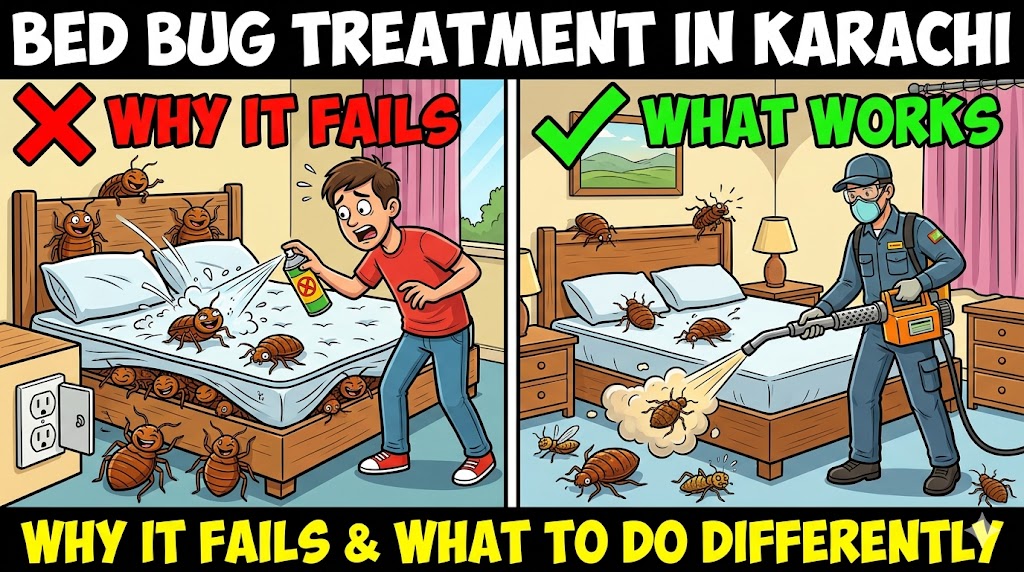
- “I’ll just wash everything in hot water.” Washing and drying on high heat kills bed bugs on fabrics — but it does nothing for bugs hiding in your bed frame, inside your walls, or behind skirting boards.
- “We sprayed — the problem is gone.” A single spray treatment from an unqualified team rarely eliminates a full infestation. Eggs are resistant to many common insecticides, and hatching nymphs will restart the cycle within 10–14 days.
- “It’s mosquito bites, not bed bugs.” This confusion is extremely common and costs weeks of action. Bed bug bites typically appear in lines or clusters on exposed skin, and the bugs themselves leave rust-coloured stains on bedding.
What Temperature Is Actually Needed to Kill Bed Bugs?
Professional heat treatments work by raising the temperature of an entire room or flat to above 50°C for several hours, ensuring heat penetrates every hiding spot. This is very different from Karachi’s ambient summer heat.
Similarly, chemical treatments must be applied by trained professionals who understand:
- Which products are effective against eggs as well as adults
- How to treat cracks, voids, and furniture joints — not just surfaces
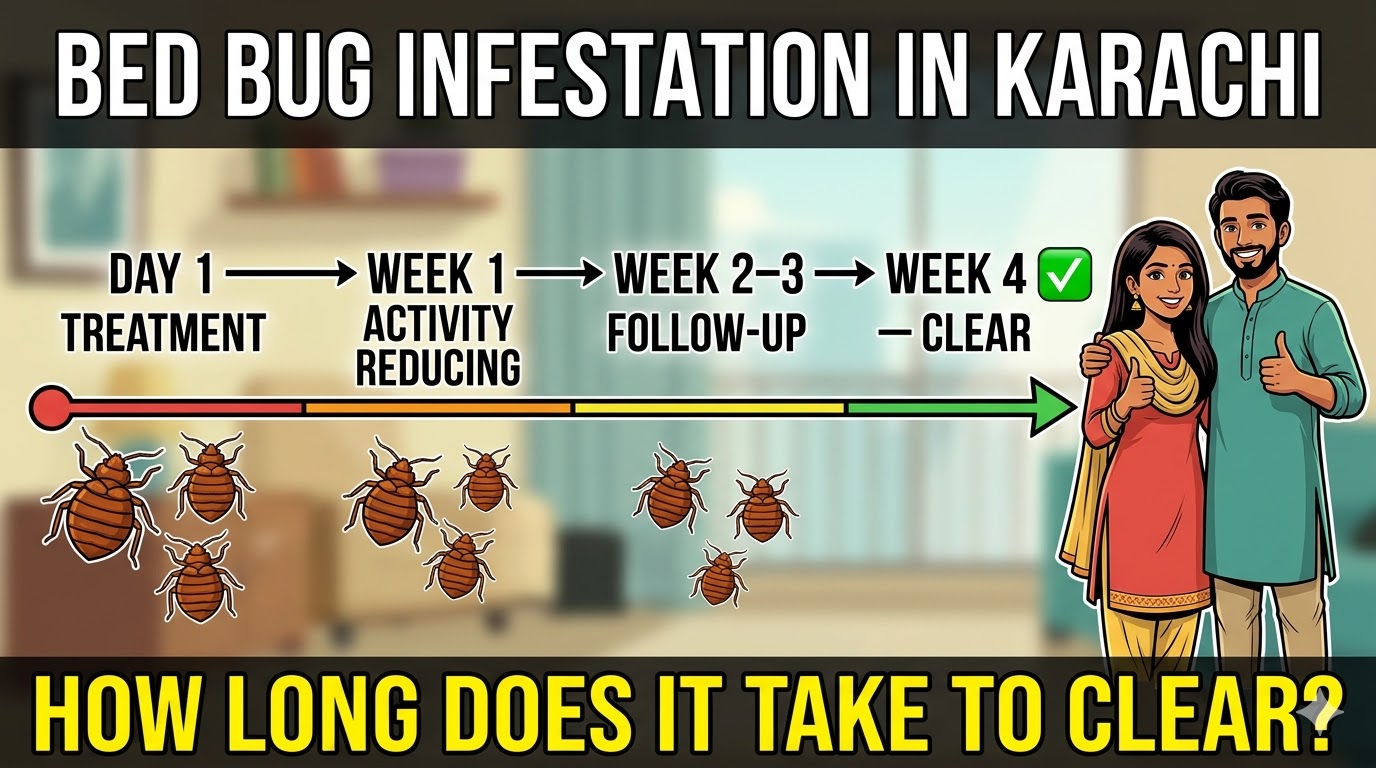
- The need for follow-up treatments to catch newly hatched nymphs
This is why professional bed bug fumigation in Karachi follows a structured, multi-visit protocol — not a single spray-and-leave approach.
Signs That Heat Has Not Solved Your Problem
If you’re hoping Karachi’s summer will handle the infestation, watch for these signs that it hasn’t:
- Continuing to wake up with new bites after hot weather
- Rust-coloured or dark brown spots on mattress seams, bed frames, or walls
- A sweet, musty smell in the bedroom (a sign of a large infestation)
- Tiny white eggs or pale yellow shed skins in mattress folds or furniture joints
- Live bugs — small, flat, reddish-brown ovals — visible at night
If you see any of these, do not wait for the weather to solve it. Every week of delay means exponentially more bugs.
What You Should Do Instead
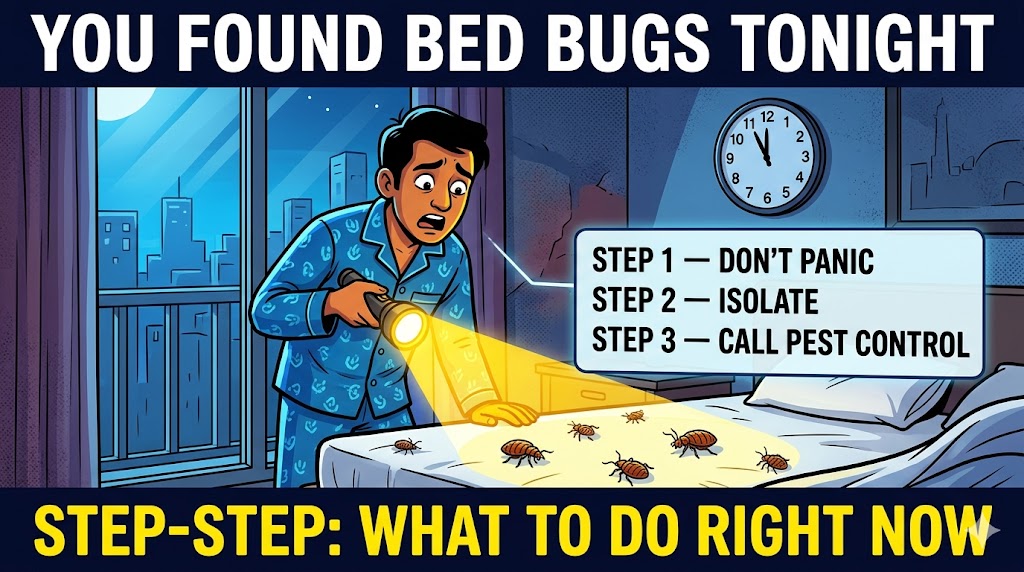
The moment you suspect bed bugs, act in a structured way:
- Confirm the infestation with a proper inspection — check mattress seams, bed frame joints, and skirting boards with a torch.
- Contact a professional pest control team immediately — the faster you act, the smaller and more manageable the infestation.
- Avoid moving furniture between rooms — this spreads bugs throughout your home.
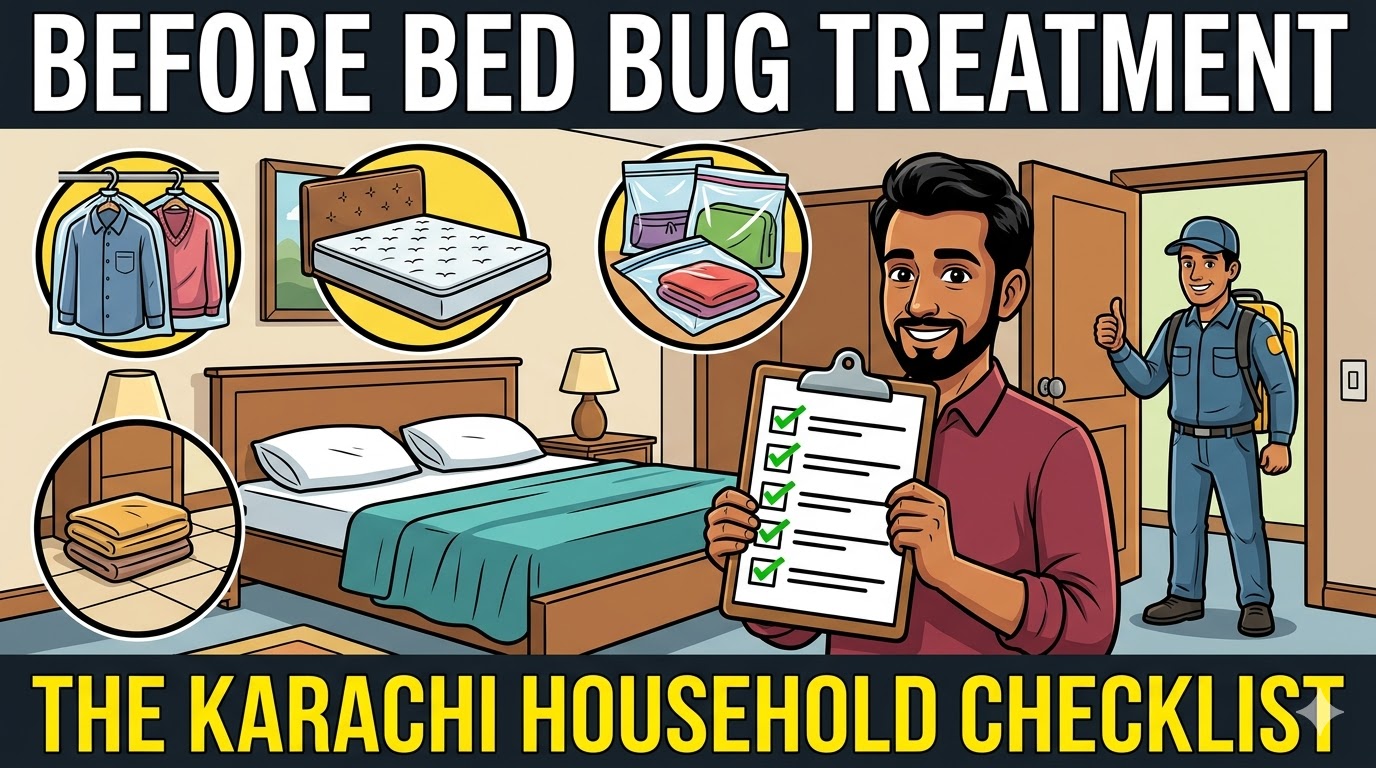
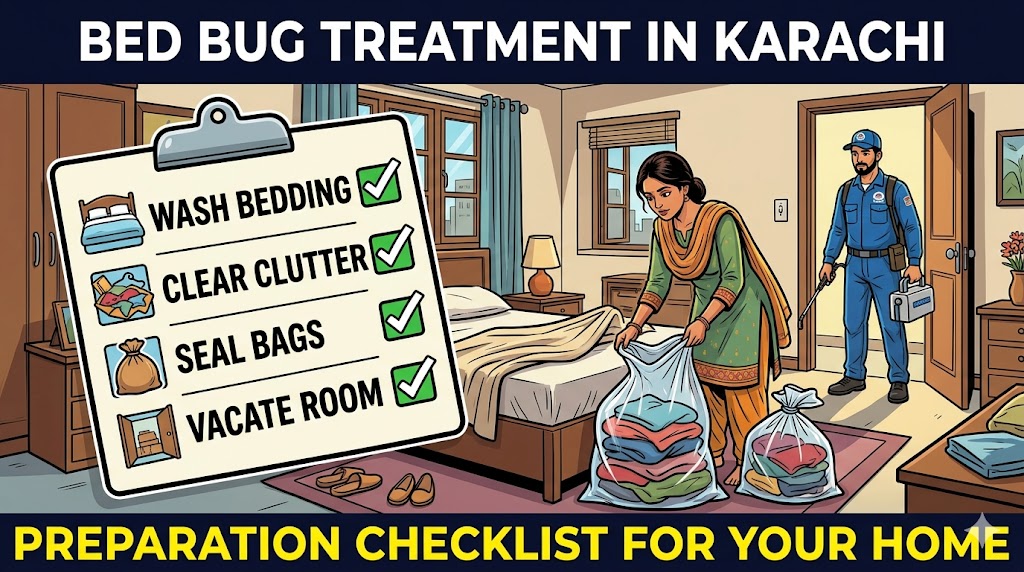
- Wash and dry all bedding on maximum heat and seal them in plastic bags until treatment is complete.
- Prepare your home for a professional treatment — move items away from walls, declutter storage areas.
Final Word: Karachi’s Heat Is Not Your Ally
It is a deeply frustrating truth, but Karachi’s climate — warm, humid, and consistent — is one of the reasons bed bug infestations here can grow so rapidly and persist for so long. The heat doesn’t kill them. It feeds them.
Taking action quickly, understanding the real biology of the pest, and working with qualified professionals is the only reliable path to eliminating a bed bug infestation in Karachi.
Book a Free Bed Bug Inspection Today
Don’t let a myth cost you months of disturbed sleep and a worsening infestation. Our team provides professional bed bug treatment services across Karachi — from Defence and Clifton to Gulshan-e-Iqbal, PECHS, and beyond. Contact us today to book your free inspection, get an honest assessment of your situation, and start sleeping soundly again.

Ahmad Karimi is a PPMA-registered pest management specialist and the lead technical consultant at Karachi Fumigation Services, where he has overseen field operations and treatment protocols since 2005. With over 20 years of hands-on experience treating residential, commercial, and industrial properties across Karachi — from DHA bungalows with structural termite infestations to Korangi factories requiring large-scale rodent exclusion — he brings direct field knowledge to every article published on this blog.
Ahmad has managed pest control programs for clients including Descon Engineering, Pakistan Tobacco Company, Saylani Welfare, and J. (Junaid Jamshed), and has issued hundreds of fumigation certificates for health authority compliance, import/export, and commercial licensing purposes. He holds active PPMA membership and works exclusively with WHO-approved chemicals in all field operations.
The content on this blog draws directly from two decades of Karachi-specific infestation data — seasonal pest patterns, neighbourhood-level risk factors, building-age vulnerabilities, and the regulatory requirements that Karachi businesses actually face. No recycled content from foreign pest control sites. Every article reflects conditions specific to Karachi’s climate, infrastructure, and compliance environment.
For treatment enquiries or technical questions, Ahmad’s team can be reached at 03463303875 or via the office at Trade Tower, Civil Lines, Karachi.