Author: Ahmad Karimi

  • How to Choose a Trustworthy Fumigation Company in Karachi: 6 Things to Check

    How to Choose a Trustworthy Fumigation Company in Karachi: 6 Things to Check

    Karachi’s climate — hot, humid, and prone to seasonal flooding — creates near-perfect breeding conditions for cockroaches, termites, rodents, bedbugs, and a dozen other pests that most homeowners dread. When an infestation finally pushes you to call a fumigation company, the sheer number of options can be overwhelming. From WhatsApp-only operators to well-established firms, the choices range from genuinely professional to dangerously substandard.

    Choosing the wrong company doesn’t just waste money — it can leave your home re-infested within weeks, expose your family to harmful chemicals used improperly, and void any future warranty claims. This guide breaks down the six most important things every Karachi homeowner should check before signing any agreement.

    Why the Stakes Are Higher in Karachi

    Pest control in Karachi isn’t the same as pest control in a temperate city. A few factors make this market uniquely risky:

    • Monsoon seasons drive pests — especially cockroaches and rodents — indoors every year without fail.
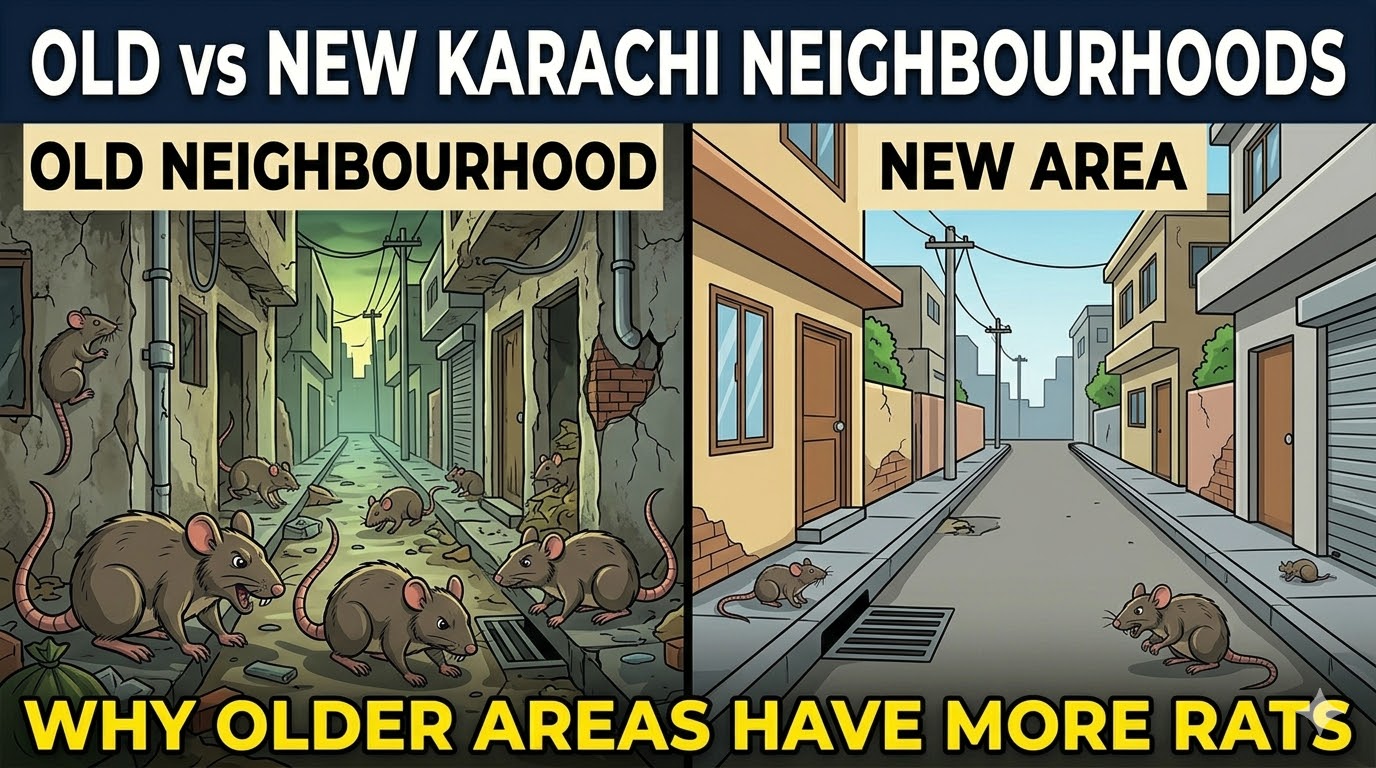
    • Old construction in areas like Saddar, Lyari, Orangi, and SITE Industrial Area means more entry points and more persistent infestations.
    • Dense urban housing in DHA, Gulshan-e-Iqbal, North Nazimabad, and Clifton creates rapid re-infestation if neighbouring properties aren’t treated.
    • An unregulated market means anyone can print a flyer and call themselves a pest control expert — with zero accountability.

    Given these realities, due diligence before hiring a fumigation company isn’t optional. It’s essential.

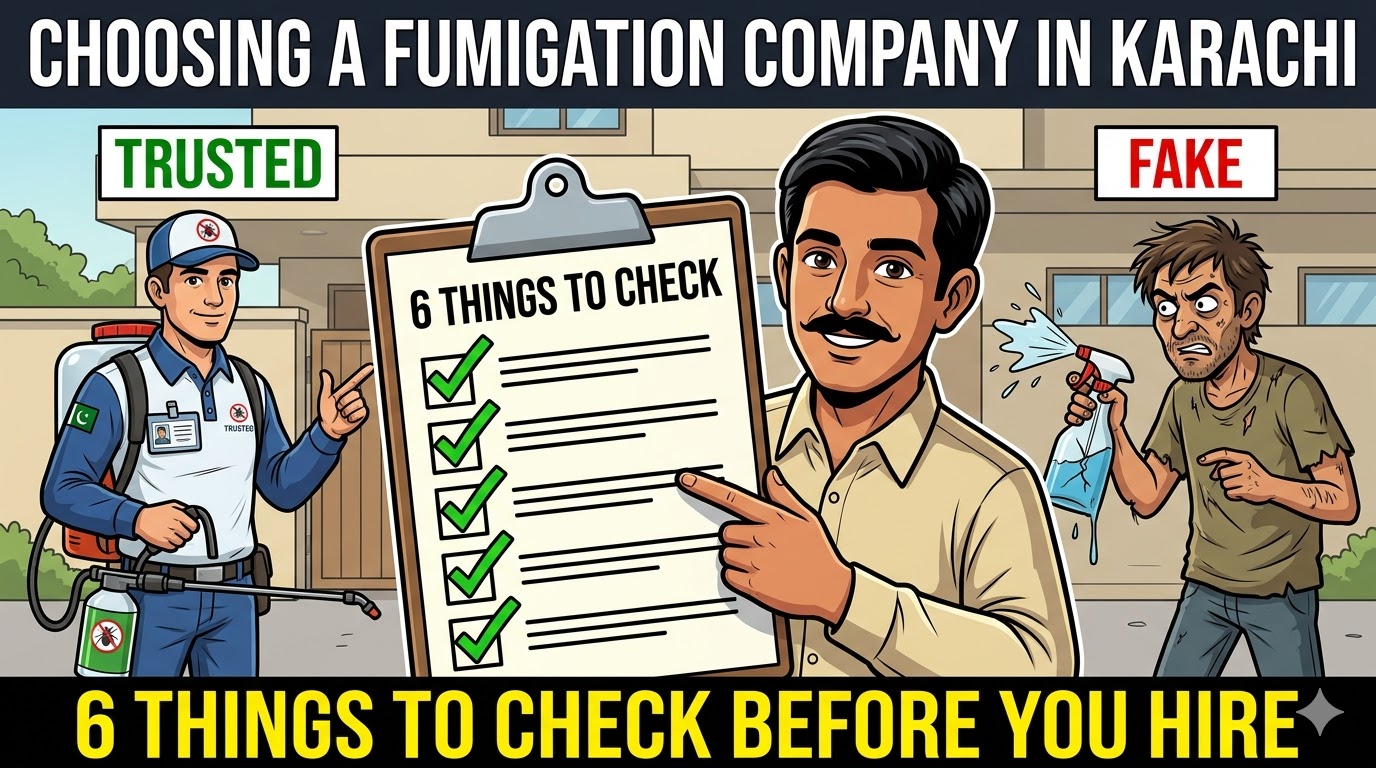
    6 Things to Check Before Hiring a Fumigation Company in Karachi

    1. Verify Licensing and Registration

    The very first question to ask any fumigation company is: “Are you registered?” Legitimate pest control operators in Pakistan should be registered with the relevant provincial or local authority. Ask to see their trade license, pest control certification, or any registration documents they hold.

    Why does this matter so much? Because fumigation involves the use of chemical compounds — including phosphine gas, pyrethroids, organophosphates, and rodenticides — that can be harmful if mishandled. An unregistered operator has no legal accountability. If something goes wrong — a chemical exposure incident, property damage, or a failed treatment — you have almost no legal recourse.

    A company that operates legally will also typically require its technicians to undergo formal training on chemical application, safety protocols, and equipment handling. Ask the company directly: “Who trained your technicians, and what certifications do they hold?” Their answer will tell you a lot.

    2. Ask About the Chemicals They Use

    Not all pesticides are equal — and not all of them are safe for use inside residential spaces, especially homes with children, elderly residents, or pets. A trustworthy fumigation company in Karachi will be transparent about:

    • The specific chemicals used for each type of pest
    • Whether those chemicals are WHO-approved or meet international safety standards
    • The required re-entry period (how long you must stay out of the premises after treatment)
    • What precautions family members should take before and after treatment

    Be cautious of any company that cannot name the products they use, uses vague terms like “strong chemicals,” or pressures you to stay out of the property for an unusually long or unusually short time. Both extremes suggest improper formulations.

    Also ask whether they use Integrated Pest Management (IPM) practices — a responsible approach that combines chemical treatment with non-chemical methods to minimize health risks and environmental impact.

    3. Check Reviews, Testimonials, and Word-of-Mouth

    In Karachi’s tight-knit residential communities — from the apartment complexes of Bahria Town to the older bungalows of P.E.C.H.S — word travels fast. Ask your neighbours, your building management, or local community WhatsApp groups about companies they’ve used.

    Online reviews on Google Maps can also be useful, but look beyond the star rating. Pay attention to:

    • Whether the company responds to negative reviews professionally
    • Reviews that mention re-infestation and how the company handled it
    • How recent the reviews are — a company may have changed ownership or quality
    • Whether positive reviews sound genuine or read like templates

    A legitimate company will also be happy to provide references from previous clients — particularly for larger jobs like termite treatment or full building fumigation. If a company refuses or deflects this request, treat that as a red flag.

    4. Demand a Written Inspection Report and Treatment Plan

    Before any fumigation work begins, a professional company should conduct a thorough on-site inspection of your property — at no charge. This inspection should identify:

    • The type of pest(s) involved
    • The severity and spread of the infestation
    • Specific problem areas (entry points, nesting zones, moisture sources)
    • Recommended treatment method(s) and the chemicals to be used

    Critically, this should be delivered to you in writing. A written treatment plan protects you as the homeowner. It sets clear expectations, creates an accountability trail, and ensures the company cannot later claim they “didn’t promise” a certain outcome.

    Be very cautious of any fumigation company that gives you a verbal quote over the phone based on nothing more than your address and the type of pest. No serious professional can accurately price a job without inspecting the property first.

    5. Understand What the Warranty Covers

    A warranty is one of the strongest indicators that a fumigation company stands behind its work. But not all warranties are equal — and Karachi homeowners need to read the fine print carefully.

    Ask these questions before you accept any warranty:

    • How long is the warranty period? (Standard for termite treatment is 1–5 years; general pest control warranties are typically 3–12 months)
    • What specific pests are covered?
    • Does the warranty include free re-treatment if the infestation returns?
    • What conditions can void the warranty? (e.g., renovation work, water seepage, denial of re-inspection access)
    • Is the warranty transferable if you rent or sell the property?

    A company offering a vague “satisfaction guarantee” without specifying terms is essentially offering nothing. Push for a written warranty document before any work begins.

    6. Compare Pricing — But Not Just the Number

    Price matters — but it should never be your only consideration. In Karachi’s pest control market, the cheapest option is almost always the cheapest for a reason: inferior chemicals, untrained staff, rushed treatments, or no follow-up service.

    That said, price transparency is a legitimate quality signal. A trustworthy company will break down their quote:  treatment type, area covered, number of visits, chemicals used, and warranty terms. If a company gives you a suspiciously low flat rate with no breakdown, ask questions.

    A reasonable comparison approach:

    • Get at least 2–3 written quotes for the same scope of work
    • Verify that each quote covers the same services and warranty terms
    • Ask each company what is NOT included in their price
    • Consider the total cost of ownership — a slightly pricier treatment with a strong warranty may cost far less than two cheap treatments that each fail

    The right question isn’t “Which company is cheapest?” — it’s “Which company offers the best value for a complete, lasting solution?”

    Red Flags to Watch For

    Beyond the six checks above, be alert to these warning signs in any fumigation company:

    • No physical address: WhatsApp-only or mobile-only operators have no accountability if something goes wrong.
    • Pressure tactics: “This offer is only valid today” or “You need immediate treatment or it’ll spread” — these are sales tactics, not professional assessments.
    • Overpromising: Anyone who guarantees 100% permanent elimination of all pests with a single treatment is not being honest.
    • No pre-treatment prep instructions: A professional company will give you specific instructions for food storage, furniture moving, and family evacuation before treatment begins.
    • Cash-only, no receipt: Legitimate businesses issue proper invoices. A company that insists on cash with no paperwork is avoiding accountability.

    What a Professional Fumigation Service in Karachi Should Look Like

    To summarize what you should expect from a trustworthy provider:

    • A thorough on-site inspection before any quote is given
    • A written treatment plan with chemical details
    • Trained and equipped technicians who follow safety protocols
    • Clear instructions for homeowners before and after treatment
    • A formal warranty in writing
    • Follow-up visits or check-ins as part of the package

    If you’ve been searching for reliable fumigation services in Karachi that meet all of these standards, take time to vet companies carefully using the checklist above before making your decision.

    Final Thoughts: Protect Your Home the Right Way

    Pest infestations in Karachi don’t resolve themselves — they escalate. Cockroaches multiply rapidly. Termites silently destroy wooden structures, furniture, and even wiring over months. Bedbugs spread from room to room. Every week you wait, or every ineffective treatment you accept, makes the problem harder and more expensive to resolve.

    Choosing a fumigation company is not a decision to rush or base purely on price. Use the six criteria in this guide to shortlist companies, ask tough questions, and demand written documentation before committing.

    Your home is one of your most significant assets. Protecting it from pests requires a partner who is qualified, transparent, and accountable — not just the first person who answers your call.

    Book a Free Home Inspection Today

    Not sure where to start? We offer a free, no-obligation inspection for Karachi homeowners. Our trained technicians will assess your property, identify pest risks, and give you a detailed written report — completely free of charge.

    Call or WhatsApp us today to schedule your free inspection. Don’t wait until a minor pest problem becomes a major infestation. The sooner you act, the easier — and more affordable — the solution.

  • What a Fumigation Warranty in Karachi Actually Covers — and What It Doesn’t

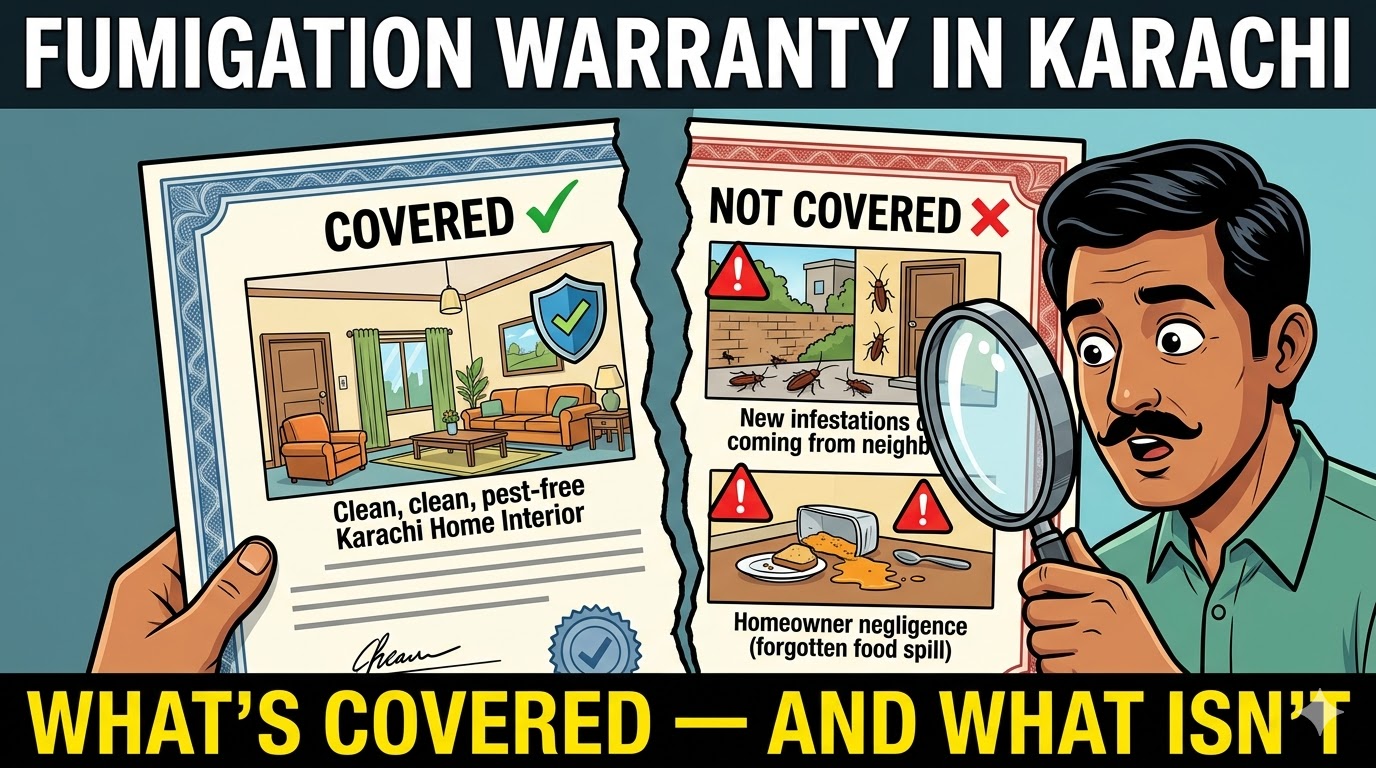
    What a Fumigation Warranty in Karachi Actually Covers — and What It Doesn’t

    You’ve hired a fumigation company, paid the bill, and they’ve handed you a warranty certificate. You feel protected. But do you know what that warranty actually covers — and more importantly, what it doesn’t?

    For many Karachi homeowners, a fumigation warranty is a vague document that provides a false sense of security until the moment it’s needed. Then, when the cockroaches return or the termites resurface, the company’s response reveals just how limited the warranty actually was.

    This guide cuts through the ambiguity. We’ll explain what a legitimate fumigation warranty should cover, what the typical exclusions look like, and what questions every Karachi homeowner should ask before accepting any warranty document.

    Why Fumigation Warranties Matter in Karachi Specifically

    Karachi’s environment makes pest re-infestation a persistent reality. Seasonal monsoons drive cockroaches, rodents, and ants indoors. The city’s older housing stock — particularly in Saddar, Lyari, Garden, P.E.C.H.S, and North Nazimabad — has more entry points and hiding places than newer construction. Dense apartment living in areas like Gulshan-e-Iqbal, Clifton, and DHA means that even after your unit is treated, neighbouring units can reintroduce pests.

    This is why a warranty isn’t just a formality — it’s a practical necessity. A good warranty acknowledges the reality of Karachi’s pest environment and commits the company to stand behind its work when re-infestation occurs. A weak warranty quietly excuses the company from almost every realistic scenario.

    Understanding the difference before you sign is the entire point.

    What a Legitimate Fumigation Warranty Should Cover

    A proper fumigation warranty in Karachi should include the following elements. If any of these are absent, you should ask why — and consider whether that company’s warranty is worth the paper it’s printed on.

    1. Specified Pest Coverage

    The warranty should explicitly name the pests it covers. Not “all pests” — but specific types: cockroaches, termites, bedbugs, rodents, ants, mosquitoes, or whatever was identified during the inspection and treated.

    Vague warranties that say “pest control” without specification are a red flag. If a new type of pest appears after treatment, you need to know whether it falls within your warranty or requires a separate service agreement.

    2. Defined Warranty Period

    Every warranty should have a clear start date (typically the date of treatment) and end date. Standard warranty periods in Karachi’s professional pest control market vary by pest type:

    Pest TypeTypical Warranty PeriodNotes
    Termites (subterranean)1–5 yearsChemical soil barrier treatments carry longer warranties
    Cockroaches3–6 monthsGel baiting programs often have rolling warranties
    Bedbugs3–6 monthsRequires multiple treatment sessions
    Rodents1–3 monthsOften tied to ongoing monitoring contracts
    General pests (ants, mosquitoes)1–3 monthsSeasonal treatments may have shorter coverage

    Any warranty period significantly shorter than the ranges above — particularly for termites — is worth questioning.

    3. Free Re-Treatment Commitment

    The core value of any fumigation warranty is this: if the infestation returns within the warranty period, the company will re-treat your property at no additional cost.

    This should be stated explicitly. Vague language like “we will address the issue” or “additional support may be available” are not the same as a clear, written commitment to free re-treatment. Push for the specific words: no additional charge, re-treatment included, covered under warranty.

    4. Coverage Area

    The warranty should specify which areas of the property it covers. Does it apply to the entire premises — all rooms, storage areas, balconies, and utility spaces? Or only the areas that were treated on the day of service?

    In older Karachi properties with multiple entry points — particularly ground-floor apartments or bungalows near storm drains — a coverage area limitation can render a warranty almost useless. Make sure you know exactly what’s included.

    5. Contact and Claim Process

    The warranty document should include clear contact information and a straightforward process for making a claim. How do you report a re-infestation? Is there a response time commitment? Who authorises the re-treatment?

    A professional company will make this process simple. A company that makes warranty claims difficult — requiring multiple escalations, imposing excessive documentation requirements, or simply not answering — is one you should have avoided in the first place.

    What a Fumigation Warranty Typically Does NOT Cover

    This is where most homeowners are surprised. Even legitimate, professionally written warranties contain exclusions. Knowing these exclusions upfront prevents unpleasant disputes later.

    1. New Pest Species Not Covered by the Original Treatment

    If your warranty covered cockroaches and bedbugs, and three months later you discover a rodent infestation, that is almost certainly not covered. Warranties apply to the specific pests treated — not to all future pest issues.

    This is reasonable from the company’s perspective, but homeowners should understand it clearly. A new infestation of a different pest species will require a new service agreement and fee.

    2. Infestations Caused by External or Structural Factors

    Most warranties exclude re-infestation that can be attributed to conditions that were not present — or not disclosed — at the time of treatment. Common exclusions include:

    • Water seepage or damp walls that create new harborage conditions
    • Structural changes or renovation work that opens new entry points
    • New furniture, goods, or materials introduced from infested sources
    • Infestations entering from adjacent units in a shared building

    This last point is particularly relevant in Karachi’s apartment culture. If you live in a high-rise in Clifton or a multi-unit building in Gulshan, pests from untreated neighbouring flats can re-enter your unit — and your warranty will typically not cover that scenario unless the company offers a building-wide treatment program.

    3. Denial of Inspection or Access

    Companies include a standard clause: the warranty is void if you deny them access for re-inspection or follow-up visits. This is reasonable — they cannot assess or remediate a problem they cannot inspect.

    However, this clause can sometimes be used against homeowners if the company makes access requests unreasonably difficult or expensive. Ensure that the warranty specifies how and when re-inspection visits will be scheduled, and that no additional charges are imposed for warranty inspections.

    4. Post-Treatment Failure to Follow Instructions

    Professional fumigation companies provide specific post-treatment instructions — re-entry times, cleaning protocols, food safety guidelines, and follow-up precautions. If a homeowner does not follow these instructions, the company may argue that treatment efficacy was compromised and the warranty is void.

    This is another reason why pre-treatment communication matters. Ask for written post-treatment instructions, follow them, and keep a record that you did.

    5. Property Damage or Consequential Losses

    A fumigation warranty covers re-treatment — not property damage. If termites have already damaged your wooden flooring, furniture, or structural elements, or if a cockroach infestation has resulted in contaminated food supplies, the warranty does not compensate you for those losses.

    For significant termite damage specifically, homeowners in Karachi should understand that treatment warranties cover future pest activity — not the repair of damage already done. Remediation of structural damage is a separate — and often costly — process that falls entirely outside the scope of pest control warranties.

    Red Flags in Fumigation Warranty Documents

    Watch for these warning signs in any warranty offered by a Karachi fumigation company:

    • No written warranty at all: Verbal guarantees are worthless. If they won’t put it in writing, the guarantee means nothing.
    • Blanket exclusions: “Warranty void in case of re-infestation from any external source” — in Karachi’s dense urban environment, this exclusion covers virtually every realistic scenario.
    • Excessively short warranty periods: A 2-week warranty on cockroach treatment is not meaningful. Any company offering such a short window has no confidence in their own work.
    • Uncapped re-inspection fees: If the warranty requires you to pay for inspection visits before re-treatment is authorised, the warranty value is significantly diminished.
    • No specific pest coverage: “General pest control warranty” without named pests can be interpreted to cover almost nothing when challenged.
    • No claims process: If the document doesn’t explain how to make a claim, that’s deliberate. It makes claims harder to pursue.

    Questions to Ask Before Accepting Any Fumigation Warranty

    Use this list when evaluating any fumigation company in Karachi:

    • Which specific pests are covered under this warranty?
    • What is the exact start and end date of coverage?
    • If re-infestation occurs, will re-treatment be provided at no additional cost?
    • Are there any conditions or actions that could void the warranty?
    • Does the warranty cover the entire property or only treated areas?
    • What is the process for making a warranty claim? How quickly will you respond?
    • Are follow-up inspection visits included, and will they incur any charges?
    • Is this warranty transferable if I rent or sell the property?

    Any professional provider of fumigation services in Karachi should be able to answer every one of these questions clearly and without hesitation. Evasive or vague answers to any of them should give you pause.

    How to Make the Most of Your Fumigation Warranty

    Even with a good warranty in place, a few steps on your end will ensure you’re fully protected:

    • Read the document before signing. Don’t assume the warranty covers everything. Read every clause and ask for clarification on anything unclear.
    • Keep your copy safely. Store the warranty document, original invoice, and treatment report together — you’ll need them if you ever make a claim.
    • Follow all post-treatment instructions. Documented compliance with the company’s guidelines protects you if they ever try to void the warranty.
    • Report re-infestation promptly. Don’t wait months before contacting the company. Early reporting prevents the problem from escalating and demonstrates good faith.
    • Document everything. Photograph evidence of re-infestation, note dates, and keep records of all communications with the company.

    Final Thoughts: A Warranty Is Only as Good as the Company Behind It

    A written warranty is a meaningful protection — but only when it comes from a company that actually intends to honour it. A piece of paper from an unregistered, fly-by-night operator carries no real weight.

    The best protection a Karachi homeowner can have is choosing a reputable, professional fumigation company from the start: one that uses approved chemicals, employs trained technicians, provides a thorough treatment, and issues a clear, enforceable written warranty.

    When you understand exactly what your warranty covers — and what it doesn’t — you can also make informed decisions about additional precautions: whether to negotiate better warranty terms, consider a building-wide treatment, or schedule periodic follow-up visits proactively.

    Pest control done right is an investment in the safety, comfort, and value of your home. A warranty done right is the assurance that investment is protected.

    Get a Free Inspection and a Warranty You Can Trust

    Not sure what your home needs — or whether your current fumigation warranty actually protects you? Our team offers a free, no-obligation on-site inspection for Karachi homeowners. We’ll assess your infestation, recommend the right treatment, and walk you through exactly what our warranty covers before you commit to anything.

    Book your free inspection today. Protect your home with a fumigation service that stands behind its work — in writing, and in practice.

  • After Mosquito Treatment in Karachi: How Long Protection Lasts and What to Expect

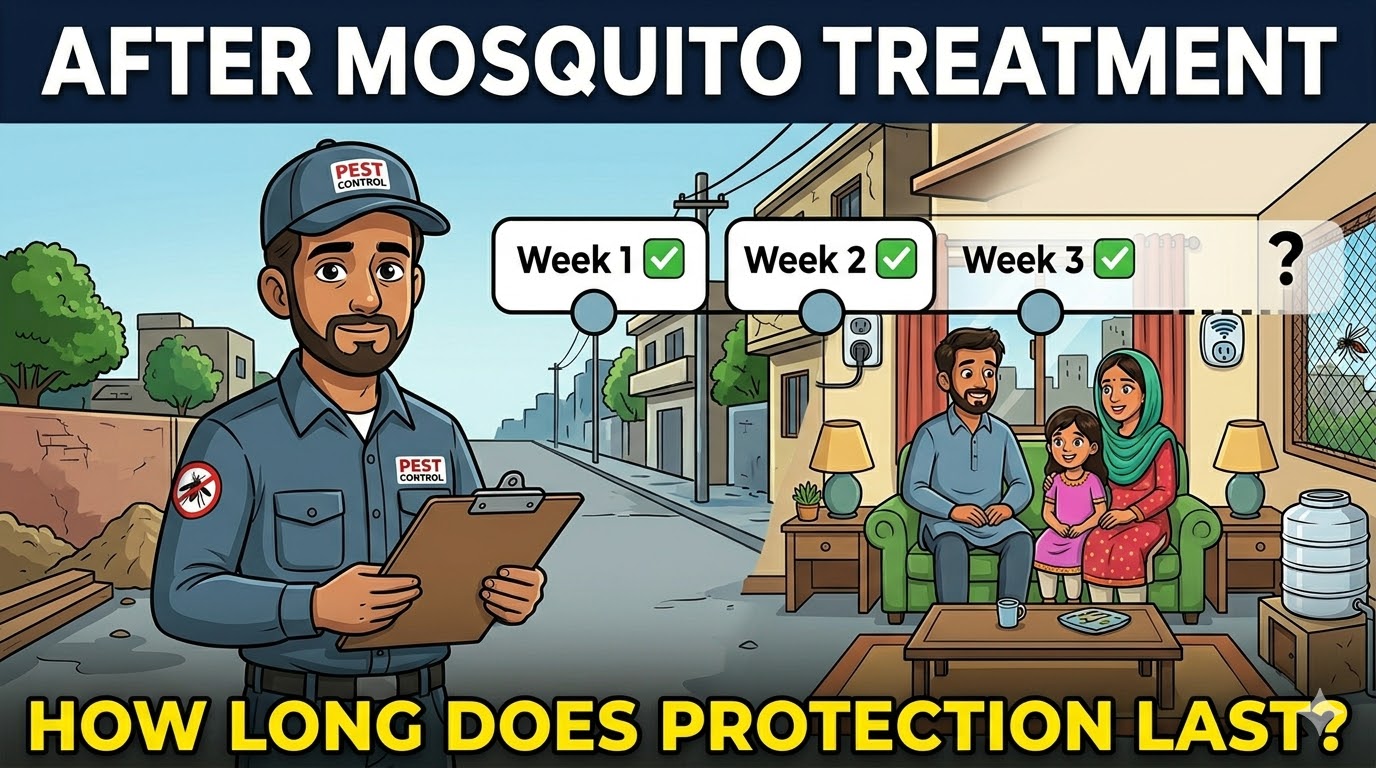
    After Mosquito Treatment in Karachi: How Long Protection Lasts and What to Expect

    The Question Every Treated Homeowner Asks: The technicians have completed their work. The equipment is packed away. Your home smells faintly of treatment product. You are wondering: how long will this last? Do we need to do anything differently? When should we call again?

    These are the right questions to ask — and the answers matter, because misunderstanding post-treatment expectations leads to either complacency (assuming you are permanently protected) or unnecessary anxiety (calling for retreatment before it is needed). This guide gives you a complete picture of what to expect after professional mosquito treatment in a Karachi home.

    Understanding What Was Treated: The Three Layers of Protection

    Professional mosquito control in Karachi typically addresses three interconnected problems. The duration of protection differs for each.

    Layer 1: Adult Mosquito Knockdown (ULV Fogging / Space Spray)

    The most immediately noticeable result of professional treatment is the rapid reduction of adult mosquitoes. ULV (ultra-low-volume) fogging or thermal fogging generates fine insecticide droplets that remain airborne for 20 to 30 minutes, reaching into crevices, under furniture, behind curtains, and inside wardrobes where mosquitoes rest.

    Expected result: A very significant reduction — 80 to 95 percent — in adult mosquito activity within 2 to 4 hours of treatment.

    Duration: The knockdown effect lasts 24 to 72 hours. This is not a residual treatment — it rapidly kills the mosquitoes present at the time of treatment but does not prevent new mosquitoes from entering or emerging from untreated breeding sites.

    What you will notice: Reduced mosquito activity almost immediately. Some dead mosquitoes may be visible on floors and surfaces for the first day — this is normal and expected.

    Layer 2: Residual Surface Treatment

    Residual insecticide application to wall surfaces, skirtings, behind appliances, under furniture, and inside drainage covers creates a treated zone that remains effective for a sustained period. When mosquitoes land on treated surfaces — even those that were not present during the initial treatment — they absorb a lethal dose.

    Expected result: Continued mosquito mortality for weeks after treatment, even as new adult mosquitoes emerge from breeding sites.

    Duration: Typically 4 to 8 weeks under Karachi conditions, depending on:

    • Temperature and humidity — Karachi’s summer heat accelerates breakdown of surface insecticides
    • Surface type — porous surfaces (bare concrete, untreated wood) absorb insecticide faster than painted or tiled surfaces
    • Cleaning activity — mopping floors or wiping walls with detergent removes residual deposits and should be avoided in treated areas

    What you will notice: Gradual reduction in residual effectiveness over 4 to 8 weeks. Your pest control provider should advise when retreatment is recommended.

    Layer 3: Larvicide Treatment

    If your water tanks, drains, or other water bodies were treated with larvicide (typically BTI or temephos), the duration of protection depends on the specific product used.

    • BTI-based granules or tablets: Effective for 30 days in most water temperatures
    • Temephos (Abate) sand granules: Effective for 6 to 12 weeks in cooler water, less in Karachi’s warm conditions

    Regular reapplication of larvicide — especially to water tanks during monsoon season — is one of the most cost-effective ongoing dengue prevention measures available.

    The First 24 Hours After Treatment: What to Do

    The period immediately following treatment requires some specific actions to maximize effectiveness and ensure household safety.

    During and Immediately After Treatment

    • Leave all treated areas for 1 to 2 hours after indoor treatment is completed
    • Keep windows and doors closed for the first 30 to 60 minutes after space spray treatment to allow the insecticide to remain airborne and penetrate resting sites
    • Keep children and pets out of treated areas until dry — typically 1 to 2 hours for surface treatments
    • Remove or cover food and cooking utensils before treatment begins — if not already done by the technician
    • Ensure fish tanks are covered and air pumps turned off during fogging — some insecticides are toxic to aquatic organisms

    First 48 Hours

    • Avoid mopping floors with detergent in treated areas for at least 48 hours — this removes residual deposits
    • Do not wipe down treated wall surfaces
    • Continue normal household ventilation after the initial 2-hour period
    • Some dead mosquitoes appearing on floors and surfaces in the first 24 hours is evidence the treatment is working

    What Is Normal After Treatment — And What Is Not

    Normal

    • Dead mosquitoes on floors in the first 24 to 48 hours
    • Slightly reduced mosquito activity within hours
    • Faint chemical smell in treated areas for 24 to 48 hours
    • Occasional mosquito sighting after 48 hours — not all mosquitoes are killed simultaneously, and new ones may enter from external sources

    Not Normal — Call Your Provider

    • No reduction in mosquito activity at all after 48 hours
    • Strong, persistent chemical smell beyond 72 hours that is causing discomfort
    • Skin irritation or respiratory symptoms following treatment that were not pre-existing
    • Visible insecticide residue on food preparation surfaces (this should not occur with proper treatment)

    Why Mosquitoes Return After Treatment

    One of the most common concerns Karachi homeowners express after treatment is: ‘We still see some mosquitoes. Did the treatment fail?’ Almost always, the answer is no — and understanding why helps set appropriate expectations.

    Mosquitoes return after treatment for several entirely normal reasons:

    • Eggs and pupae in water sources at the time of treatment are not affected by adult mosquito insecticides — they hatch and emerge as adults days later. This is why larvicide treatment of water bodies is essential alongside adult treatment.
    • Mosquitoes from untreated external sources — neighbors’ gardens, nearby open drains, construction sites — continuously re-enter your home. This is a containment challenge, not a treatment failure.
    • Residual treatment wears off progressively over 4 to 8 weeks. Mosquitoes that enter late in the treatment cycle may survive longer.

    The appropriate response to ongoing mosquito presence is not immediate retreatment — it is an assessment of remaining breeding sites and a scheduled retreatment based on the post-treatment timeline.

    Recommended Post-Treatment Schedule for Karachi

    Based on Karachi’s dengue season and climate conditions, an optimal mosquito control schedule for high-risk periods looks like this:

    Pre-Monsoon (May to June)

    First treatment of the year. Focus: comprehensive adult knockdown, surface residual application, and larvicide for all water bodies. This sets baseline protection before mosquito populations begin their seasonal surge.

    Peak Monsoon (July to August)

    Second treatment at the 6 to 8 week mark from initial treatment, coinciding with the highest-risk period. Reinforce residual surface treatment and reapply larvicide. If neighboring areas have reported dengue cases, consider an earlier retreatment.

    Late Monsoon / Post-Monsoon (September to October)

    Final seasonal treatment. This addresses the residual breeding surge that follows monsoon as water from rain events slowly evaporates or drains. This is the treatment most frequently skipped — and the one that leaves households exposed during the September-October second peak.

    Outside of dengue season — November through April — treatment frequency can reduce to quarterly unless persistent mosquito problems are identified.

    How to Maintain Protection Between Treatments

    Professional treatment provides a strong protective foundation. Household maintenance practices between treatments determine how effectively that foundation holds:

    • Continue weekly source reduction — emptying and scrubbing water containers regardless of treatment status
    • Check and clean AC drip trays monthly
    • Monitor water tank lid condition after rains that may shift or damage covers
    • Avoid creating new water accumulation on balconies, in plant trays, or through leaking fixtures
    • Report and address any new drainage issues in or around your compound promptly

    Homes that maintain strong source reduction practices between professional treatments consistently report longer-lasting effectiveness from each service — because fewer breeding sites mean fewer new adult mosquitoes, regardless of residual protection levels.

    Questions to Ask Your Pest Control Provider After Treatment

    A professional provider should be able to answer the following clearly and specifically:

    • What specific products were used and what are their active ingredients?
    • Which areas were treated with residual insecticide and which with space spray?
    • Were any water bodies treated with larvicide, and if so, which product and at what concentration?
    • When is the next recommended treatment based on today’s application?
    • Are there any specific post-treatment instructions for this property?

    If a provider cannot answer these questions clearly, that is a concern. Reputable mosquito control services in Karachi document their treatments and provide clear guidance on expectations and follow-up scheduling.

    Professional mosquito control services in Karachi should come with full transparency on products used, coverage areas, and protection timelines — not just a spray-and-leave service.

    Conclusion

    Post-treatment protection in a Karachi home is most effective when you understand what each treatment component does, how long each lasts, and what your role is in maintaining effectiveness between services. The initial adult knockdown gives immediate relief. The residual surface treatment provides ongoing protection for weeks. The larvicide breaks the breeding cycle at its source.

    Together, these create a meaningful window of protection — but only if supported by proper household practices and timely retreatment. Think of professional mosquito control not as a one-time solution but as a regular part of your home’s health maintenance cycle during Karachi’s dengue season.

    📞 Book a Free Inspection Today: Whether you have had treatment before or are considering it for the first time, our team at Karachi Fumigation Services will assess your current situation, explain exactly what treatment your home needs, and set up a seasonal protection schedule that keeps your family safe from dengue all year long. Book your free inspection now — it costs nothing and could protect everything.

  • Protecting Your Family From Dengue in Karachi: What Actually Works (And What’s a Myth)

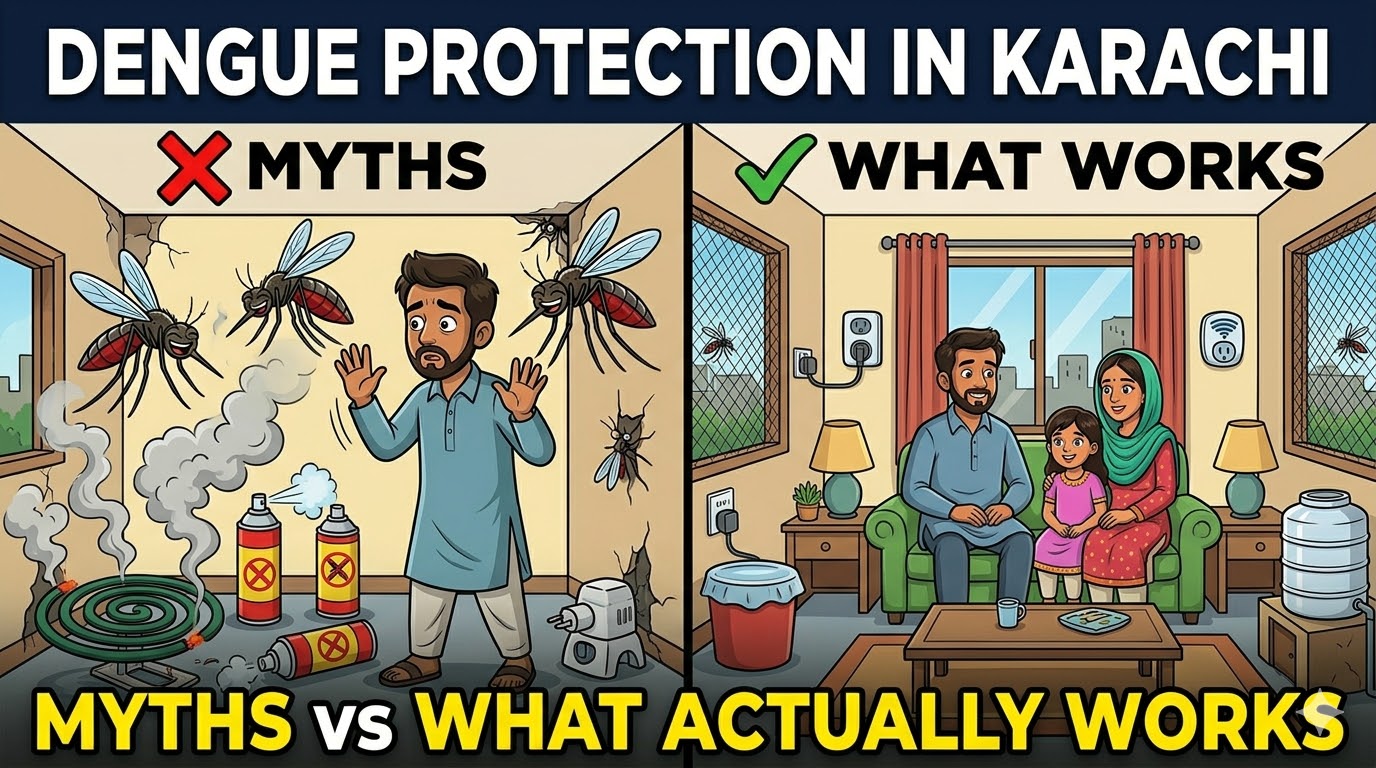
    Protecting Your Family From Dengue in Karachi: What Actually Works (And What’s a Myth)

    Every monsoon season in Karachi, the same cycle plays out. Dengue cases rise, health warnings appear on news channels, and families scramble to act. Well-meaning advice floods social media, family WhatsApp groups, and neighborhood conversations. Some of this advice is genuinely helpful. A significant portion is ineffective, outdated, or actively harmful.

    For a Karachi homeowner trying to protect their family, separating evidence-based dengue prevention from popular myths is not a minor inconvenience — it determines whether your actions actually reduce risk or simply consume money and effort while leaving your family exposed.

    This guide provides a clear, honest assessment of what works, what does not, and why.

    What Actually Works: Evidence-Based Dengue Prevention

    1. Weekly Source Reduction (Eliminating Standing Water)

    This is the single most effective dengue prevention measure available to any Karachi household — and it costs nothing. The Aedes aegypti mosquito completes its breeding cycle in standing water in five to ten days. Weekly disruption of all standing water breaks the cycle before adult mosquitoes emerge.

    What this requires:

    • Emptying and scrubbing (not just refilling) all water containers every 5–7 days
    • Checking and clearing roof gutters, particularly after rain
    • Removing or inverting all unused containers from rooftops, balconies, and compounds
    • Changing water in flower vases every three to four days
    • Ensuring AC drip trays and refrigerator trays do not accumulate water

    The scrubbing step is critical and often missed. Aedes mosquitoes lay eggs on container walls just above the waterline. Simply emptying and refilling does not remove these eggs. The container wall must be physically scrubbed to dislodge the strongly adhesive eggs.

    2. Water Tank Sealing and Treatment

    Overhead and underground water tanks with properly fitted covers are far less likely to become breeding sites. Mesh-screened overflow and inlet pipes prevent mosquito entry even when tanks must remain open during filling. BTI (Bacillus thuringiensis israelensis) larvicide, which is safe for drinking water, eliminates larvae in tanks that cannot be emptied.

    3. Window and Door Screening

    Properly fitted, intact window and door screens are one of the most cost-effective long-term dengue prevention investments a Karachi homeowner can make. They form a physical barrier against all flying insects — not just mosquitoes. For maximum effectiveness, screens must be:

    • Fine mesh — 1.2mm openings or smaller
    • Without tears or gaps along frame edges
    • Fitted to all windows and doors used for ventilation, including kitchen exhausts

    In older Karachi housing — common in Nazimabad, North Karachi, Liaquatabad, and similar areas — window screens are often absent or damaged. Retrofitting these is a one-time investment that provides years of protection.

    4. DEET-Based Personal Repellents

    For individuals — particularly children — who spend time outdoors during Aedes peak biting hours (early morning to mid-afternoon), DEET-based skin repellents provide reliable personal protection. Repellents containing 20 to 30 percent DEET provide six or more hours of protection. For children, formulations specifically tested for pediatric use are available at pharmacies across Karachi.

    5. Professional Mosquito Control Treatments

    For homes in high-risk areas of Karachi — or during active dengue outbreaks in your neighborhood — professional mosquito control provides a level of protection that household measures cannot match. Professional treatments include residual surface application, larvicide treatment of water bodies, and ULV fogging that reaches mosquito resting sites inaccessible to consumer products.

    Scheduling professional mosquito control in Karachi before the monsoon begins — and reinforcing treatment mid-season — is the most proactive approach for families who want genuine protection rather than a false sense of security.

    Common Dengue Myths in Karachi: What Does Not Work

    Myth 1: ‘Burning Neem Leaves or Camphor Repels Dengue Mosquitoes’

    The belief that burning neem leaves, camphor, or specific incense wards off dengue mosquitoes is widespread across Karachi. There is no peer-reviewed evidence that these methods provide meaningful protection against Aedes aegypti. While some plant-derived compounds have mild repellent properties, they are not concentrated or sustained enough to protect a room, let alone a home. Relying on neem or camphor instead of proven methods is genuinely dangerous.

    Myth 2: ‘Mosquito Coils Protect the Whole Room’

    A single mosquito coil creates a small, localized zone of deterrence — roughly 1 to 2 meters in radius. In a ceiling-fan-ventilated Karachi bedroom, the smoke disperses almost immediately. Coils do not protect the corners of the room, under the bed, or behind furniture — precisely where Aedes mosquitoes rest. They provide minimal comfort, not comprehensive protection.

    Myth 3: ‘Mosquitoes Only Bite at Night — Closing Windows After Dark Is Enough’

    This is perhaps the most dangerous myth in the context of dengue. The Aedes aegypti mosquito is primarily a daytime biter. Its two peak activity windows are shortly after sunrise (roughly 6 to 8 AM) and in the late afternoon (4 to 6 PM). Closing windows at night protects you from other mosquito species but does almost nothing against the primary dengue vector.

    Myth 4: ‘Municipal Fogging Has Protected Our Area’

    Municipal fogging operations, when they occur, use thermal foggers to suppress adult mosquito populations in public spaces. They are a valuable supplementary measure. However, they do not penetrate inside homes, treat water bodies, or eliminate larvae. They provide short-term, outdoor adult mosquito reduction. The assumption that municipal fogging protects your home’s interior is incorrect.

    Myth 5: ‘Once You’ve Had Dengue, You’re Immune’

    This is a particularly dangerous half-truth. There are four serotypes of dengue virus. Having dengue once gives you lasting immunity to that specific serotype — but not to the other three. More critically, subsequent dengue infections with a different serotype carry a significantly higher risk of severe dengue (dengue haemorrhagic fever). People in Karachi who have had dengue before are not safer — in some ways, they face greater risk of serious complications on re-infection.

    Myth 6: ‘Papaya Leaf Extract Treats or Prevents Dengue’

    Papaya leaf extract has been widely circulated as a dengue treatment in Pakistan, particularly its purported ability to raise platelet counts. While some studies suggest modest effects on platelet production, there is insufficient clinical evidence to recommend it as a treatment, and it should never replace medical care. Most importantly, it has no preventive value — it does not repel mosquitoes or prevent infection. It addresses a symptom after infection, not the disease itself.

    Protective Clothing: Underused but Effective

    Long-sleeved clothing during peak Aedes biting hours (morning and late afternoon) significantly reduces bite exposure. This is especially practical for children, whose active outdoor play often coincides with these hours. Light-colored clothing is also preferable — Aedes mosquitoes are attracted to dark colors.

    For households with gardens in Karachi — common in areas like Gulshan, PECHS, and DHA — gardening during these hours without protective clothing significantly increases bite exposure.

    The Combined Strategy: Why Individual Measures Are Not Enough

    Every measure listed above — source reduction, tank sealing, screening, repellents, professional treatment — addresses a different part of the dengue transmission chain. No single measure eliminates all risk. The families who consistently avoid dengue in high-risk Karachi neighborhoods are those who combine multiple approaches simultaneously:

    • Weekly source reduction removes breeding sites
    • Screens prevent indoor entry
    • Repellents protect individuals outdoors
    • Professional treatment handles what household measures miss

    This layered approach is more work than relying on a single product or method. But dengue is a disease that kills when not caught early, and causes weeks of severe illness even in uncomplicated cases. The combined strategy is worth the effort.

    Conclusion

    Protecting your family from dengue in Karachi is entirely achievable — but it requires the right information and consistent action. The myths that circulate every monsoon season consume real effort and money while leaving real vulnerabilities unaddressed. The evidence-based measures — though sometimes less intuitive — actually work.

    Know the difference. Act on what is proven. And when household measures are not enough for your area, bring in professional reinforcement before, not after, someone in your family gets sick.

    📞 Book a Free Inspection Today: Ready to build a real dengue defense for your home? Our fumigation and pest control experts will conduct a free inspection, identify your specific vulnerabilities, and design a protection plan based on what actually works. Contact us today and protect your family this monsoon season.

  • How Construction Sites and Open Drains Near Karachi Homes Increase Dengue Risk

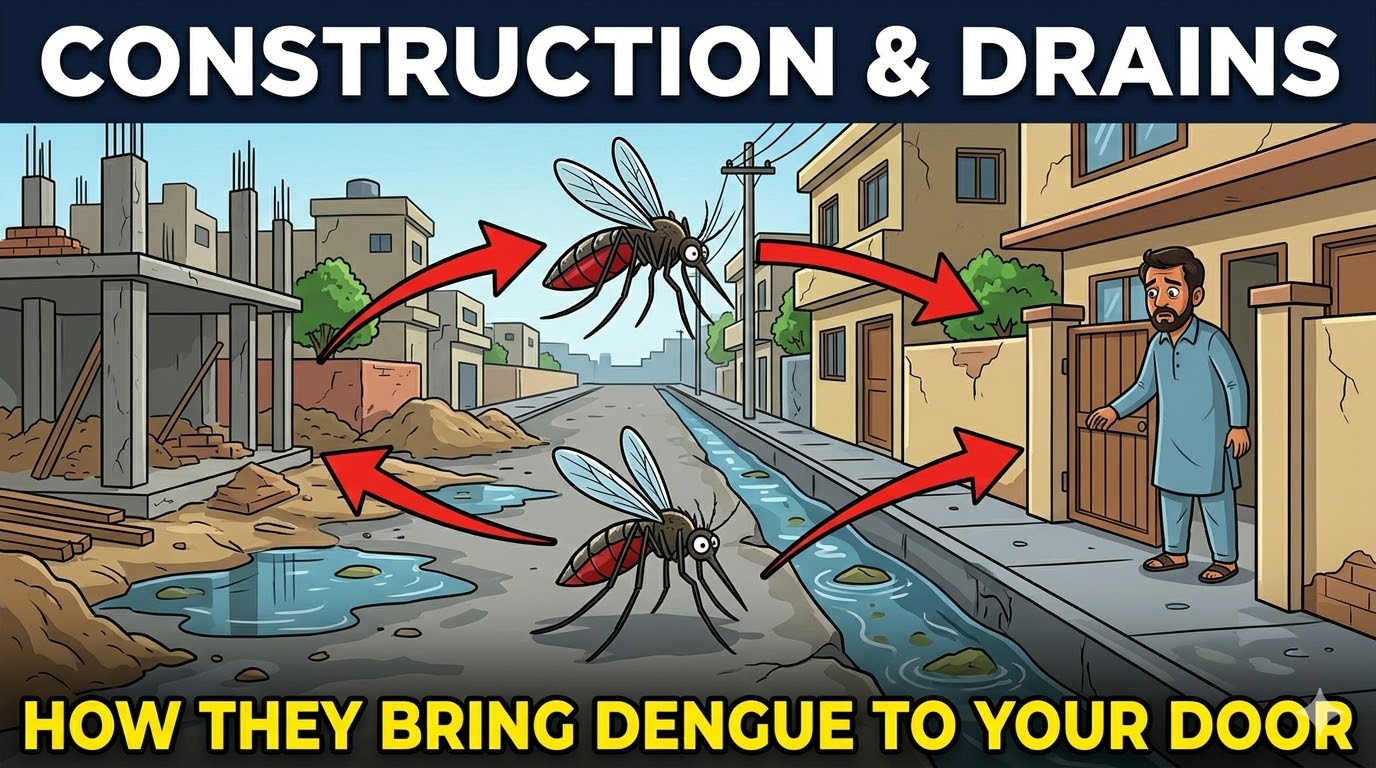
    How Construction Sites and Open Drains Near Karachi Homes Increase Dengue Risk

    When we talk about dengue prevention, the conversation usually focuses on what is inside the home — water tanks, flower pots, gutters. This is important. But for many Karachi families, the greater threat comes from directly outside: the construction site two blocks away, the open nullah running along the street, the half-excavated plot next door that fills with water every time it rains.

    Your personal hygiene and home maintenance practices can be exemplary, and you can still be at high dengue risk if your immediate neighborhood contains large, unmanaged breeding environments. Understanding these external sources — and knowing what you can do about them — is essential for any comprehensive dengue protection strategy in Karachi.

    Why Karachi’s Construction Boom Is a Dengue Accelerator

    Karachi is one of the fastest-growing cities in Asia, with construction activity visible in virtually every neighborhood — from Bahria Town and DHA City in the periphery to constant vertical development in established areas like Gulshan-e-Iqbal, PECHS, and Clifton.

    Construction sites, by their nature, create conditions that are almost ideally suited for Aedes mosquito breeding:

    Excavations and Foundation Pits

    Foundation excavations and basement pits accumulate water rapidly during rain and are slow to drain due to compacted soil. A single construction pit of modest size can hold thousands of liters of standing water for days after a rainfall. With no cover, no treatment, and full sun exposure warming the water to ideal breeding temperatures, these become mosquito nurseries of industrial scale.

    Stored Construction Materials

    Construction sites accumulate materials that create small-scale water traps:

    • Hollow iron pipes and scaffolding tubes hold water in their openings
    • Plastic tarps and protective sheets fold and collect water
    • Overturned wheelbarrows, buckets, and mixing trays retain water after rain
    • Bricks and concrete blocks with textured surfaces create micro-pools

    Incomplete Drainage Infrastructure

    During construction, original drainage from the site is disrupted. Water that previously flowed away now pools unpredictably. New drainage systems for the building under construction are not installed until late-stage construction. This gap period — which can last months or years in Karachi’s construction timeline reality — creates chronic waterlogging in and around the site.

    Concrete Mixer Troughs and Water Storage

    Construction requires significant water for mixing. Sites typically store water in large plastic drums, tanks, or open troughs. These are rarely covered adequately and rarely treated for mosquito control. They represent large-volume, accessible, clean-water breeding sites.

    The Open Drain Problem: Karachi’s Chronic Challenge

    Karachi’s open drain — or nullah — network is one of the city’s most persistent infrastructure challenges. The main nullahs (like Gujjar Nullah, Orangi Nullah, and the network flowing through Landhi and Korangi) are large enough to be visible on satellite imagery. But the problem extends to thousands of smaller open drains in residential streets throughout the city.

    Open drains create dengue risk in several distinct ways:

    Stagnant Water During Dry Periods

    Between rains, drain flow slows dramatically or stops entirely in many residential areas of Karachi. Solid waste accumulation blocks flow. The result is a chain of stagnant water pockets throughout the drain — warm, accessible, and unmanaged.

    Post-Rain Overflow

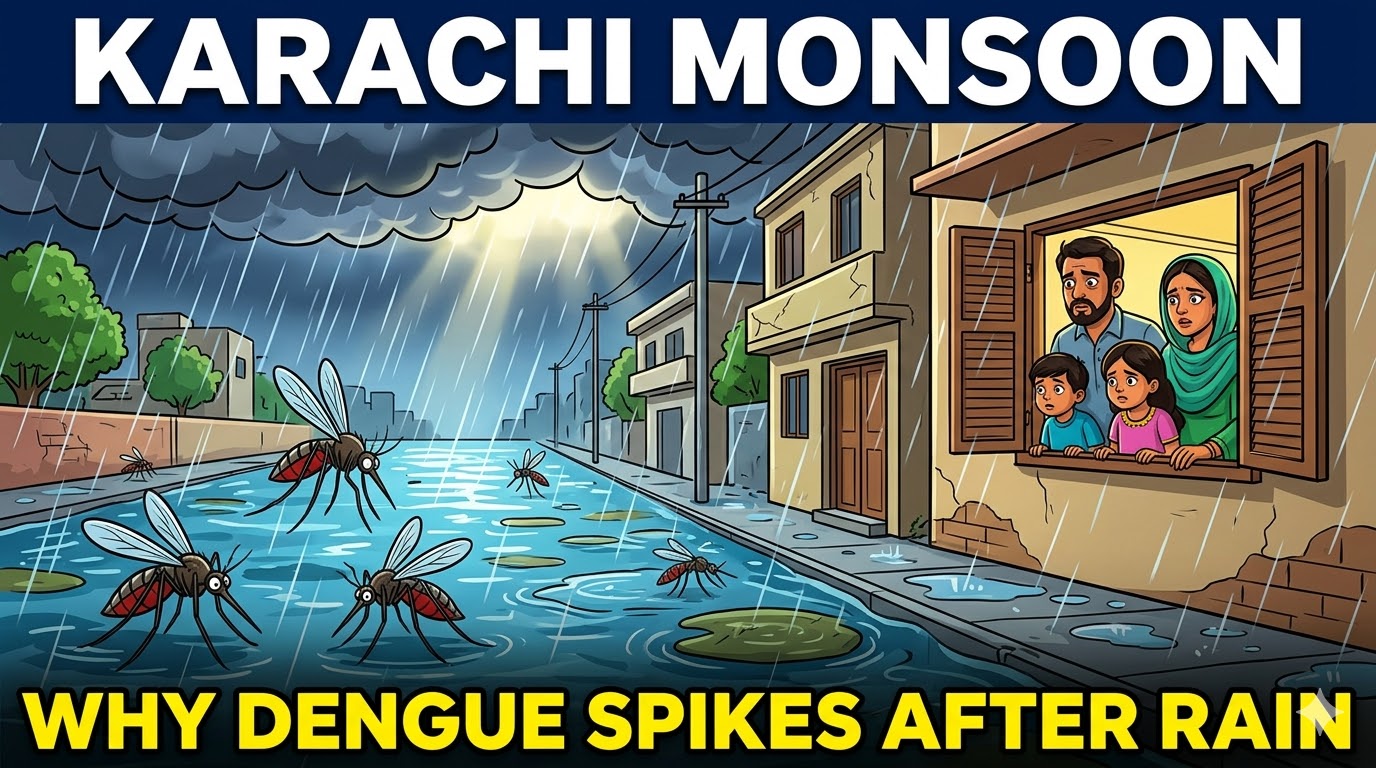
    During and after heavy rain, Karachi’s drains often overflow, flooding adjacent streets and properties with contaminated water. When this water recedes, it leaves behind pools in depressions, roadside vegetation, and low-lying plots. These residual pools become immediate breeding sites.

    Vegetation and Shade

    Drain banks in older Karachi neighborhoods are often lined with vegetation that provides shade and moisture retention. This creates conditions that support mosquito resting populations as well as breeding — the covered, shaded drain bank is a refuge for adult mosquitoes during heat peaks.

    Quantifying the Radius: How Far Does the Risk Extend?

    Aedes aegypti is considered a relatively limited-range mosquito compared to other species — its typical flight range is estimated at 100 to 400 meters under normal conditions. However, this is a statistical average. Wind, human movement, and availability of hosts can extend effective range.

    Practically, if you live within 200 meters of:

    • An active construction site with unmanaged water accumulation
    • An open drain or nullah
    • A vacant plot with debris and irregular surface
    • A large garden or nursery area with multiple water containers

    …your dengue risk is materially elevated above a household in a fully developed, well-drained neighborhood, even if your own home is immaculately maintained.

    What Karachi Homeowners Can Realistically Do

    The frustrating reality is that you cannot control what happens on a construction site next door or how often the municipal drain is cleaned. You can, however, take a combination of personal and community-level actions that meaningfully reduce risk.

    Personal Protective Measures

    • Ensure your own home’s defensive perimeter is solid: sealed tanks, cleared gutters, no standing water in the compound
    • Install properly fitted window and door screens — Aedes mosquitoes that breed nearby will enter your home to feed
    • Use DEET-based repellent on children playing outdoors in the morning or late afternoon — peak Aedes feeding hours
    • Schedule professional mosquito treatment for your home more frequently during active nearby construction

    Community and Regulatory Action

    • Report chronic open drain blockages to your local Union Committee or district municipality
    • Contact KWSB (Karachi Water and Sewerage Board) for drain cleaning requests in your area
    • Engage with your Residents Welfare Association to advocate for construction site inspections
    • Formally notify nearby construction site management about water accumulation — under Pakistan’s environmental regulations, construction sites are required to maintain drainage
    • Document breeding sites with photos and report to Karachi Metropolitan Corporation (KMC) health department — particularly during dengue outbreak periods when enforcement is more active

    Given the external threats that construction sites and open drains represent, having professional mosquito control done for your Karachi home becomes even more critical. Treatment of your home addresses the mosquitoes that enter from external breeding sources, reducing your family’s bite exposure regardless of what is happening in your neighborhood.

    The New Development Paradox in Karachi

    There is an irony that residents in Karachi’s newer, more affluent developments have noted: neighborhoods undergoing rapid development often have higher dengue incidence than established, denser areas. The reason is the construction activity itself. DHA City, Bahria Town Karachi, and areas around the new Ring Road development all experienced dengue clusters coinciding with peak construction periods.

    Families who purchase homes in new developments expecting a clean, well-managed environment sometimes find that the construction activity surrounding their homes creates the exact environmental conditions that drive dengue outbreaks. This is not an argument against purchasing in new developments — it is an argument for being especially proactive about mosquito control in those areas.

    Specific High-Risk Areas in Karachi Currently

    Without naming specific properties, certain general zones in Karachi present elevated ambient risk due to construction activity and drainage challenges:

    • Areas adjacent to major road expansion projects — where excavation creates extensive waterlogging
    • Neighborhoods bordering major nullahs — particularly during pre-drain-cleaning periods
    • Newly developing residential zones at Karachi’s periphery where infrastructure is incomplete
    • Industrial areas near residential clusters where industrial water storage and drainage is poorly managed

    Conclusion

    Dengue risk in Karachi is not contained within your walls. Construction sites and open drains within 200 to 400 meters of your home are active contributors to the mosquito population that puts your family at risk. Acknowledging this reality — and responding with both personal household protection and community-level advocacy — is the only comprehensive approach.

    Your home can be a fortress against mosquitoes even when the neighborhood presents challenges. But that fortress requires professional-grade protection, not just retail sprays.

    📞 Book a Free Inspection Today: Living near construction or open drains in Karachi? You need stronger protection. Our Pest Control Services in Karachi team will assess your specific neighborhood risk factors and provide targeted treatment designed for high-exposure environments. Contact us for your free inspection and take back control of your family’s safety.

  • Why Mosquito Sprays Fail in Karachi Homes — And What Actually Works Long-Term

    Why Mosquito Sprays Fail in Karachi Homes — And What Actually Works Long-Term

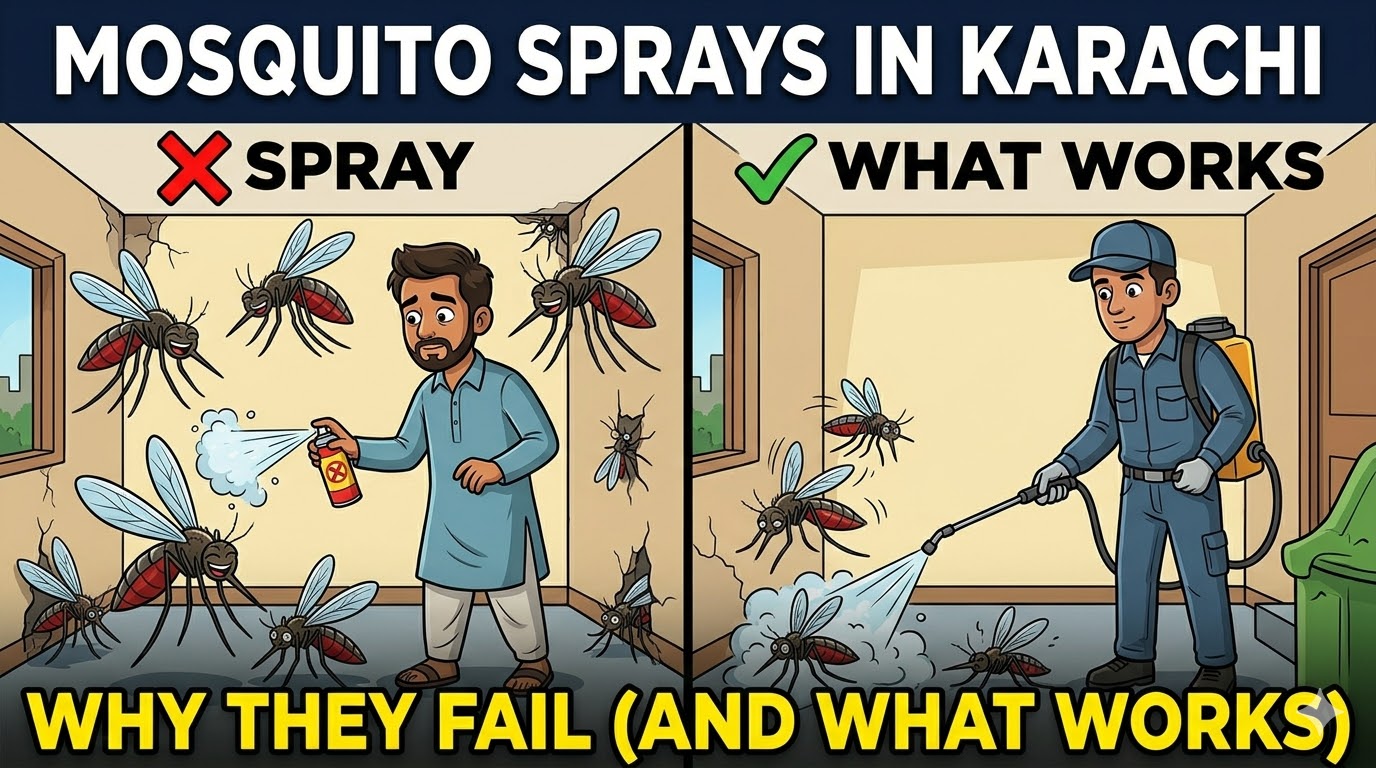
    The Spray-and-Forget Problem – Walk into any supermarket in Karachi — from Imtiaz to Naheed — and you will find a full shelf of mosquito repellent sprays, coils, electric vaporizers, and aerosol cans. They are affordable, widely available, and easy to use. Most Karachi families have at least two or three of these products at home.

    And yet dengue cases continue to rise every monsoon. Hospital wards fill up. Platelet count updates circulate in family WhatsApp groups. Children and adults get infected despite homes stocked with sprays.

    The problem is not user error. The problem is that consumer mosquito sprays are fundamentally the wrong tool for dengue prevention. Understanding why requires understanding what these products actually do — and what they do not.

    What Consumer Mosquito Sprays Actually Do

    Most retail mosquito sprays sold in Pakistan contain pyrethroid insecticides — typically permethrin, cypermethrin, or d-allethrin. These are the same active ingredients used in professional pest control, but in much lower concentrations and with a critical limitation: they are contact killers and short-range repellents.

    What this means practically:

    • They kill or repel mosquitoes that are directly hit by the spray mist
    • They provide a short residual effect — typically 30 minutes to a few hours at maximum
    • They do not address mosquito larvae or eggs
    • They do not penetrate into the crevices, cavities, or dark corners where Aedes mosquitoes rest during the day
    • They dissipate quickly in Karachi’s warm, ventilated homes

    You spray your room at night, it smells strongly of insecticide, and you feel protected. But the Aedes aegypti mosquito is primarily a daytime biter — it is most active from early morning until mid-afternoon. By the time it is actively seeking a blood meal, your previous evening’s spray has long since evaporated.

    The Resistance Problem in Karachi

    There is another issue that local pest control professionals have observed for years: Aedes mosquitoes in Karachi show increasing resistance to the pyrethroid class of insecticides used in most retail sprays.

    This is not unique to Karachi — it is a global phenomenon documented in dengue-endemic regions. Repeated exposure to sub-lethal concentrations of pyrethroids (exactly what happens when families use consumer sprays daily for years) creates selection pressure, and populations develop resistance. Mosquitoes that survive repeated pyrethroid exposure pass on their resistance to offspring.

    The practical result: sprays that provided reasonable protection five or ten years ago have significantly reduced effectiveness against today’s mosquito populations in urban Karachi.

    Mosquito Coils and Electric Vaporizers: Are They Any Better?

    Mosquito coils work by releasing pyrethroid smoke that creates a zone of deterrence. They are moderately effective in small, enclosed, still-air spaces. Their limitations in Karachi homes:

    • Ineffective in rooms with ceiling fans or air conditioning, which disperse the active compound before it reaches mosquito resting zones
    • Only protect the immediate area — a coil on the floor protects approximately a 2-meter radius
    • Require continuous burning — protection ends when the coil is done
    • The smoke poses its own respiratory concerns with prolonged daily use

    Electric vaporizers use a heating element to release insecticide from a liquid or mat. They are slightly more consistent than coils but share the same fundamental limitation: they treat only the air in the immediate vicinity. They do not reach breeding sites, wall cavities, or the areas under furniture and behind appliances where Aedes mosquitoes rest.

    Repellent Sprays Applied to Skin: A Personal Tool, Not a Household Solution

    DEET-based and picaridin-based repellents applied to skin are genuinely effective at preventing mosquito bites on the individual wearing them. They are an excellent personal protection measure, particularly for children, outdoor workers, and people in high-risk areas of Karachi.

    But they do nothing for the mosquitoes breeding in your water tank, the larvae developing in your flower pot tray, or the adult mosquitoes resting behind your wardrobe. They protect you while you wear them. They do not address the mosquito population in your home.

    What Actually Works: A Layered, Professional Approach

    Effective long-term dengue control in a Karachi home requires addressing three separate but connected problems: adult mosquito populations, mosquito larvae, and breeding source elimination. No single product addresses all three.

    1. Source Reduction — Non-Negotiable

    No treatment will provide lasting protection if breeding sites are not eliminated. Weekly inspection and removal of standing water — from tanks, trays, containers, and drains — reduces the mosquito population at its source. This is the most powerful and cost-free intervention available.

    2. Larvicide Treatment

    Larvicides target mosquito larvae in water before they become adult mosquitoes. The most widely used and safest is BTI (Bacillus thuringiensis israelensis), a naturally occurring bacterium toxic to mosquito larvae but harmless to humans, pets, fish, and other wildlife. BTI tablets can be used in water tanks — including drinking water tanks under professional guidance — and any water body that cannot be emptied.

    3. Residual Insecticide Treatment (Professional Grade)

    Professional pest control companies use residual insecticide formulations — not aerosols — that are applied to wall surfaces, under furniture, inside drainage lines, and other resting sites. These formulations adhere to surfaces and remain active for weeks. When a mosquito lands on a treated surface, it absorbs a lethal dose even without direct spray contact.

    This is fundamentally different from an aerosol can that you spray into the air. Residual treatments work while you are not there, treating the entire home including areas inaccessible to household sprays.

    4. Space Spraying (Fogging)

    Thermal fogging or ULV (ultra-low-volume) cold fogging, when done professionally, produces extremely fine droplets that penetrate into crevices and resting sites far more effectively than consumer aerosols. This is what health departments use during outbreak responses and what professional pest control companies deploy during active dengue seasons.

    Consumer foggers sold at hardware stores in Karachi do not produce the particle size necessary for effective penetration. Professional-grade ULV equipment generates droplets in the 5 to 20 micron range — small enough to stay airborne longer and reach hidden resting zones.

    For a comprehensive, evidence-based approach to mosquito elimination in your Karachi home, a professional mosquito control treatment combines larvicide, residual surface treatment, and targeted fogging in a coordinated programme that retail products simply cannot replicate.

    How Often Should Professional Treatment Be Done?

    In Karachi, timing matters. The dengue risk window runs from approximately July through October, with peak risk in August and September. A practical professional treatment schedule for a Karachi household:

    • Pre-monsoon treatment: June to early July — disrupt breeding before mosquito populations explode
    • Mid-season treatment: August — reinforce protection at peak dengue season
    • Post-monsoon follow-up: October — address residual breeding from the tail end of the rainy season

    For homes in high-risk areas — near open drains, construction sites, or neighborhoods with documented dengue cases — monthly treatment during peak season is recommended.

    Protecting Your Children Specifically

    Children are particularly vulnerable to dengue in Karachi for several reasons: they spend more time at home during school holidays (which coincide with monsoon), they play outdoors during Aedes peak biting hours in the morning, and their immune systems produce more severe inflammatory responses to primary dengue infection in some cases.

    For households with young children, the combination of professional home treatment, daily application of DEET-based repellent on exposed skin, and window/door screening creates a multi-layered defense that consumer sprays alone cannot provide.

    Conclusion

    Consumer mosquito sprays in Karachi are not protecting your family from dengue as effectively as you think. They address the adult mosquito briefly and partially. They do nothing for larvae, nothing for breeding sites, and increasingly little against pyrethroid-resistant mosquito populations. The false sense of security they provide may actually delay more effective interventions.

    Long-term protection requires source reduction, larvicide application, professional residual treatments, and properly timed fogging — a coordinated strategy that only professional pest control can reliably deliver.

    📞 Book a Free Inspection Today: Stop relying on sprays that fall short. Our pest control experts will assess your home’s specific risk profile and design a treatment plan that actually works — through monsoon season and beyond. Book your free inspection today.

  • Dengue vs. Regular Viral Fever in Karachi: Early Signs Most People Ignore

    Dengue vs. Regular Viral Fever in Karachi: Early Signs Most People Ignore

    The Confusion That Costs Lives – Every year during Karachi’s monsoon and post-monsoon months — roughly July through November — hospitals across the city see a surge in fever cases. Most patients and their families assume it is a common viral fever, widely referred to locally as ‘viral.’ They rest at home, take paracetamol, and wait for it to pass.

    In many cases, it does pass. But in others — when the fever is actually dengue — the delay in diagnosis leads to dangerous complications. Dengue fever follows a predictable pattern, and recognizing the early signs versus a standard viral infection is a potentially life-saving skill.

    This guide is written specifically for Karachi residents who need to navigate this distinction quickly and confidently.

    Why Dengue Is Commonly Missed in Karachi

    Dengue is not always immediately distinguishable from other viral infections, which is what makes it so dangerous. Several factors specific to Karachi compound the problem:

    • High background rate of general viral fever during monsoon means families are conditioned to expect and dismiss fever
    • Dengue’s early stage closely mimics other common illnesses including flu, chikungunya, and even typhoid
    • Self-medication culture — visiting a pharmacy before a doctor — often leads to treatment with ibuprofen or aspirin, which are dangerous in dengue and can trigger bleeding
    • Overcrowded public hospitals create a hesitation to seek care early for what seems like ‘just a fever’
    • Limited awareness of the specific patterns that distinguish dengue from other fevers

    The Classic Dengue Fever Pattern

    Dengue fever, caused by four distinct serotypes of the dengue virus and transmitted by the Aedes aegypti mosquito, follows a characteristic three-phase pattern. Knowing these phases helps you identify it early.

    Phase 1: Febrile Phase (Days 1–3)

    The febrile phase is where most people dismiss dengue as ordinary viral fever. Symptoms include:

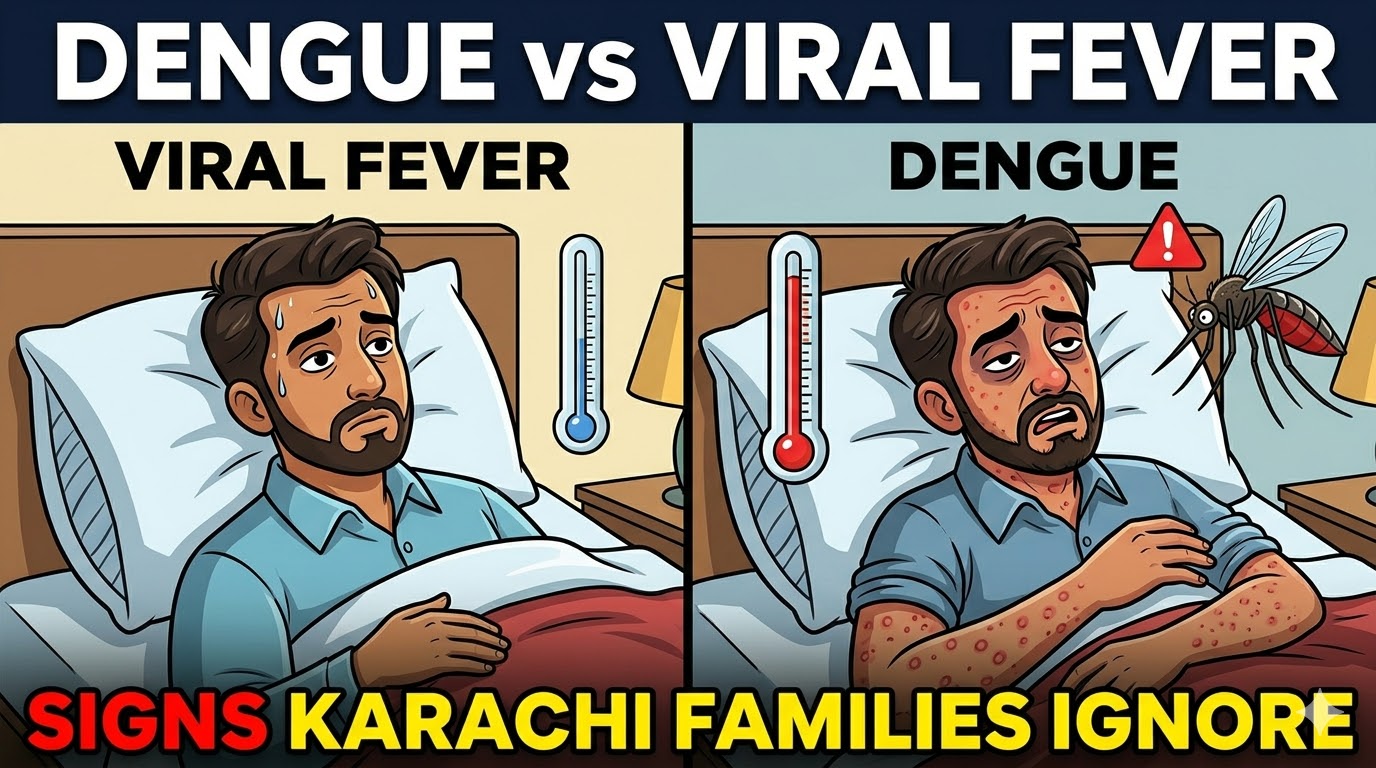
    • Sudden, high fever — typically 39 to 40.5 degrees Celsius, appearing abruptly
    • Severe headache, particularly behind the eyes (retro-orbital pain) — pressing the eyeballs causes significant pain
    • Intense body aches, particularly in the joints, muscles, and bones — historically called ‘breakbone fever’
    • Flushed, red appearance of the face
    • Mild rash in some cases — appears as widespread redness, especially on the chest
    • Loss of appetite and nausea

    The distinguishing characteristic at this stage is the severity and combination of symptoms. Ordinary viral fever rarely produces the degree of bone and joint pain seen in dengue. The retro-orbital headache (pain behind the eyes) is particularly specific to dengue and worth noting.

    Phase 2: Critical Phase (Days 4–6)

    This is the most dangerous period. The fever may actually drop — a fact that leads many families to believe the patient is recovering. This is a critical mistake. The apparent improvement can mask serious internal developments:

    • Plasma leakage from blood vessels, which can lead to dengue shock syndrome
    • Rapid drop in platelet count (thrombocytopenia) — normal is 150,000 to 400,000; in severe dengue, it can fall below 20,000
    • Warning signs of severe dengue: bleeding from gums or nose, blood in vomit or urine, severe abdominal pain, persistent vomiting, rapid breathing, fatigue or restlessness

    If fever drops but the patient develops any of the warning signs above, it is a medical emergency. This is the stage at which many dengue-related fatalities in Karachi occur — not from the fever itself, but from the cardiovascular complications of the critical phase.

    Phase 3: Recovery Phase (Days 7–10)

    Most patients who pass through the critical phase without complications begin recovering. However, the recovery phase has its own characteristics:

    • Return of appetite
    • Stabilization of platelet count and fluid levels
    • Possible appearance of a secondary rash — described as ‘islands of white in a sea of red’
    • Bradycardia (slow heart rate) is common during recovery and is not cause for alarm

    Comparing Dengue to Common Viral Fever: Key Differences

    Here is a direct comparison to help Karachi families make a faster, better-informed judgment:

    Fever Pattern

    • Viral fever: Gradual onset, moderate (37.5–38.5°C), often fluctuates
    • Dengue fever: Sudden onset, high (39–40.5°C), saddle-back pattern (drops then returns)

    Pain Profile

    • Viral fever: Mild to moderate body aches, occasional headache
    • Dengue: Severe joint, muscle, and bone pain; pronounced retro-orbital (behind-eye) headache

    Skin Changes

    • Viral fever: Rarely produces a rash in adults
    • Dengue: Flushing in early stage; classic petechial rash (small red dots that do not blanch under pressure) in later stages

    Bleeding

    • Viral fever: No bleeding
    • Dengue: Possible nosebleeds, gum bleeding, easy bruising, blood in urine or stool

    Platelet Count

    • Viral fever: Normal or minimally reduced
    • Dengue: Significant reduction, often below 100,000 and potentially below 20,000 in severe cases

    Abdominal Symptoms

    • Viral fever: Mild nausea possible
    • Dengue: Severe abdominal pain and persistent vomiting are warning signs of severe dengue

    When to Get Tested in Karachi

    Given the frequency of dengue cases in Karachi, any fever during or after monsoon season that:

    • Exceeds 38.5°C and came on suddenly
    • Is accompanied by severe muscle/bone pain and retro-orbital headache
    • Lasts more than two days without obvious cause (such as a cold or throat infection)

    …warrants a dengue test. The NS1 antigen test is most useful in the first five days of fever. After day five, IgM and IgG antibody tests are more appropriate. Complete blood count (CBC) showing low platelets and low white blood cells strongly supports a dengue diagnosis even before confirmatory tests return.

    Most diagnostic labs in Karachi — including Agha Khan Hospital, Liaquat National, and the network of private pathology labs — offer dengue testing. Do not wait for a full five days to pass if warning signs are present.

    What Not to Do When You Suspect Dengue

    This is equally important. Many well-intentioned interventions make dengue significantly worse:

    • Never take ibuprofen (Brufen) or aspirin for fever — these thin the blood and dramatically increase bleeding risk in dengue
    • Do not delay testing because symptoms seem mild in the first two days
    • Do not stop monitoring platelet counts because fever has decreased — this is the critical phase
    • Do not administer any injectable medications without medical supervision
    • Avoid herbal or alternative remedies without consulting a doctor — some delay necessary treatment

    The Environmental Connection: Protecting Your Household

    Understanding the symptoms helps you respond faster. Understanding the source helps you prevent the next case. If one member of your household has been diagnosed with dengue, the likelihood that the breeding source is inside or immediately adjacent to your home is very high. An emergency inspection and treatment of your living space should be conducted immediately — not after the patient recovers.

    Professional mosquito control services in Karachi can identify and eliminate the breeding source, reducing the immediate risk for all other household members who may already have been bitten.

    Conclusion

    The early signs of dengue are recognizable if you know what to look for. The sudden high fever, the bone-deep aches, the retro-orbital headache, and the potential for a dangerous critical phase when fever drops — these patterns distinguish dengue from ordinary viral fever. In Karachi, where dengue cases escalate every monsoon season, knowing these signs is not optional preparation. It is essential knowledge for every household.

    Act fast, test early, use only paracetamol for fever, and monitor platelet counts closely. Those three actions, taken promptly, save lives.

    📞 Book a Free Inspection Today: Has there been a dengue case in your home or neighborhood? Don’t wait for the next one. Contact Pest Control Services in Karachi for a free home inspection. We identify breeding grounds, eliminate active mosquito populations, and help protect your family through the entire dengue season.

  • How Clean-Looking Water Tanks in Karachi Still Become Mosquito Breeding Grounds

    How Clean-Looking Water Tanks in Karachi Still Become Mosquito Breeding Grounds

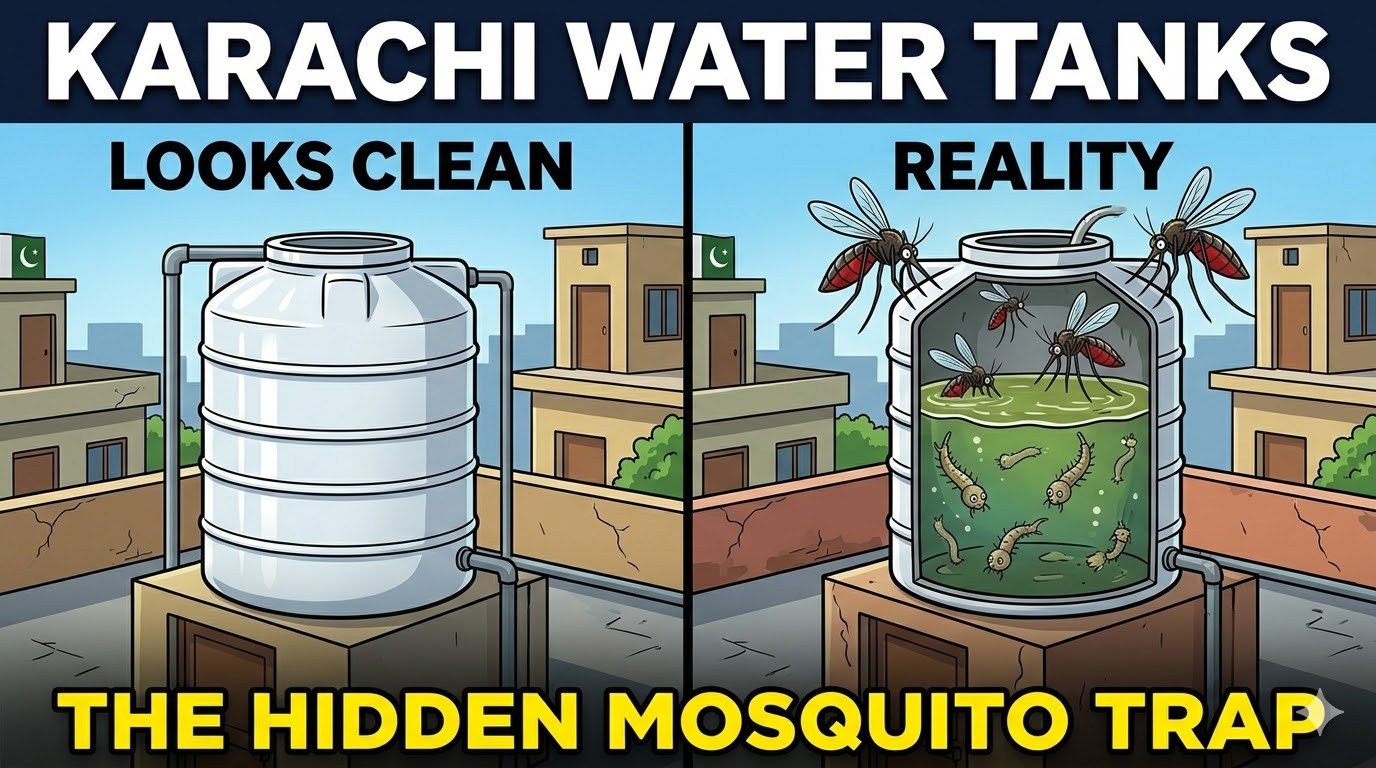
    Ask any Karachi homeowner about their water tank, and most will tell you it looks fine. The water appears clear, there is no visible growth, no smell — surely it is safe? Unfortunately, when it comes to dengue mosquito breeding, appearance is deeply misleading. A perfectly clear, odorless tank can harbour hundreds of mosquito larvae completely invisible to the untrained eye.

    This misconception is one of the primary reasons dengue continues to spread in Karachi despite widespread public awareness campaigns. Families believe they are safe because their tanks look clean. They are not checking for what they cannot see.

    Understanding the Aedes Mosquito and Water Preference

    The Aedes aegypti mosquito — responsible for transmitting dengue, chikungunya, and Zika — has a distinct preference: clean, stagnant water. Unlike many other insect pests, it does not seek out dirty, polluted, or biologically rich water. It actively prefers clear, still water with minimal organic content.

    This is precisely the water stored in Karachi’s overhead and underground tanks. The water that comes through municipal supply or tankers and sits in storage tanks is ideal for Aedes breeding. There is no turbulence to disturb eggs, the temperature is warm due to Karachi’s climate, and the water is clear — exactly what the mosquito needs.

    Aedes mosquitoes lay their eggs not floating on the water surface but along the waterline on container walls — just above the water level. These eggs are tiny, dark, and firmly attached. They are invisible without close inspection, and they survive for months in a dried state, hatching immediately when water returns.

    How Karachi’s Water Storage Habits Create Risk

    Karachi faces chronic water supply challenges. Most households — regardless of income level — maintain some form of water storage to cope with irregular supply. This is entirely rational given the infrastructure realities of the city. However, it creates a city-wide network of potential mosquito breeding sites.

    Overhead Rooftop Tanks

    Plastic and concrete overhead tanks are ubiquitous across Karachi’s rooftops. The issues that make them high-risk include:

    • Lids that do not seal properly, leaving gaps through which mosquitoes enter
    • Cracked or absent lids in older tanks common in areas like Orangi Town, Korangi, and parts of Gulshan
    • Overflow pipes that lack mesh screening — a direct entry point for mosquitoes
    • Inlet pipes from tanker water that are left open after filling
    • Interior walls with microscopic surface irregularities where eggs adhere between cleanings
    • Low fill levels during dry periods that expose large interior wall areas above the waterline — the exact spot mosquitoes prefer

    Underground Water Tanks and Sumps

    Underground tanks and sumps present a separate challenge. Because they are below ground and often accessed only through small manholes, they are rarely inspected. Gaps or damaged covers allow mosquito entry, and the dark, enclosed space with its still, clean water is a perfect environment.

    Many Karachi homes discovered during outbreak investigations that their underground sump — fitted years ago and never serviced — was one of their largest breeding sites.

    The Tank Cleaning Paradox

    Many homeowners do have their tanks cleaned — annually or semi-annually. This is good practice. However, incomplete cleaning creates a false sense of security and sometimes makes the problem worse. Here is why:

    • Standard cleaning removes algae and sediment but does not address Aedes eggs attached to walls
    • Eggs laid above the waterline are often above the water level during cleaning and survive the process
    • If the tank is refilled immediately after cleaning, eggs that survived hatch within days
    • Cleaning without treating — using a larvicide or appropriate solution — leaves the tank vulnerable immediately after refilling

    Proper dengue-prevention tank maintenance requires physical scrubbing of all interior walls at and above the waterline, allowing the tank to dry completely if possible, and then refilling. In cases where tanks cannot be emptied, dengue prevention measures such as BTI (Bacillus thuringiensis israelensis) larvicide tablets — which are safe for drinking water and highly effective against mosquito larvae — can be used under professional guidance.

    Warning Signs Your Tank Has a Mosquito Problem

    Even without directly inspecting the tank interior, certain signs suggest a breeding problem:

    • Increased mosquito activity in rooms closest to the tank (often top floors or areas near the tank room)
    • Adult mosquitoes seen emerging from the tank area during daytime hours
    • Tiny wriggling larvae visible if you can shine a flashlight into the tank — larvae hang just below the surface
    • Small, raft-shaped egg masses floating on the water surface (more common in less turbulent water)

    In Karachi’s high-rise buildings — common in Clifton, Defence, and newer developments in Bahria Town Karachi — a single contaminated rooftop tank can spread mosquitoes across multiple floors. Building management in such properties has a collective responsibility to ensure all shared water storage is maintained and treated.

    The Role of Tanker Water in Dengue Risk

    A significant proportion of Karachi’s population relies on private water tankers for their supply. These tankers are an underappreciated vector for dengue risk. The water transported by tankers:

    • May already carry mosquito eggs or larvae from contaminated water sources
    • Is typically delivered and pumped into tanks that are not inspected before refilling
    • Creates turbulence during filling that dislodges wall-attached eggs, causing them to hatch faster

    This does not mean tanker water is inherently unsafe to drink — most Karachi residents use it without incident. But it does mean that the tank receiving that water requires regular monitoring and cleaning, not just a one-time setup.

    What Effective Tank Protection Looks Like

    A properly protected water tank in Karachi combines physical, chemical, and structural solutions:

    Physical Controls

    • Install tightly fitting, purpose-made tank covers with no gaps
    • Screen all inlet, outlet, and overflow pipes with fine mesh (at least 1mm openings)
    • Ensure the tank base and surrounding area does not accumulate spilled or dripped water

    Cleaning Protocol

    • Clean tanks at minimum every six months, ideally before and after monsoon season
    • Physically scrub all interior walls — do not just flush with water
    • Allow to dry completely before refilling where possible

    Chemical Controls (Professional Application)

    • BTI larvicide treatment safe for potable water storage
    • Professional inspection of overflow and inlet pipes for hidden breeding
    • Treatment of surrounding areas for adult mosquitoes

    Homeowners who are uncertain about the condition of their tanks or who have experienced increased mosquito activity should consider a professional mosquito control inspection in Karachi. Trained technicians can assess and treat water storage systems safely, without compromising your water supply.

    What About Building and Apartment Complex Tanks?

    If you live in an apartment building in Karachi, the responsibility for shared water tanks typically falls on the building management or apartment owners’ association. However, your individual risk is directly linked to shared tank conditions.

    It is worth raising the issue with your building management if:

    • Shared tank lids are damaged or missing
    • Tanks have not been cleaned in over six months
    • Mosquito activity has increased in the building
    • There has been a dengue case in the building within the past month

    Building-level mosquito control in Karachi requires coordinated intervention — treating common areas, tanks, rooftops, and drainage simultaneously. Individual apartment treatment without addressing shared tanks will provide only partial protection.

    Conclusion

    Clean-looking water tanks are not safe tanks — not in Karachi, not during or after monsoon season. The dengue mosquito has evolved to exploit precisely the kind of water storage that Karachi’s water infrastructure necessitates. Understanding this, and taking proactive steps to seal, clean, and treat your tanks, is one of the most powerful things you can do to reduce your family’s dengue risk.

    Do not let the clarity of the water mislead you. What you cannot see is exactly what you need to address.

    📞 Book a Free Inspection Today: Is your water tank properly sealed and treated? Our team at Fumigation Services in Karachi offers free home inspections that include water tank assessment. We identify vulnerabilities and provide safe, effective treatments that protect your family without affecting your water supply. Book your free inspection now.

  • Why Dengue Cases Spike in Karachi After Rains — And How Mosquitoes Multiply Inside Homes

    Why Dengue Cases Spike in Karachi After Rains — And How Mosquitoes Multiply Inside Homes

    Every year, Karachi residents welcome the monsoon with relief — cooler temperatures, washed streets, and a break from the brutal summer heat. But within 48 to 72 hours of the first significant rainfall, something else begins: a silent explosion of mosquito activity that health authorities have been warning about for decades.

    This is not a coincidence. The relationship between Karachi’s rain patterns and dengue outbreaks is well-documented and deeply rooted in how the Aedes aegypti mosquito — the primary dengue carrier — behaves and breeds. Understanding this connection is the first step to protecting your household.

    What Happens After It Rains in Karachi: The Breeding Cycle Begins

    Karachi’s urban infrastructure, while improving, still struggles with adequate drainage. After a heavy downpour, water collects in dozens of places — some obvious, many not. This standing water becomes prime real estate for dengue mosquitoes.

    Here is what happens in a typical Karachi neighborhood post-rain:

    • Roof gutters and drains become blocked with debris and hold water for days
    • Flower pots and plant trays in balconies and courtyards fill up
    • Discarded tires, plastic bags, and broken containers in open areas trap water
    • Construction site depressions and uneven ground create puddles
    • Air conditioning drip trays inside homes accumulate water unnoticed

    The Aedes aegypti mosquito needs only a bottle-cap worth of water and about seven to ten days to complete its breeding cycle from egg to adult. Karachi’s humid, warm post-rain climate accelerates this dramatically — sometimes cutting that cycle to five days.

    Inside Your Own Home: Where Mosquitoes Multiply

    Many Karachi homeowners assume the threat is primarily outdoors — open drains, parks, or unkempt lots. The reality is more uncomfortable. A large proportion of dengue mosquito breeding happens inside and immediately around homes. Unlike malaria-carrying mosquitoes (Anopheles), which prefer outdoor water bodies, Aedes aegypti is a domestic mosquito. It thrives in urban environments, close to people.

    Common Indoor Breeding Spots in Karachi Homes

    • Overhead and underground water tanks with poorly fitted or absent lids
    • Flower vases and indoor plants with water trays
    • Bathroom buckets left filled for days
    • Unused water dispensers or cooler trays
    • Drains inside bathrooms and kitchens that hold stagnant water
    • Refrigerator drip trays underneath the appliance
    • Any decorative water features that are not cleaned regularly

    In DHA, Gulshan-e-Iqbal, Clifton, and older neighborhoods like Nazimabad and North Karachi, where apartment buildings are dense and shared spaces often go unchecked, the risk multiplies. A single neglected item on one floor can produce hundreds of mosquitoes that circulate throughout the building.

    Why Post-Rain Temperatures Make It Worse

    Karachi’s monsoon brings humidity levels that can exceed 85 to 90 percent. Mosquitoes are cold-blooded and thrive in warm, humid conditions. After rains, temperatures in Karachi usually remain between 28 and 34 degrees Celsius — the precise range in which Aedes aegypti breeds, feeds, and spreads most aggressively.

    This combination of abundant standing water and ideal temperatures creates what entomologists call a ‘breeding surge.’ Within two weeks of a heavy monsoon spell, the adult mosquito population in an affected Karachi neighborhood can increase by several hundred percent.

    The incubation period for dengue in humans is four to ten days. So cases that appear in a hospital in late August or September often trace back to mosquito bites received during or shortly after a rain event in mid-August. This delay causes many families to miss the connection.

    The Urban Layout of Karachi Amplifies the Problem

    Karachi is one of the most densely populated cities in the world, with over 16 million residents living in a patchwork of planned and unplanned settlements. This density creates unique conditions for mosquito proliferation:

    • Narrow streets in areas like Lyari, Keamari, and old Saddar limit sunlight and airflow, keeping surfaces moist longer after rains
    • Roof-to-roof proximity in apartment clusters means mosquitoes travel easily between units
    • Frequent water supply outages push residents to store water in open containers, inadvertently creating breeding sites
    • Solid waste management challenges mean discarded containers accumulate in alleyways and rooftops

    Even in more affluent areas, the problem is not eliminated — it simply shifts. In Clifton or Defence, well-maintained gardens with ornamental plants, decorative pools, and multiple water storage points become high-risk zones if not monitored properly.

    How to Break the Breeding Cycle Before It Starts

    The most effective anti-dengue measures are not chemical sprays or fumigation alone — they are systematic, weekly elimination of standing water combined with professional treatment of areas that cannot be emptied.

    • Empty and scrub all water containers weekly, not just refill them — mosquito eggs stick to container walls and survive drying
    • Cover overhead tanks tightly with fitted lids or mesh that prevents mosquito entry
    • Remove or overturn any unused containers from rooftops and balconies
    • Change water in flower vases every three to four days
    • Pour a thin layer of cooking oil on ornamental water features to prevent mosquito breeding without harming plants
    • Check and clean AC drip trays monthly

    These are powerful steps, but they only address the areas visible and accessible to you. Professional mosquito control treatments reach breeding grounds inside walls, under furniture, in plumbing cavities, and in structural gaps that household inspection misses. If your home is in a high-risk area of Karachi — particularly near open drains, construction sites, or low-lying areas prone to waterlogging — professional-grade intervention becomes not just helpful but necessary.

    For comprehensive protection, consider scheduling a mosquito control treatment in Karachi before the monsoon peaks. Early-season treatment disrupts the breeding cycle before populations explode.

    When to Act: Don’t Wait for a Diagnosis

    One of the most costly mistakes Karachi families make is waiting until someone in the household is diagnosed with dengue before taking action. By that point, mosquitoes have already been breeding in the home for at least a week — and every family member has been at risk throughout that period.

    The responsible approach is pre-emptive: treat your home before the monsoon begins, maintain vigilance during the rainy season, and act immediately if you notice increased mosquito activity — especially during daylight hours, when Aedes aegypti is most active.

    Unlike the common house mosquito (Culex), which bites at night, Aedes mosquitoes bite primarily during the day — morning and late afternoon. If you notice mosquito bites during these hours, it is a strong indicator that Aedes mosquitoes are present in or around your home.

    Conclusion

    Karachi’s post-rain dengue spikes are not inevitable — they are preventable with the right knowledge and timely action. The mosquitoes multiplying inside your home right now are not a random occurrence; they are the product of specific environmental conditions that you can disrupt. By addressing standing water, monitoring hidden breeding sites, and partnering with professional pest control services, you take control of your household’s health.

    📞 Book a Free Inspection Today: Don’t wait for dengue season to peak. Contact Karachi Fumigation Services for a free home inspection. Our trained technicians identify breeding hotspots you would never find on your own and apply treatments that provide weeks of protection. Call us or visit our website to schedule your appointment before the next rain.

  • Why Karachi’s Older Neighbourhoods Have Worse Rodent Problems — and What Changes That

    Why Karachi’s Older Neighbourhoods Have Worse Rodent Problems — and What Changes That

    If you live in Nazimabad, PECHS, Liaquatabad, Saddar, Kharadar, or any of Karachi’s established older residential areas, you may have noticed that rodent problems here seem more persistent, more severe, and harder to resolve than in newer parts of the city. Neighbours compare notes. Professional pest control helps but the rats keep coming back. The building a few streets over seems to have the same problem. This is not coincidence, and it is not a reflection of any individual household’s maintenance standards.

    Karachi’s older neighbourhoods have structurally worse rodent problems for reasons that are embedded in the physical and urban fabric of the areas themselves. Understanding why is the first step toward changing it — both at the level of your own property and at the neighbourhood level. This article explains the specific factors that create persistently high rodent pressure in older Karachi localities and outlines what property owners and residents can actually do about it.

    Factor 1: Ageing Underground Infrastructure

    The most significant contributor to severe rodent problems in older Karachi neighbourhoods is the condition of the underground sewage and drainage infrastructure. Sewer systems in areas like Saddar, Lyari, PECHS, and Nazimabad were built during the mid-twentieth century for population densities far lower than exist today. Decades of use, inadequate maintenance, and the physical stress of Karachi’s ground conditions have left these systems with cracked pipes, collapsed sections, and open joints.

    For rats, a cracked or compromised sewer system is not an obstacle — it is a highway. Norway rats move freely through sewer networks and emerge through broken pipes and open joints into the soil beneath buildings, through floor drains, and directly into basements and ground-floor spaces. In newer areas with more recently laid sewer infrastructure — DHA Phase 8, Bahria Town, some parts of Gulshan-e-Hadeed — the sewer system is more intact and provides less direct access. The difference in above-ground rodent pressure is directly related to below-ground infrastructure condition.

    Factor 2: Building Age and Construction Standards

    Buildings constructed in the 1950s through 1980s in Karachi were not built with rodent exclusion in mind — neither the materials nor the construction standards of the era included systematic pest-proofing. Foundations are often rubble or brick, with irregular joints. Wall ties, pipe penetrations, and service entries were typically left with gaps sealed only with soft mortar, which has since deteriorated. Expansion cracks have developed across decades of ground movement and monsoon loading.

    A house in PECHS or Nazimabad that was well-maintained through the 1980s but has had limited structural attention since then will have accumulated dozens of small entry points that simply do not exist in buildings that were constructed more recently. This is not a criticism of the original construction or of subsequent maintenance — it is simply the physical consequence of building age in a demanding climate.

    Compound this with the common practice of informal additions — rooms added above the original structure, walls built against existing buildings, service pipes routed externally — and the number of unplanned gaps and penetrations in older properties grows further.

    Factor 3: Land Use Density and Mixed Development

    Older Karachi neighbourhoods are characterised by mixed land use in ways that newer planned areas are not. A residential street in Nazimabad or Liaquatabad will typically have ground-floor commercial units, food vendors, small workshops, garment operations, and residential apartments coexisting in a single block. This density of different uses creates a complex food waste environment at street level that supports very high rodent populations directly adjacent to residential spaces.

    The organic waste output from even a small number of food-related businesses — a single paratha stall, a fruit vendor, a small restaurant — is sufficient to sustain a significant rat population in the immediate vicinity. In a mixed-use block of the kind common across older Karachi, there are multiple such sources within a few metres of every residential unit. Controlling the rodent population in your home while those food sources persist outside is a perpetual rather than solvable problem unless it is addressed structurally.

    Factor 4: Shared Boundary Walls and Compound Infrastructure

    Many older Karachi properties share boundary walls, drains, and in some cases underground infrastructure with adjacent properties. This creates a situation where a rodent problem in one property cannot be fully resolved without addressing the adjacent ones. Rats burrowing under a shared boundary wall move freely between properties. A property that has been treated and sealed will be repopulated from the adjacent one within weeks if that property remains infested.

    In newer planned communities and apartment developments, the physical separation between properties is cleaner, and the shared infrastructure (lifts, common areas, service shafts) is managed collectively by building management. In older, organically developed residential areas, this collective management is largely absent, which means individual efforts to control rodents are partially undermined by the broader neighbourhood condition.

    Factor 5: Open Nala Proximity

    Many of Karachi’s older established areas were developed adjacent to or around the natural drainage channels that became the city’s nala network. Areas like Golimar, Liaquatabad, Orangi, and large parts of Korangi are in close proximity to open drainage channels. As noted in the broader article on Karachi’s rodent ecology, these nalas function as population reservoirs — supporting large numbers of rats in the channel environment and continuously generating dispersal pressure into the surrounding residential areas.

    Properties within 300 to 500 metres of an open nala face a fundamentally different baseline rodent pressure than properties further from the channel. No amount of individual property management eliminates this pressure — it can only be managed through a combination of exclusion, ongoing professional control, and, ideally, coordinated neighbourhood-level action.

    Factor 6: Historical Accumulation in Older Structures

    Rats that have been nesting in a building for generations leave behind material evidence — grease marks on frequently used runs, accumulated droppings in wall voids, and nesting material in cavities — that guides subsequent rat populations to the same locations. Older buildings with long histories of rodent activity have, in a sense, been ‘mapped’ for use by the local rat population. This is why infestations in older properties tend to recur in the same locations and why complete elimination requires not just population control but clearing the physical signs of previous activity.

    What Actually Changes the Situation in Older Neighbourhoods

    The factors above are structural, but they are not insurmountable. What changes the situation is a combination of property-level investment and, ideally, coordinated neighbourhood-level effort.

    At the Individual Property Level

    • Comprehensive structural exclusion — identifying and sealing every entry point using materials rats cannot gnaw through — is the most impactful single investment a homeowner can make
    • Upgrading drain covers and fitting rat blocker valves on main drain outlets eliminates the sewer access route
    • Addressing the building’s immediate perimeter — clearing clutter, eliminating ground-level harborage, maintaining a clear zone around the foundation
    • Engaging professional pest control on a maintenance basis rather than reactively — this is essential in older neighbourhoods where external pressure is continuous

    At the Neighbourhood Level

    The most effective improvements in older Karachi neighbourhoods come from coordinated action among a cluster of properties. This is more achievable than it sounds. A group of homeowners in a block who commission a collective exclusion and treatment programme get better results than any of them would individually, at a cost per household that is typically lower than individual contracts.

    Pressure on local bodies for improved drainage maintenance, covered nala sections, and reliable waste collection removes the environmental conditions that sustain the rat population. In areas where these improvements have been implemented — certain sections of DHA’s older phases, some managed housing societies in Gulshan and North Karachi — rodent pressure visibly decreases.

    The Role of Professional Assessment in Older Properties

    In older Karachi homes, a professional assessment is especially valuable because the history of the building shapes the specific rodent control strategy required. A trained technician can identify the established travel routes, the historical nesting sites, and the entry points that are being actively used — information that guides a targeted treatment and exclusion plan rather than a generic one.

    Our rodent control service in Karachi is specifically experienced with the challenges of older residential properties across the city’s established neighbourhoods. We understand that in PECHS or Nazimabad, the approach to rodent control cannot be the same as in a recently built apartment block — and we tailor our programmes accordingly.

    Whether you are looking for a one-time comprehensive treatment or an ongoing maintenance programme suited to the conditions of an older Karachi property, our team has the knowledge and local experience to make it work. We are proud to be among the trusted fumigation services in Karachi that understand the city’s unique urban environment and the specific pest pressures it creates.

    Book a Free Inspection Today

    If you are living in one of Karachi’s older neighbourhoods and dealing with a rodent problem that keeps coming back no matter what you try, the answer starts with a proper professional assessment of your specific property. Our free inspection service is designed exactly for this situation — we will examine the structural vulnerabilities of your home, assess the level of external pressure, and give you a clear, practical plan. Contact us today to book your free inspection and get a genuinely lasting solution.