
The treatment is done. Your home has been professionally treated for fleas. Now what? The two weeks following a professional flea treatment are a critical period, and knowing exactly what is normal versus what is a problem will determine whether you handle this period with confidence or unnecessary anxiety.
The Most Important Thing to Understand First
Seeing fleas after professional treatment is expected. Read that again. If you see fleas in the days following treatment, particularly in the first week, this is not a sign that the treatment failed. It is a sign that the treatment is working as designed.
Here is why: flea pupae sealed in their cocoons are immune to chemical treatment. They will continue to hatch after treatment. The newly hatched adults will be exposed to the residual insecticide on your floors and surfaces, and they will die, but not instantly. This process takes time, and during that time you may see live fleas. This is normal, expected, and is part of the treatment's mechanism.
Understanding this distinction is essential. Homeowners who do not know this often call their pest control provider in alarm after day three or four, convinced the treatment was ineffective. In most cases, everything is proceeding exactly as it should.
Day-by-Day: What to Expect in Week One
The first two weeks after flea treatment
- Days 1–3Adults drop sharplyFleas present on the day die on contact or within hours
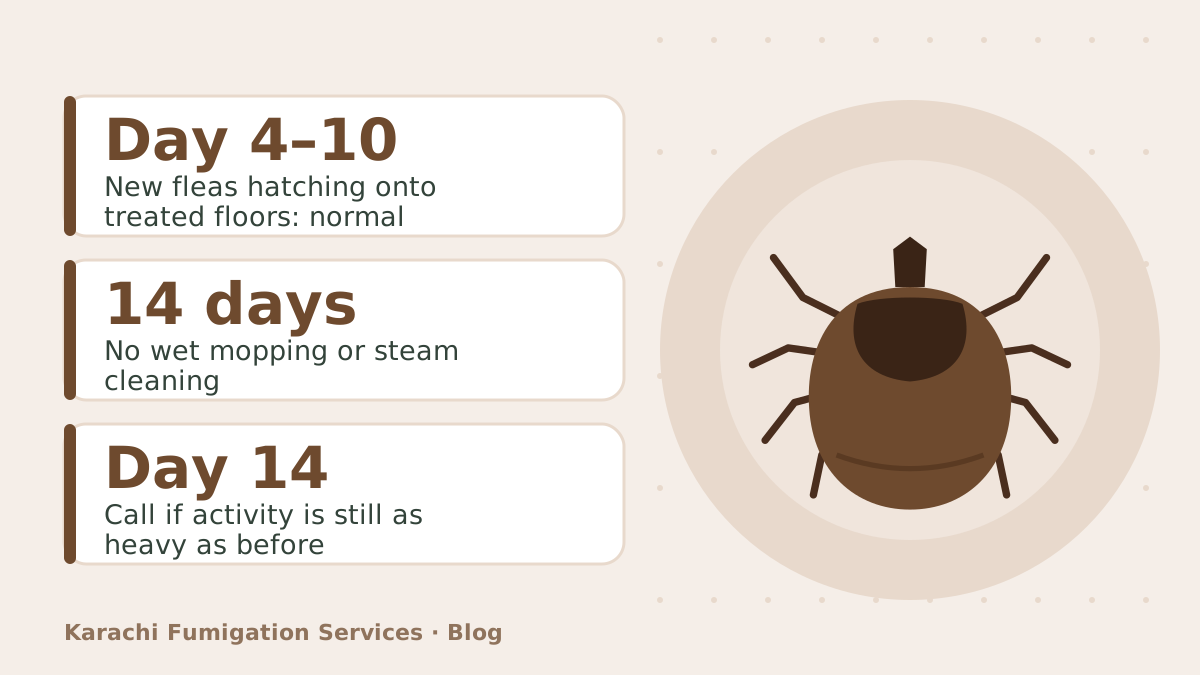
- Days 4–10New fleas appearPupae hatch onto treated floors and die: this is normal
- Days 10–14Sightings tail offMost pupae have hatched and met the residual
- Day 14Check pointStill as heavy as before treatment? Call your provider
Days 1 to 3
The immediate post-treatment period will show a significant drop in visible flea activity. Adult fleas that were present at the time of treatment are killed on contact or within hours of exposure to the residual product. Your pet, if treated concurrently, should also show reduced scratching.
You may notice a faint chemical smell in treated rooms; this is normal and will dissipate with ventilation. The smell is strongest in carpeted areas and along skirting boards where product concentration is highest. Continue to ventilate the home after the minimum re-entry period, but avoid wet mopping treated floor surfaces.
Days 4 to 7
This is typically when homeowners begin to see new flea activity and become concerned. Pupae that survived the initial treatment are beginning to hatch, triggered by the vibration and heat of household activity. Newly hatched adults are exposed to the residual insecticide on treated surfaces and will die within hours, but they exist in your home for that window.
Continue vacuuming at least every two days. This is not optional maintenance advice; it is an active part of the treatment protocol. Every vacuuming session agitates additional pupae into hatching, bringing more of them into contact with the residual zone. The faster you trigger pupa hatching, the faster the infestation cycle is closed.
Do not vacuum up the treated areas and then wash the floors. This removes the residual product that is doing the work.
Days 7 to 10
Flea activity may seem to peak during this period: counterintuitively, this is often the point at which the treatment is most actively working. Large numbers of pupae are hatching simultaneously, newly hatched adults are encountering the residual, and die-off is occurring rapidly. Many homeowners who push through this phase report a sharp decline in flea activity by day 10 to 12.
Continue the protocol: regular vacuuming, no wet mopping of treated surfaces, pet flea prevention ongoing.
Week Two: What Should Be Happening
Days 10 to 14
By the second week, the frequency of new flea sightings should be noticeably declining. The residual insecticide is still active on surfaces, and the majority of the pupae that were present at the time of treatment should have hatched and been eliminated by this point.
If you are seeing a continued high level of activity, comparable to what you saw before treatment, this warrants a call to your pest control provider. It may indicate that the initial treatment missed key harbourage zones, that your pet's flea treatment is not working, or that there is an ongoing external source of reinfestation (such as stray animal access to your property).
This is also the time to decide, with your flea and tick treatment provider, whether a second round is needed. If activity is still building, the best window for it is 14 to 21 days after the first visit.
What You Must NOT Do in the First Two Weeks
The first 14 days, do and don't
Don't
- Wet mop or steam clean treated floors
- Wash, beat or wet-clean treated rugs and upholstery
- Stop your pet's vet-prescribed flea treatment
- Ignore activity that is still building after two weeks
Do
- Dry vacuum every day or two: vibration brings fleas out of cocoons
- Keep treating the pet on schedule
- Keep rooms ventilated after the re-entry period
- Book the second round on time
Wet cleaning removes the residual layer that kills the fleas still hatching.
Do Not Mop or Steam Clean Treated Surfaces
Wet mopping and steam cleaning are the single most effective ways to destroy the residual insecticide that is doing the ongoing work after treatment. Many homeowners who call their pest control provider reporting treatment failure have, on investigation, steam cleaned or wet mopped their floors within the first week. The residual was removed, the hatching pupae found no insecticide, survived, and began reproducing.
Dry vacuuming is acceptable and encouraged. Wet cleaning is not.
Do Not Wash Treated Rugs and Upholstery
For the same reason, do not wash, beat, or wet-clean any soft furnishing that was included in the treatment zone during the first two weeks. If specific items need cleaning urgently for hygiene reasons, discuss this with your technician first.
Do Not Stop Your Pet's Flea Treatment
A treated home with an untreated pet is the most reliably ineffective combination in flea control. Your pet continues to serve as a host for any fleas that hatch and a transport mechanism for reintroduction. Maintain your pet's flea prevention continuously; this is particularly important in Karachi where stray animal contact is nearly unavoidable.
Do Not Ignore Fleas That Are Still Building After Two Weeks
A common reason flea infestations persist in Karachi homes is not product failure but a missed follow-up. If activity is not falling by the two-week mark, a properly timed second round is what closes the cycle, so raise it with your provider before the window passes.
With our treatment, the residual spray includes an insect growth regulator that keeps eggs and larvae from maturing, so the return visit is made under the 3-month written warranty if fleas are still active after the hatching period. Keep to the after-care steps on this page, because the warranty depends on them. The full process is described in our flea and tick treatment guide.
What Signs Indicate a Problem Worth Calling About
While some post-treatment flea activity is expected and normal, there are specific signs that warrant a call to your pest control provider before the scheduled second round:
- Flea activity is as intense on day 14 as it was before treatment
- Bites are continuing on multiple family members daily
- Your pet shows no improvement in scratching or skin irritation despite ongoing veterinary flea treatment
- You are finding ticks on family members or pets, suggesting tick treatment may have been incomplete
- The infestation appears to be spreading to rooms that were not previously affected
Managing Your Family's Comfort During This Period
The first two weeks after treatment can be uncomfortable, particularly if young children are present. Some practical measures to reduce exposure and manage bites:
- Have children wear socks and light trousers indoors to reduce direct skin exposure to ground-level flea activity
- Use a mild antihistamine cream (paediatric formula) for bite relief: consult your pharmacist or doctor
- Focus children's indoor activities on elevated surfaces (beds, sofas) rather than floor-level play during the peak hatching period
- Change and wash children's clothing daily during this period
- Continue vacuuming every day or two and ensuring the home is well-ventilated
If someone in the house is sensitive to smell or has asthma, our safety guidance explains how to air the rooms and who should come back last.
After the Second Round: The Road to a Flea-Free Home
Following a well-executed second treatment, most households in Karachi achieve complete flea elimination within one to two weeks post the second round, assuming the pet is treated, the home preparation was thorough, and no significant external reintroduction source is present.
The weeks after the second treatment follow a similar but typically shorter and less intense version of the first post-treatment period. Again, some pupa hatching and new adult activity may occur in the first week after the second round. The residual from the second treatment handles this final wave.
At the four to six-week mark from the first treatment, a successfully treated Karachi home should be entirely flea-free, assuming ongoing pet treatment continues and external introduction pathways have been addressed.
Long-Term Prevention After Treatment
Once your home is free of fleas, maintaining that status requires modest but consistent effort:
Keeping the home flea-free afterwards
- Year-round pet preventionPrescription flea control every month, not just in summer
- Vacuum twice a weekCarpets, rugs and the pet's favourite spots
- Hot-wash pet bedding weeklyEggs and larvae collect where the pet sleeps
- Seal stray-animal accessGaps under gates and doors that cats and dogs use
- Yearly inspectionIf strays live around your home or building
- Keep your pet on year-round prescription flea prevention, not seasonal
- Vacuum carpets and rugs twice weekly as routine maintenance
- Wash pet bedding weekly in hot water
- Seal gaps around exterior doors and access points that strays may pass through
- Schedule a professional inspection annually if your home has ongoing stray animal exposure nearby
Final Thoughts
The two weeks following professional flea treatment are a period that requires patience, consistency, and the right information. Homeowners who know what to expect, follow the protocol, and maintain communication with their pest control provider navigate this period with confidence and achieve lasting results. If you are currently post-treatment and have questions about what you are seeing, or if you need to schedule your second round, reach out to Karachi Fumigation Services for straightforward, expert guidance.